"They Will Remember That" Changed Gaming Forever | Ryan Kaufman (The Walking Dead)
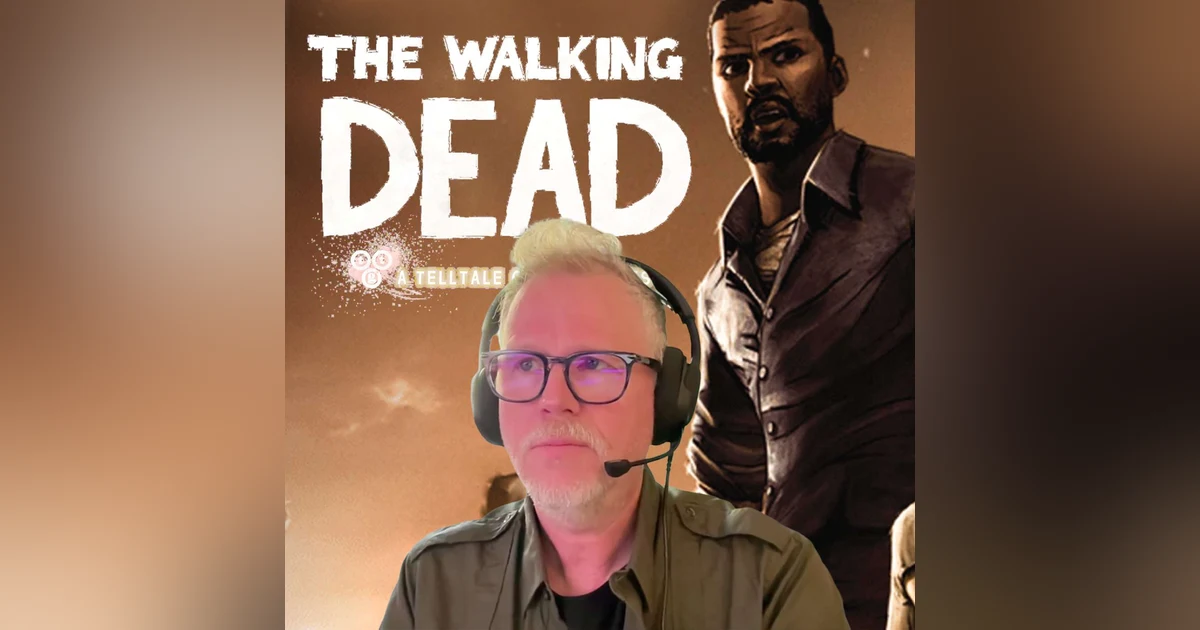

Send us Fan Mail Let's talk about the origins of "They Will Remember That" from Telltale's The Walking Dead with Telltale Games veteran Ryan Kaufman. Today I am talking with Ryan Kaufman, Director of Design for The Wolf Among Us, whose first gig at Telltale Games was on The Walking Dead Season 1. It turns out the journey that led to The Walking Dead and its famous "They Will Remember That" mechanic was not an easy one, and it was born out of the fact that originally the team had done too good...


Let's talk about the origins of "They Will Remember That" from Telltale's The Walking Dead with Telltale Games veteran Ryan Kaufman.
Today I am talking with Ryan Kaufman, Director of Design for The Wolf Among Us, whose first gig at Telltale Games was on The Walking Dead Season 1.
It turns out the journey that led to The Walking Dead and its famous "They Will Remember That" mechanic was not an easy one, and it was born out of the fact that originally the team had done too good a job of sewing together the seams created when a player makes decisions throughout the game.
We go on to talk about what he learnt from The Walking Dead and applied to The Wolf Among Us, and where he hopes to see narrative adventures go in the future.
I am a huge fan of Telltale games, from their Sam & Max series, Tales of Monkey Island and Strong Bad games, to their era of choice-driven narrative adventures.
#thewalkingdeadtelltale #thewolfamongus #telltalegames #gaming #thewalkingdeadgame
The Examined Game
Each week, host Steven Lake asks the creators behind some of the world’s most influential video games about the meaning of life (in video games), leading to conversations about the personal and creative impact games have had on their lives.
We kind of done too good of a job smoothing out the seams. And one of my first tasks was to come up with that. He will remember that, little Chiron. Okay. We're not gonna say exactly what he will do with that information or why he will remember it, but we're giving you a little ping that this could be something. I don't think the quantity of options we give to a player matters as much as the quality. Starting to face the criticism of players who said, Well, my choice didn't really matter. Yeah, but did you feel something about it? You know? And it wasn't until we hit on the core of what Walking Dead was that we shifted gears pretty radically with Wolf.
SPEAKER_02Hi there, my name is Stephen Lake, and welcome to the Examine Game. Today I am talking with Ryan Kaufman, an award-winning writer and narrative lead who has worked with the likes of LucasArts, Double Find Games, and spent over seven years at Telltale Games during their real glory years. So I really wanted to speak with Ryan about what it was like to be at Telltale Games during the conception, creation, and release of the original season one of the Walking Dead video game. There is something I just love about this game, and I feel like it set off this new genre of immersive, interactive video game that we're still seeing get iterated on today. What I wanted to hear about was the creation of the system that made you feel like your decisions had impact in that moment when you're making that decision. It feels real. When I first played this in The Walking Dead, I was like, I've got no idea what's going to happen when I make this call. And I want to find out. And also how they iterated on that approach to design when it came to The Wolf Among Us, which is such a highly celebrated video game from the Telltale catalogue. And there's an eagerly anticipated sequel coming as well. So we talk a little bit about that today. I hope you enjoyed the episode. Please do join me on my Patreon. You can become a free member or paying member for exclusive episodes and early access to the whole catalogue of interviews that I've got coming up. Thank you very much. I'm gonna let my background sort of pull focus so you can get a chance to see.
SPEAKER_01Oh hey, look at that. Wow, that's a cool action. Oh my god. Amazing.
SPEAKER_02Yeah, I I I try not to draw too much attention to it, but when I know it's someone who's definitely gonna um appreciate it, I uh 100%.
SPEAKER_00Yeah, that's cool. Wow.
SPEAKER_02This is pretty this is very new. I w I went I I had my 40th birthday uh and I went back to my parents and I pulled out all my big box games, and I couldn't believe how many I still had. I remember I knew I had them, but how many I had that were still in good good condition and and all that stuff.
SPEAKER_01So I do I do miss having the a big old box, you know, with a manual in it and the little pamphlets and the disc banging around in there and all that.
SPEAKER_02And they're like really big, and you know, there because there's there's uh the for Monkey Island 2, The Chuck Revenge, there's even in the manual, it's sort of explaining like what a point-and-click game is and what you're gonna sort of be expected to do, and it gets to it into such a sort of rudimentary level, um, yeah, which I just thought was so charming.
SPEAKER_00Yeah, yeah, yeah, absolutely.
SPEAKER_02Um so I was really keen to speak with you because uh you know, obviously you're you know, lineage in this industry, and and and you know, you've you've gotten to be a part of some really special games that have got really long tails to them in terms of the influence and impact they've had. And um I think when I reached out, you know, we're talking I I said I'd spoken with John Ingold from um Inkle Studios, and we spoke about a lot about The Walking Dead and Wolf Among Us. Um, so that's sort of what I want to dive into, but usually I like to begin by finding out what someone's playing right now, if they're playing at all, because someone's sometimes people are like, I just can't play video games right now for whatever reason.
SPEAKER_01Yeah, I mean that's the situation I'm in. I'm I'm in the middle of developing something uh as my day job, and then I also have an indie studio going at so I'll do that at night, and then honestly, I'm left with almost no energy to play video games at that point. I have to soak up some other form of media um just to kind of offset that. So um yeah, I'm not I really am not playing anything at the moment. I think obviously when GTA comes out, that'll that'll be a huge time sink for me because I I do love that series and I will play those games uh almost meditatively sometimes, uh just to fill a couple hours just doing whatever. But yeah.
SPEAKER_02It's an interesting you're right, it it can be meditative GTA, same as I found with Red Dead 2. And because you can just like pottery pottering around, as we say in the UK, like in in in real life. I hadn't thought about it like that before. Um, I'm sort of the same, right? I mean, I'm uh my day is filled with video production y documentary stuff, so video games are a really welcome change of um pace. Well, I should probably be watching more films, but I just want to play um Galactic Racing instead.
SPEAKER_01There's a million films that I on my backlog, especially now during October. One of my favorite things is to go back through all the um hammer horror type movies, so specifically kind of British horror from the 60s, late 50s and 60s. Um not only is there a certain aesthetic that I love, but weirdly I really appreciate how efficient they are with the production design. And like there is a there is a game connection there. It's taught me a ton about being really smart about how to use a small cast of characters or how to use um, you know, we got one set, guys. Like we have to make the most out of this one set. Um that kind of stuff. I really have kind of come to appreciate the artistry of like being really, really frugal. Uh and uh yeah.
SPEAKER_02I love that um that crossover. I feel I've been I watch uh some stuff. Um I've forgotten her name, but she did Gilmore Girls and gets these very good budgets for Amazon, like um a toile, this ballet show, and then um The Marvelous Miss Maisel. And when I'm watching it, every other scene I'm like, my god, this must have cost so much to make. This scene must have been so expensive. You know, it's like two dozen extras, and they're all beautiful. It's like this, that's that's so much money. Anyway, I don't want to jump way, way ahead, but I don't want to pick up on that because I'm curious if there's uh any particular examples that come to mind because I think that's really interesting, and it's the sort of thing that um I've probably quoted this before. There's a line from Futurama where Bender like meets God and God says when you do things right, people won't notice that you've done anything at all, and I feel like that's sort of what you're getting at, right? Like you you do what you talked about there correctly, no one's ever gonna know. But I'd love to hear about if there's a particular scene or game that you're thinking of when you think about that efficiency.
SPEAKER_01Um, you know what's funny is like the thing that pops into my head immediately is when I first arrived at Telltale and they were still in development on Walking Dead, and it was the very first Walking Dead, episode one, season one. Um and they were still working out how the structure of that game was going to, you know, play. Um, and one of the big problems they had is they had written it too well in terms of when you made a choice or when there was a branch, the writers had been so clever to smooth out all the transitions that playtesters had no idea they had that their choice had had any kind of consequence because it just seemed completely organic to the story. Like, of course, they would say that, of course, this is how it would go. So they came back, the playtesters came back with a lot of comments about like um, yeah, you know, it was really good, well written, love the characters, but I just didn't feel like I was doing anything, and we realized that um we kind of done too good of a job uh smoothing out the seams, and one of my first tasks was to come up with that. He will remember that uh little Chiron.
SPEAKER_02And that was Is that something that was original to is that the sort of the first time that that had happened in a video game? I'm sort of trying to in in in that overt way, you know, this decision will have consequences up in the top right or wherever it pops up.
SPEAKER_01It might have been. Um I can't remember if we were the exact first. Uh I remember Life is Strange coming out after us, and they had a like a butterfly motif. I think they were trying to work out the same issue. Um but yeah, we we didn't know how to do it. We'd certainly never done it before. Um, so that but that was like definitely a a case of um being a little bit too good, I think. Like they just everything's felt so natural, people had no idea what was going on.
SPEAKER_02That's uh yeah, that's that's sort of like again, that's just something complicated about that. It's a good problem to have to then solve. And what a way. I mean, so so was that was that it's like actually if we you know we don't need to go back and rewrite this or recodle this, it's just like we need something over that's gonna let people know it's just about signaling more than anything else, right?
SPEAKER_01Yeah, it was like I treated it as a game piece of game feedback, like almost an i the narrative equivalent of an ammo counter on a gun, you know, you just have to know there's a certain amount, certain kinds of feedback you just need in a game. Um and it was very interesting, like when we put first put that in, there was sort of a divide in the studio about whether people like that or not. And some people really didn't, they were like, no, no, no, I don't want to, it's breaking the immersion for me. Um and for other people it was the exact opposite. They they couldn't they couldn't figure out the gaminess of it unless they had a little bit of feedback. Um and I think eventually everyone came around to it, but there was definitely a faction in the studio that was like, well, we want to put an option in the game menu to turn that off, just in case people want to play it as a completely seamless cinematic um thing. And I was like, Oh no, that's fine. You know, having anytime a player goes into a menu and turns something off, I'm like, that's fine. They've made a discreet choice to say I don't want that feature, and okay, that's on you then.
SPEAKER_02I mean that came to mind when you said it's like the ammo counter, because I know, say, like if you play Last of Us, you know, on the most hardcore version, there's no you have no idea what ammo. I just love that there's an equivalent for narrative story-driven uh games like that.
SPEAKER_01I went to a GDC talk uh pretty early on in my career by a guy named Ernest Adams, and he I remember his talk was specifically about health meters in games, and he was advocating for vague health meters. In other words, not I have 100% of my life and down to you know seven 57 and blah blah blah. He was advocating for like do something more like a color with a transparency on it so that you have a general sense of you know your life is dwindling, but you don't have that sort of exact metric um that maybe is too fake. But really, I think that's even it's still an open question. Is that better? I don't know, it's different, but it produces a different effect. But I I took that forward and thought I still think about it to this day.
SPEAKER_02Again, it's one of those things I never yeah, haven't yet yeah. And obviously, you know, I remember what was the first thing I ever played with that in memory, maybe like Modern Warfare 1. I can't remember when they introduced that into the Call of Duty series. It probably came before that, but I'm just remembering the first time with the you know the vision blurring and the you know the the the colour changing, and it's it's it's a really wonderful piece of of kind of feedback that you get, like you said, that that that and you know you know you know you there's there's a tension that comes with that as well, right? Because you sort of you do know, like, well, I'm on this colour now, so I'm like two shots away from dead, but it's it's still abstract enough that it maybe it helps contribute a certain amount of tension, which yeah, which again is interesting because we're talking about two completely different mechanics, but I can also say the exact same thing with that he will remember that, you know, and you think, well, yeah, wonder what trouble this is gonna cause me down the line, you know.
SPEAKER_01Yeah, yeah. And a lot and a lot of the language for he will remember that came about as a result of testing out how explicit we wanted to be with the exact consequence. Um, and and he will remember that was kind of rode the perfect line of being threatening in a vague way. Like, okay, we're not gonna say exactly what he will do with that information or why he will remember it, but um, we're giving you a little ping that this could be something. So yeah, I think we're again we're sort of trying to line ride the line between sort of a digital and analog, if you will. Um what's the right kind of feedback, especially in a narrative-driven game.
SPEAKER_02I'm also curious when when when that was I I'm curious what the intention was, say, with that game, which which for me really does feel like a first of its kind in in terms of making that system feel so um impactful to me as a as a player. Um was it was that always the real North Star of like this is what we need people to come away from feeling? Or or or is it still it's like no, the most important thing is like it's it's it's character and story, it's just that this is the means within which we're going to um to do this, or again, is it more like we want people come away saying, I just got to play a branching narrative game and I feel like the choice that I made really did matter?
SPEAKER_01I think at the time um the real focus of the team was uh to break free of a of the point and click stasis. So in some of those games, like when you have an exhaustible dialogue, um it can really uh evoke you can get into sort of a very a very um complacent state where you're like, I have four things I can ask this character, and I know that I can do them in my own time. And you know, I can ask him line three over and over and over. Uh or you know, are you selling these fine leather jackets, whatever? You like you can you can you can do that ad nauseum and it and it creates a sense of uh contemplative kind of attitude towards the game and and exploration is great and all that, but um I remember for Walking Dead, they were like, how do we get that like a real a real tension, a real sense of you're in danger constantly, and coming up with that real time, like the dialogues just continue through in a linear in a linear fashion and the thing that you could have asked is gone forever. You didn't choose that one. So the the aim of the reconstruction of of the dialogue system from a very traditional point and click, which we'd done previously, you know, with Sam and Max and Bone and Monkey Island and all that stuff, which up to that point had been very, very traditional conservative design. The aim was more to create that tension that the of the the the genre. We were like, okay, we're in a horror genre now. We need to make it scary, and how do we do that? And we could press people for time, and they were experimenting with it on the Jurassic Park game as well. And so the funny thing was the branching narrative game became a concept that was way more clear to us after we'd made it, I think.
SPEAKER_02Yeah.
SPEAKER_01And we looked back at what we'd done and realized, oh, like that's a formula, that's a repeatable formula. And then as you can see, um, if you look at the the Telltale catalog as it goes on in years, that formula solidified, also calcified and in a negative way, but it was a very much like um I'd be curious to think hear what other people were would say who were on that team, but I really got the sense that we didn't know quite what we were building, it only became obvious when we had a lot of it together and we looked back and said, Oh, okay, branching narrative. Like puzzles aren't as big of a thing. Um, you know, there was there was even an attempt to do this game in first person at one point, and you can see vestiges of that. If you play episode one of Walking Dead, you can still see vestiges of the first person um treatment. You know, we didn't throw it all away. So I don't think it was at all obvious. Um and and it became obvious when we had it together and thought, oh, okay, yeah, branching narrative. And then it was like, okay, well, how do we improve that? And and what are the elements that we need to highlight and what are the rules that we should stick to and follow.
SPEAKER_02I wonder if that's the sort of thing if if you sort of go into it being like, we're gonna make a branching narrative game that you would break your brain trying to iterate on that to make it what you think it should be, as opposed to it becoming as a it coming out as a consequence, like that you said if I understand it right. It's like, well, we need it's a horror game, we need people to feel time under pressure, what is the way we do that, and then inadvertently coming up with this beautiful genre.
SPEAKER_01Yeah, no, I think you're right. I think if you set out you know, on a blank sheet of paper and said, right, how do we make a branching narrative game, it would probably look a lot more like a visual novel. Um and less like, you know, I think Walking Dead really still had elements of like there's puzzling and there's walking around, there's exploration. Um there are there are more dialogue moments that do feel a bit more like Monkey Island. Um, but yeah.
SPEAKER_02I think for me, you know, and this is what I was talking with John John Ingold about with this this interview was you know, that that first time playing something is he's the one who said it. It's like I've got to make a choice here, and I think I've just screwed up the game, and I'm gonna have to go back and you know, I forget what the first sort of big thing is, but but when you do it and you sort of have screwed up in some way or another, but the game continues on. That you were talking about, and it's it's it's like you know, and obviously if you play those games again or you get forever along, you start to see the seams, you know. Well, actually, that what felt like a huge thing didn't wasn't necessarily the most consequential thing in the world. Um, I don't think that that's an argument against how impactful it felt at the time, because that's sort of down the road, and you get to look at it in hindsight, but uh to have these heart stopping moments where I feel like the decision I'm gonna make really, really matters. I think those are extremely rare in games, and they they are not increasing with better technology or bigger budgets. Um I don't know what I I just think that's interesting.
SPEAKER_01Yeah, absolutely. I I um I don't think the quantity of options that we give to a player matters as much as the quality. And I think that was proven to me even when we were in the middle of making telltale and you know making more games and starting to face the criticism of players who said, Well, my choice didn't really matter. And I was always on the side of, yeah, but did you feel something about it? You know, was it memorable? Um if you're looking purely for consequence, I don't know if we can offer a breadth of consequences where each one matters so much that you would be like, okay, well, fine, my choice mattered, but I don't I didn't care about the outcome. I would rather err on the side of I had less choices, but they all felt really interesting and emotionally impactful. Um you know, I think we we we can experience those games in the same way that we re watch our favorite shows. Like, you know what's gonna happen. Like I'm rewatching Game of Thrones probably for the fifth time, and I'm like, I know what happens. Um, but it's the delight in the characters and the the storytelling that is the reward.
SPEAKER_02I mean, it makes me think about like in Fallout 3 with Megaton. I remember them demoing it. Did they demo it? But you know, you find out you can basically destroy an entire settlement in that game, and that's an example. That's this ginormous consequence because you've just lost this entire place. But again, the satisfaction doesn't come once you've done it down the line, you're just kind of frustrated actually. But the satisfaction comes from pressing the button and and and again being being a part of that that decision making rather than you know regardless of how actually consequential it was in the end.
SPEAKER_01Yeah. Um yeah. Well one of the designers on Walking Dead, um, Jake Rodkin used to talk about how important how important the content was on either side of a choice. Um and he pointed out that it's really actually more important the lead up to it, because that's where the tension comes. Like exactly as you're saying, it's everything that's coming up to that, and then the button press, the feeling you're part of that, you're invested. Um, the things that come after tend to be weirdly less important or less, I don't know. That's not the part you you agonize over as much because it's done, you know, and you're like, okay, well now we have to move on to the next thing. So yeah, I agree with you there.
SPEAKER_02Well, I think about very rudimentary versions of this, like the Broken Sword series, one of my favorite adventure games growing up, and you know, there's there's a very small handful of times for you as George Stowart, you're in a position where you can you can sort of lie, and it's it's displayed, if I remember it correctly, it's displays either like a thumb up or a thumb down. And sorry, phone called in side side, and the the all all that happens is you get a s a different sentence, you know, that you say and then a different response back, and then the game keeps on going. But as a you know, a twelve 11-12-year-old kid, that felt really really impactful. And as you said, I think it was it was all about the build-up to that, to that point that that made it special. Um, but I'm curious then to go because we sort of jumped ahead a bit there, but then to go back, because at the core of it, what you still need is like good story and engagement, and I'm I would love to hear about well, actually, firstly, I want to hear about your um early experiences of gaming where you really felt like okay, there's something like special here. It might not be the first ever game that you played, but where you you saw a kind of depth or nuance or understanding of a video game that you might not have experienced up in until that point.
SPEAKER_01I think probably I mean I I I played a lot of the very early games and arcades and stuff, and asteroids and centipede, and you know Atari and all that, and um I think those games kind of were fun, or they glanced off me. Like, yeah, this is on entertainment. I didn't really like many people I work with felt an early and immediate connection to video games, and I really didn't. Um until I was in my twenties and I played one of the first XCOM games. Um and you bring your squad to you load out your squad, you you invest in who they are and how what they're carrying and what they can do, and then you bring them into this dangerous situation, and I wasn't particularly good at the game, so I tended to get them killed. Um and the there's no going back, you know, once that character is dead, they're dead, and you lose all their stuff as well. And for some reason that really got me. Um, I think that's what hooked me into the potential of wow, okay. Well, this is really actually very moving. Like I hadn't I'm fighting aliens here, but I am I'm still really upset about my crew, um, upset at myself for the decisions I made because of the permanence of their death. And you know, this isn't Pac-Man anymore. So I I think that right, that XCOM is probably one of the first games where I really realized there could be more going on in my imagination than there was in the game. I mean, the game penalizes you in the sense that it's like, well, you can't have that character back, and you have to continue on with maybe a lesser crew, and there are mechanisms within the game to make it harder to recover from that, but there wasn't particularly an emotional component to the game, like no one came on screen and yelled at you for being a bad commander. Um, but that was all happening behind my eyes, and then you know, I think that's such a a thing that I've been chasing in my own designs and my own narrative ever since then. It's like I want the I want 90% of my game to exist in my players' mind. Because I just think that's such a that's a more fertile ground than I can ever create on my own or put into software.
SPEAKER_02Um it's got a lot more processing power than uh and and then so how did that start how did that inform the sorts of games that you went on to start start working on, you know, in your in your the earlier part of your earlier to mid part of your career?
SPEAKER_01Uh I mean we uh the early part of my career I was at LucasArts and we were making you know Rogue Squadron and Jedi Knight and um high adventure type games. Um but I think it made me aware that they could hit deeper and we could strike darker notes if we wanted to, and it would work. You know, I wasn't afraid of that. Um and it wasn't necessarily a negative experience either to have a you know there there was a mindset, it's definitely a mindset now of like, especially in mobile games, of like, don't do anything to upset the player. Um they're our number one customer, we can't chase them off. And I feel that's at the detriment of an emotional connection sometimes or being a little risky. Um yeah, so maybe that taught me sort of treat you could treat the material, even if you're fighting aliens, you can treat the material in a way that respects the player's you know, emotional maturity. Um that's that's okay and it works, and it works.
SPEAKER_02I love that, yeah. Just even thinking that players have emotional maturity uh is a is a a nice sign of respect instead of just like you said, not not not um I mean it's it's that mistake I think it's just made, just not giving players the benefit of the doubt, you know, or thinking that they can they can hand handle it. And it's it's it's interesting again, coming like thinking about Ted Itales, like uh you said this type of story or that you were telling with The Walking Dead um made that shift in the gameplay mechanic necessary, but um that willingness to sort of tread uh new ground is um you know it's something we can't we can't afford to be without with with this industry, right? Although, and then like you said, it calcifies and then it suddenly it's not the new thing, and it's it's it's at risk of becoming as stale as the using the crowbar on the great mechanic in a point-and-click game, right? Like you're constantly sort of chasing uh the next uh the next iteration.
SPEAKER_01Yeah.
SPEAKER_02Um and then I guess and so then with and it was interesting, this isn't interesting, but it's interesting to me. The two comic book series that I read through to completion is The Walking Dead and Fabled. So I always thought was really interesting. And I don't know that those because again, like you said, I suppose with The Walking Dead, you weren't thinking about that because of the um decision making, but Wolf Among Us, I suppose you knew that this was something, this was a mechanic that you were gonna be utilizing, right? So I'm I'm curious how that did that inform you know whoever it was that's making the decision, okay, this is the IP that we're gonna be going for?
SPEAKER_01Um, not as much as you would think. Uh both of those projects or those contracts were signed by the time that I uh arrived. So Walking Dead was was in progress and Wolf Among Us was in progress, and Walking Dead was as I said, we were trying to figure out what that game was. It was like like point and click, but what if it's all in real time? And then Wolf Among Us was following a much more traditional path of point and click adventure with very traditional kind of explore the room, find the clue, you know. Big B had a a smell mechanic that he could use. Um, there were multiple characters, and you could switch between them, you know, maybe a little more like Maniac Mansion or something like that. Um and it wasn't until we hit on the core of what Walking Dead was that we shifted gears pretty radically with Wolf, and it became much more like Walking Dead in terms of its structure as a branching narrative in real time, you know, with a few puzzles, but um it it's it's yeah, it's surprisingly less that they were choosing the IP for its suitability um for a branching narrative and more just the richness of the characters and um you know that that that whole thing, I think. And also there was a feeling that I think Fables was a growing kind of IP. Um at the time they they signed Walking Dead, there was only the comic, and I'd read the comic, and the comic blew my mind um in terms of what could be done with a zombie story. I'd never seen anything like that. Long form zombie story. I don't know why, blew my mind. I'd only ever experienced zombie films two hours, you're in, you're out.
SPEAKER_00Yeah, yeah.
SPEAKER_01That's the you know, there's no reason to tell a story that long. Um, but there was no TV show for The Walking Dead, or if there was, it was just barely in production, but it not hit as big. So that was also kind of regarded as like, here's a here's an IP that um you know, we can afford this license, it's kind of up and coming, the creators are cool, let's see what we can do with it, and then that exploded into a whole thing.
SPEAKER_02I mean, yeah, like that that point about the long, you know, a long-running series on that topic, because you and as as most zombie movies, they're playing out nearly in real time, right? Like usually a day is passing or a few days, and it's like, oh, the real horror begins when yeah, yeah, stay with the first stay within for a year, that's when it gets really dark, you know.
SPEAKER_01Yeah. I just last night started watching 28 years later, so I loved like 28 days is great, 28 weeks is whatever. But um, but I was really I'm really curious to see. I'm only about halfway through, I had to stop. But um, yeah, that that, like you said, the real horror, when does that begin? Yeah, it's afterwards.
SPEAKER_02Uh well, I won't say anything about it, but because you still gotta watch it, but yeah, I really, really enjoyed that that that film. Um, I gotta watch with my stepdaughter, which is always fun. We watched 28 days later, we sort of skipped 28 weeks and then and then saw that, and I'm just always curious to see what her takeaway is from it versus mine. But we were pretty much in sync on that brilliant film. Um and then obviously, you know, Wolf Among Us would just I'm I'm I'm not surprised because I absolutely love that game, but it's had such a long tale in terms of people's talking about it, you know, obsessing about the the sequel. I don't know if it's a scarcity thing where like if you just don't you just make this like this one game and then don't make any do anything after it for ages, people will just like that there's this kind of brings out this kind of sadomasochistic part of us as players. But I don't know if you've got I'm curious what you took away from the response from that game and why and why it was just as so as strong as it as it was.
SPEAKER_01Yeah, I I never thought of the scarcity part of it, but I think you might be right. I think there's there's in a world we live in where every success is sequalized, um, you know, yeah, people have been dying for more. Um, and I will say for myself, I would never have dreamt of a sequel to that game. I felt it was like it was closed down pretty well. Um knowing the guys or knowing the people who um are cre uh wrote the sequel, I think it's gonna be good. But I just was like, oh, I just felt that was such a nice, tidy little package. Um, it did exactly what we wanted it to do. At least it for for me artistically, creatively, I was quite happy. And I am continually surprised by the way that it connects with people even years later. Um it was such and maybe it was such a quirky, kind of very personal aesthetic take on the license, you know. 80s noir, like I love that, but who else does? I I really am shocked that other people like respond to that. Um it's such a very particular way and a frame for telling that story that yeah, I'm I'm always surprised to find out people half my age are like, oh yeah, I played it, I loved it. I'm like, okay, maybe it's maybe it's because it's um in such a little, it's like a ship in a bottle, you know, it's just very much its own thing. It wasn't trading on any wasn't trading on any particular trend at the time. It it'll probably never feel dated because it was already dated when like purposefully when we created it. We're like, we're already hearkening back to a a vision of of 80s New York that is gone. Um so it's a bit of a period piece, so maybe it's always gonna be, you know, it'll never feel dated because it's uh well already was. Um I don't know. I'm I'm as surprised as anyone. I've delighted, but yeah.
SPEAKER_02I mean it just feels like that, you know. I was thinking, I'm curious from an inside perspective with Telltale Games, you know, what was the sentiment of that company in those early years? And where that I mean it had such an incredible hit rate of of projects. And I remember when I first read about the company, like remembering this for me, like predates me like downloading games on Steam, and basically here are my point and click video games, I can just play them over and over again. And you know, the I think the the the positioning was it's like, oh, it's it's uh I don't know that it's ex exactly this, but what I hear is it's like it's these ex LucasArts devs gonna make a bunch of new adventure games for you. Um, and I was so excited about that, but anyway, that's just my whimsy. Um what was the vibe going on there or the the North Star that that you think accounted for so much success and so much goodwill from from players for what you all were doing?
SPEAKER_01I I know that the company was born out of the flames of trying to make Sam and Max at LucasArts, and Kevin Brunner and and Dan Connors were you know trying to make that game at LucasArts, and they had a vision for um the downloadable scheme, which wasn't really that common at that point, you know. Network's bandwidth was just getting good enough to the point where you could download a game, and they envisioned chopping up a game into smaller episodes to make it more digestible and downloadable. And um, and that was a vision that was a good one, and it wasn't shared by the company really. And so when they spun off into Telltale, I think the germ of that idea was almost like we'll show you, you know, there was a bit of like we can stand on our own two feet, um we'll figure out how to do this, a very independent spirit, and um knowing their audience as well. So it was people who had bookshelves that look like yours, knowing that those people were passionate about those games and that those games had fallen out of favor somewhat, but that they believed that audience was still there. Excuse me. They believed that audience was still there and still wanted those games and would would show up, and they did. And so the early days, I think, of Telltale very much formed like the North Star was like, we're gonna be independent, we're gonna make cool little games that are on the fringes of what's popular, but there'll be things that we know our audience were gonna is gonna love. So it's like we're gonna make the strong bad game, we're gonna make, you know, um, Monkey Island, uh, because we know the audience wants it, and and it was really interesting um to feel that vibe still there and all the way down, you know, from the top down. People, everyone who worked there had sort of an independent spirit. And then we started doing bigger and bigger licenses, so it became Jurassic Park, and then it was Walking Dead, and then it was Marvel, and then it was Batman. And it it became a challenge to still be independent and have that spirit of risk taking um and being true to an audience when uh taking risks with the big IP was not always that easy, and also the audience that we'd built um built the Empire on wasn't the same group of people who was playing branching narrative games necessarily. Yes. Um and and so that became tricky and and and became a very much a creative tension uh for the entire studio on some level. Everyone sort of had to deal with that. Um but yeah, I think it was definitely born from like almost a bit of a rebellious spirit, and that did stay with us the whole time.
SPEAKER_02And do you think it's is it that and you know it's one of those things that can sometimes it can be anyone's guest, or it's very clear, but is it that that sort of tension that you think is the sort of thing more often than not, that's what leads to a company tripping over itself, right, and then getting into um trouble where it it it's it's still the the quality of the games they're putting out is good, but it's it's different from whatever that original North Star was, and suddenly perhaps it doesn't know who its audience is anymore. I know Mark Darrow spoke about that to me about Bioware, that that and it it can happen so because because if you said to someone, it's like, well, this is gonna happen, so well, no, it's not, of course not, but it happens incrementally, right? That before you know it, you're not where you were supposed to be.
SPEAKER_01Yeah. Yeah, I think it's fair to say that when we pivoted to bigger IP and trying to go for a much bigger, more casual audience, if you will. Um, there was an identity crisis. Not that anyone ever said that or talked about it, and maybe that was part of the problem, but um trying to figure out okay, well, what how do we continue to be this rebellious little indie studio, but also be making the next Guardians of the Galaxy game? Um that wasn't obvious. The the one time that I think we kind of hit it again was the Minecraft game. And that was a really strange project, but I think the thing that was right like center target about that was that it we it was a for kids. Um, and when you kind of refocus and aim like for a kid's game, you can start to be cheeky and rebellious again, uh, and it works. And there's a new audience that's sort of receptive to that. So that felt like a little spark of, yeah, this is what we set out to do. But um there was a lot of other things going on that like we were trying to handle some pretty heavy do some heavy lifting. Um and no one had really elucidated, okay, here's what version two of us looks like, or here's what you know the next evolution of the studio should be.
SPEAKER_02I'm curious, and I want to I want to talk about what you're sort of going on to do now, but I'm just interested from an out now an outside perspective, what you if you sort of feel like you know, whatever this version two is and and the sorts of games that are coming out, not just you know, in in the genre generally, that that it has been able to iterate and evolve uh from whatever its original start point is, and maybe maybe now there is a hope of actually bringing in a wider audience, obviously from a business perspective, that's a good thing. But I'm always interested in when I when you can get people who are not interested in you know narrative-driven games playing these things, right? And it seems like there's a a nice wave of of stuff coming out now that is hopefully gonna be able to do that.
SPEAKER_01Yeah, I see the the children and grandchildren of of the Telltale games all the time out there. Um people are improving on the formula and weaving it in in really interesting ways, and even something like, you know, What Remains of Edith Finch? Like, I see stuff in there that is such an echo of what we were trying to do, but they've taken it beyond that, you know, and added their own thing to it. And um everybody I know who left Telltale or was part of the diaspora after it fell apart still holds those values, and it's really interesting to see the individual contributions at other companies and other games where I go, I can point to something and go, Oh, yeah, I know they did that, they put that in there. That's such a telltale moment, and I do it myself. Like I think everybody took that, took the seeds out and planted them.
SPEAKER_02I love that. A telltale moment, you know, yeah. Um, and then so what are you wanting to iterate on? And you know, and again, it sounds like what so you said, whatever you picked up on that feeling that you got from X XCOM, right? You've you've always been trying to leverage players' imaginations, uh, because it it doesn't it makes your job easier in some ways and then harder in others, right? But what what do you what are you what is the sort of future for you? And I know sometimes that can be tricky because it's it might be things that you literally can't talk about, but um if you can't, then it's more about well, what's the sentiment behind what you want to see see out there?
SPEAKER_01I I think with yeah, without without violating my NDAs or giving up trade secrets or anything like that, but um the thing that I became very interested in the last 10 years both at Telltale and in my mobile gaming career was um games that are more focused on relationships, especially um games that are kind of more either aimed at women or more just aware that women play them. Um that was something that we, in my opinion, very much left on the table at Telltale, except for a very few like great moments or great scenes, but we never tackled the like like let's do a romance game or let's do a game where relationships are the forefront of what's happening, or let's give players more control over uh romance options, or um things of this nature, where again, I think those are the kinds of things that live in our brains. Um your relationship to an NPC can become a thing that you think about when you're on the bus. And um that is to me where I I want to go more than anything is like how do we how do we make that part a huge part of of branching narrative games? I still have branching narrative. Um I'm still aiming for that. I I I don't think that genre's dead. I think it's just waiting um for another revival. I've seen it happen a bunch of times, so I'm fairly confident like it will happen. Um and then the other the other bit that I really want to explore is um my love of like cheesy horror films, uh low budget horror movies. Um I I think there's something there that we don't have enough kind of gothic horror in games. We have a lot of zombie horror, but we don't have we don't have the gothic horror, the mental horror, the society horror kind of thing. Um that's something I'm super interested in exploring too.
SPEAKER_02I don't know if you guys play the excavation of Hobbs Barrow.
SPEAKER_01Um I've seen it. Yeah, it looks really cool.
SPEAKER_02Really, really lovely game, really great game, but just and again, very traditional point and click, but in that yeah, sort of in and around that genre, I would really, really strongly recommend it. Um that's the interesting. I'm curious for you, you know, you talk about the romance thing, and you're you're so right. I'm kind of thinking, oh yeah, it's like I feel like with it it's the same approach that's just being done over and over again to sort of varying degrees of success. But I'm just curious in terms of games you've played where you feel like, oh, this is like they've they've and it maybe it's not it doesn't have to be romance, but also just that MPC companionship where you're thinking about on the bus. I'm curious what games you've played where you feel like they really got you with that.
SPEAKER_01Well, the the one that I think of uh most recently is like Baldur's Gate 3. Um and that is to me both the the the thing that um I'm like yes, we we want more of this, but also it's also the the thing where I'm like, oh man, take out the stumbling blocks already. Like, I don't want the game. I don't want the game, I just want the cutscenes. Um and uh much like we identified uh when we were doing Walking Dead that the puzzle the the difficult puzzling elements of an adventure game sometimes slowed down the pace of the story to the point where it stopped completely. Um and that was anathema to a horror genre. I look at things like I'm like Baldur's Gate, but what if you didn't have to like run around and kill stuff and be killed and you know level up and do all the mechanical bits? What if it was just like like what if it's just character building? What if it's just storytelling? Um, you know, and I I I can't tell you how many people have been like, here's my fan fiction about my Baldur's Gate characters, here's like let's talk about um who I romanced in Dragon Age. Um, you know, people who want to tell you about how they felt about characters in Mass Effect that they fell in love with. And to this day, we'll talk about you know, crushes that they had and stuff like that, as if they're real. I mean, they are real, but um that's kind of the energy that I want to tap. I'm like, why aren't we that feels to me like like lava under the surface, you know? We that that's a source of potential energy that is just not being tapped. So um yeah, I think about Baldur's Gate. I'm like, it's such a triumph in that respect. But then also I'm like, yeah, but how do we how do we just make that a little more mass market?
SPEAKER_02Um well I look forward to seeing what might come in the future uh from you if it's in and around that or something else. But um but yeah, well, thanks so much for your time. I mean, I was just this this is the first time I got to chat with someone around that sort of telltale stuff, and again, one of my favorite genres, this like um you know branching narrative um games, and I still love going back to them. And I I do hope that they continue to like find new audiences because um and then I I and I still love going back to my you know weird little new point and click games that only like 12 people are gonna play, and I like it that way, you know. I like other than that to be like it's a small club, an exclusive club, yeah, yeah.