The Game Dev Trying to Ruin Your Life (And Save It) | Bennett Foddy (Getting Over It, Baby Steps)
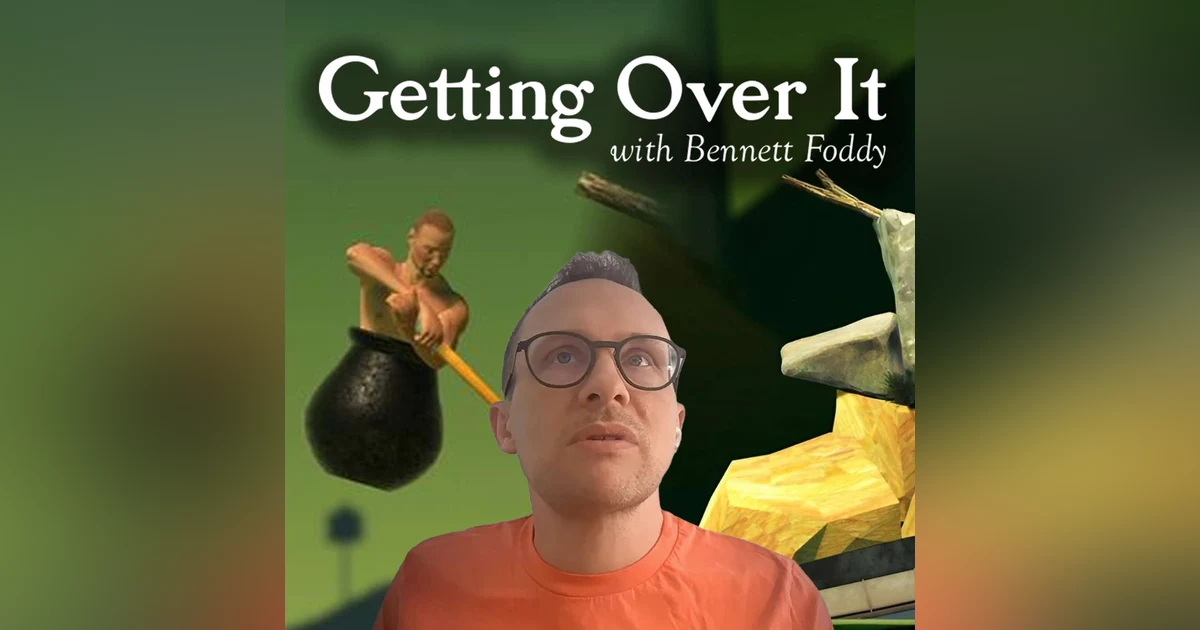
Send us Fan Mail Today I'm talking with Bennett Foddy, creator of QWOP, GIRP, Getting Over It with Bennett Foddy, and co-creator of Baby Steps. Bennett's games are known for torturing players, but today I get to deep dive into the philosophy behind his design choices, and they run a lot deeper than you might think. Bennett is incredibly thoughtful and considered when it comes to players, which might surprise you considering the challenges he puts in their way. In this interview, we talk a lot...


Today I'm talking with Bennett Foddy, creator of QWOP, GIRP, Getting Over It with Bennett Foddy, and co-creator of Baby Steps. Bennett's games are known for torturing players, but today I get to deep dive into the philosophy behind his design choices, and they run a lot deeper than you might think.
Bennett is incredibly thoughtful and considered when it comes to players, which might surprise you considering the challenges he puts in their way. In this interview, we talk a lot about player expectations, the value of difficulty in video games, and what he hopes to give players who persevere with his games.
#gettingoverit #babysteps #bennettfoddy #gaming #gamingpodcast
The Examined Game
Each week, host Steven Lake asks the creators behind some of the world’s most influential video games about the meaning of life (in video games), leading to conversations about the personal and creative impact games have had on their lives.
Some of the things that I've loved the most hearing from getting over it players are things like I was so full of rage and I was breaking my mouse and I was stomping around, punching the wall, and then at some point that all lifted and it kind of broke in me and then from that point forward I couldn't be enraged anymore by losing progress. And that's unusual, right? Like that kind of thing is not a reward that a game usually can offer. But I could only get that person there by holding them in this place of anger and frustration for a certain amount. I look forward most to things being released and getting to see people's interactions and responses. But in spite of the fact that that's what I look forward to the most, I don't enjoy it at all. It's a kind of a form of torture when it happens. It doesn't necessarily track how positive or negative it is. I don't find praise to be less painful than criticism.
SPEAKER_00People might be happy to hear that because think, oh, Bennett's in as much pain as we are playing this game. The creative guap, GURP, Getting Over It and Baby Steps, which was made in collaboration with Gabe Cazillo and Maxi Bok. Bennett is someone who is probably best known for getting over it with Bennett Foddy, which is an extraordinarily difficult game, and it's world famous among streamers as well. And then most recently, Baby Steps. I became familiar with his work way back when he was making games on Flash. Uh GERP, which was a sort of manual climbing game, was my first experience of his. And it's been really great seeing the evolution of games that he's been putting out there into the world and the way that players respond to it. It's such a fascinating conversation because effectively we're hearing from someone whose games are perceived as just basically being like punishingly hard, unfairly hard, really difficult, really frustrating, all of these things. But then to hear the sentiment, the forethought, all of the ideas that are going into making these games and what he intends for the player. It's such an interesting deep dive into, I don't know, the type of courage that comes from making a game that you know so many, so many people are basically going to detest and to do it anyway because there is a beauty in his games. I see that. Um and I think if you dig dig a little deeper behind just whatever the literal mechanics of the game are, what he's trying to get you as a player to feel it's something really special and extraordinarily unique. This is a brilliant conversation. Please stick around and please do subscribe. I would love it, love it if you would support me on my Patreon, which is linked in the description for free, or you can become a paying member.
unknownThank you.
SPEAKER_00I asked you to sort of let us know about you know what your kind of most played games are. Um I've I've had a chance to look at it because you sent it in advance, but I'd love you to just reel off some of those top names.
SPEAKER_03All right, absolutely. Um let me just call that up. So yeah, Noita. Um do you want me to do you want me to speak to them as I go down the list? Yeah, so I would love that.
SPEAKER_00And if you've got any sense of like, you know, how many hours is that? If you don't, that's all fine. But you know, just curious about your your dedication to certain games.
SPEAKER_03Yeah, I mean, as a general rule, I tend to dabble. I don't play games for hundreds of hours or anything like that. Uh my steam my steam stats are a little messed up, partly because um I often will just leave a game running when I when I go to bed, uh, or you know, something like that. So um some of them show really artificially high numbers. Plus, uh if I'm playing a game through development, uh, and there are a couple on these on this uh list that are like that, then I'll uh I'll tend to play more hours than I otherwise would. Um Neuter uh by uh Petri Puro and and uh and friends, um Arby Tekari and uh Ollie, uh whose last name I forget, or from uh or from Finland, uh one of my most beloved games. I have about 80 hours in that one. Um and uh you know that was a game that I uh was lucky enough to see Petri's first prototype for, something like ten years before it uh before it came out, and it's a very, very different format. Uh and somehow at the at the intersection of the types of games that I like to play for um sort of like comfort, uh which is you know things like uh roguelikes and um uh you know RPGs and that kind of thing, and the the kinds of games I I like to make as well, so things that are very heavily physics driven. It's like a physics roguelike, and there there really aren't many of those, and I think they just nailed it perfectly. If there was ever a game that was kind of felt like it was for me as a player, uh that was the one. Um second highest hours I have in Softbody, that's a game by uh ex-student and mentee of mine, Zeke Varant. It was his indie game that he made before going to AAA, and he's now the uh I think the lead uh gameplay designer over at Machine Games. They did the um the Indiana Jones and the and the Great Circle, which uh you know, which I loved. I really thought was was kind of great. Uh Zeke Zeke before that worked on um the hunter Call of the Wild uh uh for Avalanche software in in Sweden. Um and uh you know that's another game as kind of I it's not intended for people who are like me, it's kind of intended for people who like hunting, which is not me. Uh but I love the kind of open format of that game, and I love kind of being in that in that kind of space and and uh had some really great times um playing that game with friends, just trying to do photography rather than hunting. Um But yeah, Softbody is is is a game that I played a lot because I was I was um giving feedback on it uh over the over the years and um I still really love it. It's kind of a beautiful, minimalistic uh shmup. I don't have any other schmupps on here. Um it's a schmupp where you don't shoot, you just kind of move around and dodge and to a to what I think is still one of the all-time great uh video game soundtracks. So Dunk Lords, also by a friend Andy Hull. Um when I was uh working at NYU, I just played so many hours of this in the kind of multiplayer, the local multiplayer mode. Uh always giving feedback, uh, but you know, I have to count this as something like again, like 80 hours of of of play on on Dunk Lords. Um sort of like indie NBA jam. Um and you know, I I have a deep and enduring love of local uh multiplayer games, competitive games in particular, and I've made more than a few myself, so um that that was really one that resonated for me. And then the first one that I have no personal connection to is Catherine, actually. I played Catherine Classic. Came to this really late. Uh I was I was sort of interested as we were working on baby steps looking for um uh games to play for ref uh and and everybody said, well, you're working on this thing that's kind of about failed or problematic masculinity in a certain kind of way, and Catherine is sort of the poster child uh of of of existing games that uh uh that are playing in that zone. And it also is uh kind of a weird Soccerban, which is a genre I've played an enormous amount of and enjoyed a lot of.
SPEAKER_00Um, that's not a genre I'm familiar with as as much though.
SPEAKER_03Soccer bar, you know, block pushing games, puzzle games.
SPEAKER_00Okay, got it.
SPEAKER_03Um and it's not exactly a block push like a traditional block put pushing game, it's got its own weird set of rules that you have to learn. But I loved getting uh getting better and better at that and kind of exploring the the story, which is you know, it's about um it's about kind of systemic misogyny or something like that, you know, it really um uh really kind of goes to interesting places. I enjoyed that game a lot. And then after that, UFO 50, that's another one I was playing when it was in in testing. There's a lot of that comes up a lot when I'm talking with uh Yeah, well I mean even if you are a dabbler like me, you know, to dabble in 50 games actually puts a lot of time on the on the clock. Uh and I'm a longtime fan of of uh Derek Yu's and and and um and John Perry's games. Um and and that was uh you know was really it was really wonderful watching that kind of come um come into focus over time. Uh those are the top five. Uh I won't I won't give you the top 20. Uh but yeah, there's like it's I play pretty eclectically, you know. Other other things I'll just mention quickly on the list, it goes from Civ uh Civilization, which I play uh whenever I want time to disappear, uh, to uh Dark Souls, which I've which you know is really is a kind of a big game for me in terms of like uh finding a triple A series that kind of shared my sensibility in a certain kind of way. And Rain World, one of my favourite games of all time, but you know, like the the if I'm playing a linear format game like that, I don't tend to replay them. I I get through to the end, and then that feels like a complete experience to me. So uh it's further down the list.
SPEAKER_00When you say shares the sensibility, what does that mean for you? Because I'm sure there's a bunch of ways that that can be seen or interpreted, and obviously it's gonna depend on the game and those like you said it's a collector, right? Those are that's not just a list of top ten souls likes ever made, you know.
SPEAKER_02No.
SPEAKER_00So yeah, when you say sensibility, what are you thinking there?
SPEAKER_03I um think that a lot of game designers uh have ideas and they and they kind of filter them through a lens of um what will be uh possible for the player, what will be smooth, what will be annoying, um all of those sorts of things. And uh people talk about d Demon Souls, I guess is the first one that people really started to take notice of. Obviously, it comes out of a tradition of making Kingsfield games, but Demon's Souls uh it has this kind of uh sense of uh indifference is always the word people use. This is sort of like the world is indifferent to you. You're in a you're in a fantasy world that you are only kind of like a insignificant part of, you're not like a hero, and and there's a sense that many heroes have come and gone and died in this world. And but it's born out in the gameplay as well. Like there's if something um if something is hard or if something is is kind of not on a smooth difficulty curve. We usually have this thing, especially for role-playing games, where we try to construct uh uh an increasing challenge so that as you get better at it, the game gets harder at roughly the same speed, and you're always just kind of in a zone of kind of being nicely challenged, but with not being frustrated on the one end and not being patronized on the other end, and uh try to kind of hit this um this sweet spot. And I really felt like in the s in those uh in Demon Souls and in Dark Souls, it's just clear right at the beginning if if something needs to be hard, if something wants to be hard in the design, um to a point of of being frustrating, uh to a point of being enraging, they just let it be uh like this. And they're you know, they're these are these are games with incremental role-playing systems, so eventually you can kind of like cheese things or kind of grind or whatever. That's it's fine. It's not gonna break the game. It's designed so that it won't break if it's too hard for you. But they are they give you space to be uh to be frustrated, to be uh to rage quit, to uh to be confused, to not know what you're supposed to do next, to bounce off, to to let a lot of people bounce off. Uh I had come out of making games on Flash where people pay you nothing for the experience, and there you you potentially you either have zero players or you have a hundred million players generally. It's like there's a very, very sort of steep power law on on browser games. And uh as kind of function of that, you don't really need to care about making things comfortable for players, right? You don't need to care about difficulty curves or you know, kind of quote unquote good design or anything like that. Um if you if you want it, if you think it's more interesting uh for something to be spiky and difficult, uh or you know, you have a control scheme which takes forever to m to master or something like that. That's allowed, right? You know, you're not you're not in any sense having to worry about value for money or or the sense that people are owed something if they've paid you $60 for your for your game. And so my my sensibility had been to not worry about that, to kind of try to seek what what I felt was interesting uh in the game design and just to never particularly worry about whether people could play them. And and I really felt a sense of kinship playing Demon's Souls. Um just like an immediate uh recognition uh I I felt like watching. I mean I I you know, I I always say I I saw like maybe 15 seconds of a video of Demon's Souls, like a guy going up some stairs in the dark holding a shield, uh kind of turtling against the wall, and I was like, I have to have this. I just like immediately didn't have a PlayStation. I had to go to a new place that had import uh games so that I could get the Hong Kong English version. I just knew like um I had to I had to have it. Uh and so yeah, it was significant, significant for me in that sense. Because I think that that this kind of sensibility had existed, it's not just me, there were other people making kind of free games in this with this sensibility, and some of them I had kind of like been influenced uh uh by in the nineties and early aughts before I got started making games. Uh but I hadn't really seen it in AAA, uh at least not since the nineties, when uh when the last uh sort of like single or two-person um developers finally got uh kind of priced out of making kind of uh triple A full price games. Um it had kind of disappeared. And so it was sort of for me it repres represented a coming together where where I could uh where I could uh enjoy a triple A game that was doing similar things to the games that I really loved in the in the indie space.
SPEAKER_00I I I never thought about it like that when you're talking about obviously starting in Flash. And so then again, there's certain things that you're not necessarily or pressures you're not having to take on board when something's not you know, like said, it's like the cost parameters and all that stuff are totally different, right? And that that's so interesting to me. Because I think something I was curious about is like the evolution of your games, if that's even the right word. And you know, obviously once you land with someone like getting over it or baby steps, that's you know, evolved beyond you know um you know, paying platforms and people like buying these games, actively choosing to like invest their money in them, but you've sort of bought some goodwill um through what you've done up to this point where like and some ill will. And and a and a ton of ill will as well.
SPEAKER_03No, I mean it does cut both ways, because you know, for baby steps, for example, we were trying to make something where uh there there is an easy experience, so like an accessible experience in there if you want it. Uh but we I did I I think we did find that um there were a lot of people on the message boards being like, uh, I can't play Bennett Foddy games. And I, you know, so you pay it, you pay a price uh for it, uh for for that reputation as well.
SPEAKER_00I I think that's really interesting, and I I sort of would have maybe even said that about myself until I I was so I had such a strong desire to play baby steps. Um it was the same I got to speak with um Sean Velesco Did Me of the Hollower, which was you know said as like difficult, difficult, difficult. Um but I just I just loved the look of it so much. I was like, I'm gonna have to put myself through this because I'm not a sort of soul-zight player, and then I even your yours is one of the few games, except for like the big franchise ones that just drill into your mind that I've actually dreamed about as well. Um but anyway, what am I getting at? Um so I but I I wanted to play it, so I I I changed my tune on saying I can't play Bennett Foddy games, and and yeah, I'm I'm bad at it, and um I can't pretend I put tons and tons of hours into it, but I'd I'd love that you created something that was actually to to my mind to totally accessible. The only barrier is depending on which way, how do I want to immerse myself in this world? And it's like, well, yeah, if you want to go to the top of that big wheel, then then maybe you can't play this game. But if you don't mind sliding around in the mud, then this game's for you, Stephen.
SPEAKER_03Yeah. Well, I mean that that and that and that fed some of the uh kind of narrative ideas in that game. It's really the this sort of idea that uh here is a world, and you know, some of it is easy to traverse and some of it is is not. And um we will never tell you you have to traverse the hard hardest parts. Um but uh if if you if you feel it's necessary, that's kind of on you. And you know, that's that's that was a very interesting kind of space to explore because you know, as a player, I I sometimes play leaned back, and if if there's like a challenge in a game that seems like annoyingly hard to me, I'll just skip it, and I feel no uh no kind of way about that. But sometimes I have to do the hard thing. Sometimes I I kind of like fixate and I and I have to do it in that way. I think it's a very interesting uh aspect of um of what it means to play a game and and what motivates us when playing games to to think about how we decide uh which kind of difficulties to to take on, which ones are for us and which aren't. And there's a certain kind of player who's like, everything's for me, uh, who gets quite angry at the idea that something is too hard for them or uh is too unfair and that that they can't access every part of it. Uh but most people are somewhere in between totally relaxed about missing some of the even even challenges that have that don't gate any content, that don't have any story at the end of them, or don't have a reward. Um people have a range of orientations to to to how essential they feel it is to playing a game. Some people have to 100% a game to feel like they played it at all. Um and that's interesting to me. That's like a that's a thing I think we we wound up um exploring in the narrative, and as we start to see people kind of playing it and having different orientations to these challenges, it started to be like something that we wanted to to reflect in the in the kind of narrative beats for that game. Um yeah.
SPEAKER_00You you said some, you know, and again that you said you know this this idea of worlds that are sort of indifferent to the player to some degree. Um but at the same time, you know, I I had this great interview with uh chat with John Ingold, did like 80 Days, Heavens Vault, you know, and talking about that we as players I think struggle not to be at the centre of the world that we're put in. And this idea that that maybe that's to go deeper on it, that's coming from a place like we we don't think we're enough, you know, unless we're at the very centre of it. And he his thing is like you're enough, you're good enough. Um and that comes to mind, and I get this feeling like with your game, certainly like with with getting over it and the monologue, um it it's I I don't know this paradoxical, but like whatever way you spin it, someone is potentially introducing themselves to something that's extraordinarily could be extraordinarily difficult. Um whilst at the same time it feels like every step of the way you're kind of just trying to encourage someone to kind of like go gently on themselves and gently on on on the the on the game, but then people can't a lot of the time people aren't capable of doing that and become quite frustrated quite quickly. But I don't I'm not trying to put blame on the us as the players themselves, but I know sometimes I need to say, well, is is better really asking this of me? Or or am I just free to kind of chill in this space?
SPEAKER_03Yeah, I mean I I think that's one of the things that I think about a lot is um where is motivation coming from when you're playing a game? You know, we talk about uh intrinsic and extrinsic um motivation. The sort of the idea, I guess, it's not really usually interrogated very closely by game designers or by players for that matter, but the the the very rough idea is that intrinsic motivation is like there's something about the playing of the game that is motivating you to play more, right? Like maybe it's pleasurable moment to moment, or maybe uh curiosity is driving you forward. Um, maybe a sense of of of of mastery is is creating a satisfaction quite apart from whether or not you're enjoying yourself. You know, there might be all manner of different uh motivations that are intrinsic or kind of inherent to the uh to the gameplay, to the game itself. And then there are extrinsic motivations. Which we often would say are things like achievements or high score tables, cash rewards, there might be any number of things which are not natively part of the gameplay. Now of course in reality it's not as clear cut as that. Is an achievement intrinsic to a game? If every game on PlayStation has to have at least 11 trophies, then maybe there's an argument that it is part of the gameplay to kind of trophy hunt, right? But I I got very interested in having players ask themselves why they're playing and where what is it that they're looking for when they're playing and to kind of zero in on it. Because uh well for a range of reasons, but but but but chief chief among them, I think, or at least one of the main reasons that I'm interested in that is because my games, I think, I want to be able to offer uh games that have a non-standard array of a uh of rewards. Um if if some of the things that I've I've loved the most hearing from Getting Over It Players are things like uh I was so full of of rage and I was like breaking my mouse and um you know I I was I was uh stomping around, punching the wall, and then at some point uh that all lifted uh and it kind of broke in me, and then from that point forward I couldn't be uh I couldn't be enraged anymore by losing progress. And and uh that's that's that's unusual, right? Like that kind of thing is not um is not a reward that a game usually can offer. But I could only get that person there by holding them in this place of of of anger and frustration for a certain amount of time.
SPEAKER_00Um I don't think you think of like a really old school form of like, you know, therapy from like the 30s, you know. Yeah, it's gonna electrocute you until you uh get your stuff together, you know.
SPEAKER_03But I mean I I feel like I I always um you you hear from players who have uh who bring with them baggage from uh from other games, a bunch of expectations about what it is that they expect to be doing, what they expect to be getting out of uh a game. And you know, a simple example is is is players who want to see 100% of the content and get 100% of the achievements, right? They want to get the max gamer score. And that's fine. I mean, this is just one example. People have all manner of different approaches to this stuff. But I maybe I'm just perverse, but when I get players coming to my game who are achievement hunting, I just want to disrupt that for them a little and get them to be aware, I want to point to and have them be aware of other reasons for playing games. No, I don't need them to commit to that if they want to stay as as like achievement-oriented players, that's that's great. But I also want them, when they're playing my game, to just just to look for a second for me to say, hey, yeah, actually, the range of of reasons for playing game is so broad, and the kind of sort of classic constructions of completion, mastery, and fun are great. I mean, I play games for those reasons too, but I also play them for other reasons. And I I I as a as somebody who thinks of himself as an artist, I want to be able to orient people to other reasons for playing.
SPEAKER_00I love hearing that about people getting past, yeah, breaking through a certain barrier if you can push them enough. And again, it's like, you know, again, I'm not like the best gamer in the world, but like I said, something like Mean of the Hollower, which I found extreme, extremely difficult. I found myself addressing a form of gameplay which I hadn't been willing to touch since I was like 12 years old, which is you know, back when you're like when playing on my um Sega or whatever, a game that I can't save scum and is gonna be punishing's not the right word, it's just the way that it's made. Um, that the you know, I threw my controller at some point at the age of 12, and I never picked up a certain game again, you know, until a couple of decades later. And again, I I got to push through that pain barrier to hit something, and then finally I was like, now I get it, now I get the allure of the souls.
SPEAKER_03Like, yeah, well, it's not just that you're accessing a sense of satisfaction or pride or mastery or something like that. Of course, that's in the mix. But I think that for me when I push through on a difficult game, I access a bunch of things that are not accessible to me when I'm playing leaned back and I'm playing in a kind of comfort-oriented way. Uh, and it depends on the game, right? You know, I haven't played Mean of the Hollower, but when I um when I push through on Rain World, having kind of bounced off it five or six times, and I decided finally I'm gonna bring my full brain and I'm gonna bring a full amount of effort and I'm really going to to to try to uh to get through this. Um it opens up uh dimensions of beauty that come from, I think, uh roughly that there is a sense of reality, uh a sense of of weightiness given to the events in the game by uh my struggle to to get through, right? By the um there's a sense in which um I was trying to explain, let me take a little uh let me take a little diversion here. I was trying to explain yesterday to my wife why uh tabletop role-playing games have dice. Now I'm not a big TTRPG people, some of them, if they're listening to this, may howl at this description. But to me, one of the big reasons why we roll dice playing DD or any other tabletop game is to borrow a sense of reality from the dice. You roll dice, there is a fact about how they could have come out and how they came out, right? Like there is a a hard fact that isn't established by either the player or the dungeon master making a choice, right? So, you know, just take it to the simple level of of uh when we're rolling for the the character creation, we're gonna roll stats for for the player. And we roll three dice, and it uh I was hoping to make an intelligent uh arch mage character, but I roll a three for intelligence. And this like this is like taking a fact about something that happened in reality dice, and I'm borrowing that to make it a fact that happened in the game world that um that that we got unlucky in in in life and we were born stupid, you know, like so um that's something that uh that games need is is is a feeling that of non-arbitrariness because because by default everything that happens in a game is the arbitrary, capricious choice of the designer, or even like a like a genre default or something like that, or maybe it's it's it's in some cases the the capricious behavior and choices of the player. And in order for the events that happen in a game to matter, we need to find kind of sources of of ground truth, sources of of reality that feel uh given to us and not chosen, uh, if if that makes sense. Um so games that are um that I that I must struggle and try again and kind of really bring my full self in order to overcome them, gain a sense of uh it it mattering at the end that I beat it. Not because I big developed skills and became masterful, but just because my struggle was real, right? Like even if I never got any better at it, and even if it just took me a million tries and it was just kind of dogged perseverance, which is how honestly that's that's how I get through Souls like games, is dogged perseverance and cheesing. It's not really by getting good at them. Um that's real, right? Like and that that part of it is real, and um we're we're just we're just seeking that in games. I think there is a sense sometimes I play a game that's that's too easy and uh it sort of feels like I nothing happened, you know, like that that that nothing really um took took place. And uh yeah, that's so so so so it is something in that sort of in that sort of space for me. That that's something that I'm that I'm interested in is is um just a sense of weight, a sense of things mattering, uh sense that it mattered at all that you played a game. I don't always need that. Sometimes I can play games that are popcorn y, where it's just simply a matter of like zero nutrition uh comfort that I did for enjoyment. I of course I like everybody I uh who plays games, I have I have some that are that are in that zone. But those aren't the things that I value the most.
SPEAKER_00And do you make how do you make peace? I mean, maybe you make peace very quickly and easily with this, but knowing that the huge wave of people that aren't gonna see that see your games as that. They'll just say, well, this is the guy that makes he's just trying to make the most difficult game in the world. And that's that's as far as um it'll ever be perceived or understood.
SPEAKER_03I mean I'm I'm empathetic to that. I think uh the th the th obviously something that that I talk about with my designer friends a lot is that it's so hard to play a game, right? Even imagine the easiest, smoothest, most smoothed off experience. Uh and uh imagine it's on a store that already has like my credit card details in there and it's on a console. Even then, like downloading it, right, learning the rules, going through the tutorial, playing like you know, it so much relative to most art forms, so much effort goes into playing a game. I'm not gonna say it's the most effort, you know. Sometimes reading a difficult book takes even more effort, for example, but it's a it's a lot. And so and it takes a long time, like reading a really dense, difficult book, to really play a game. And it's kind of miraculous that anybody's willing to bring that, uh, you know, that that that there are enough people who are willing to to to bring that level of effort and trying to to a to a game even once. Um when we when we look at a game and we see a screenshot or a video, or somebody tells us about it in a conversation or or whatever it might be, we might read a review. There's some kind of difficult to describe process that goes on in our hearts where we decide I'm gonna devote you know 80 hours of active trying to this thing, of, of, of high thought. I'm gonna do the uncomfortable thing, which is to turn my brain all the way on and and try to learn to do this thing and to get good at it. And I'm gonna I'm gonna, you know, it's really gonna bring myself. Um and we try to understand what it is that makes us do that for one game and do it not just absolutely refuse for another. Think about trying to get if you can have a friend who trusts your taste, who who loves you and wants to kind of like have things to discuss with you, and they're super motivated, they love similar games, and you say, Hey, I found this game, it's so for you. I really love this, I I recommend it with like great force. I'll be angry if you don't play it. Like you can try to bring as much uh pressure to bear as you like, something that I do all the time to a enormous fault with my friends, and they still won't play it, right? They're completely impervious uh to the recommendation. Uh which just shows, I think, so how strongly by default we so strongly don't want to play a video game. Yet sometimes for a small portion of them, you see just a glimmer of them, right? Just a screenshot, just 15 seconds of video, and you're like, I'm I'm that's for me. And and yet so um I know that for any given person with any given game, it's so rare that that connects, just that the market is huge, right? There are so many games and there are so many players, right, that it does happen all the time every day. But for any given pairing of a person in a game, it's vanishingly unlikely that they'll feel this and that they'll want to put in that effort and time. Uh and so in a in a sense, I'm just grateful whenever it happens, right? And it's it's it's also uh to me, having spent so much time trying to understand how um how things connect in that way, how a how a game that's perfect for somebody and the perfect person who's perfect for the game can connect or fail to connect, and and struggling to understand it, it still feels very much kind of ineffable to me to understand what makes that click or not click. And I feel like anybody who could really understand it would have billions of dollars in in game revenues. Um but that's to me, uh yeah. I don't I don't hold high expectations, and certainly I mean the lesson for me of making getting over it was uh this thing that I was sure would connect with almost nobody. I was sure there would be like a very small handful of passionate sickles who liked it. Uh I was confident in that. Uh but I had its level of popularity wrong by literally a thousand to one in my in my project projections, which is a crazy way to be wrong. Won't be many predictions you make in your life that are wrong one thousand to one. That that's so catastrophically off. Uh it just goes to show uh I'm I'm uh clueless about about how to predict this stuff, how to how to really understand it. Um but I'm fascinated and kind of captivated by that problem.
SPEAKER_00I I I I think that's something I'm almost always trying to get to the bottom of with these interviews, especially if I'm talking with, you know, like Alex or Kelsey Beecham from Outer Wilds or Edmund McMillan, Binding of Isaac. These games that were not predisposed to being gargantuan in their appeal and gargantuan is maybe too big a word, but you know, that they would have this way broader appeal than whatever the expectation was on making the game. And then there's this sort of I mean it's a kind of magic source that you said you can't really bottle that because there are games that are being made with so much cash and so much oversight and so many resources that that can just crash and burn. Um whereas when someone's I don't know if this is how you would describe it, but say like when I speak with Edmund, it sounds like he's he's sort of pleasing himself and he's doing that to the nth degree, and it just so happens that he's made a piece of content. I mean, I I'm kind of describing like literally pr pretty much every great piece of art I think ever made, right? When like if you please yourself, well then maybe there's at least one other person in the universe that has similar taste to me.
SPEAKER_03You might look at Edmund's uh games and you go, wow, this guy has incredible uh hit rate, because he's had three uh big viral successes uh at this point. And um that's that's definitely there's not too many people with three. Um so but then you you realize actually if you look at his Irv, he just has you know dozens of games, most of which are really, really niche. Uh and so even in even in the case of somebody who has uh this kind of Titanic level of of success, it's not um I think you're right that he does just sort of try to please himself and uh and it either resonates or it does it it doesn't. And I would go a little further to suggest that of of the the his three biggest things, the binding of Isaac, Super Meat Boy, and uh Mutenics, uh it's not even like there's that much similarity between those games, right? You know, maybe maybe Isaac has a little bit more in common with Mutenics, but it's more like a production methodology at some point and not uh not even like a sort of shared um gameplay design or anything like that. And there's a shared sensibility. I think you're exactly right. I mean, I don't think I don't think Edmund I I know from talking to him that he he worries about popularity. He wants his games to be popular. We're working in a popular form, uh, and I think most designers um can't be completely satisfied with critical appear with critical praise or uh peer uh recognition or anything like that. We want our games to be popular, so I know he worries about it, but I don't think he designs toward it in a certain sort of way. Um not that you can't, uh and not that I don't think about those things, but I think that my um my experience has been that whether I attempt to shoot for popularity or not doesn't have a strong impact on whether or not the games are popular. For me, I mean it's it's I don't know if Edmund feels the same way, but um it's not enough just that they're popular either. It's that I want to make something this is so conceited, and uh, but I have to kind of cop to this being true. Uh I want to make things that oughtn't to be popular, that that have the shape of something that's obviously niche and obviously uh a little too thorny and difficult and uncommercial, and for it to be successful. That's a that's a thing that I've had a taste of a couple of times. And uh it's a it's it's a difficult uh drug to to let go of because you feel like as a designer that you are having an impact on the culture when that happens, right? Like that's that's what I want is to uh is to shift people's taste. Uh and um yeah, that's it's it's uh it's intoxicating when that happens. But I can't say I know how to make it happen, it's just what I what I um what I hope will happen each time.
SPEAKER_00Have you had the chance to hear from you know other developers that are very fond of your work? And and again, I think that word sensibility comes to mind where I'm not talking about people wanting to iterate on and do copycats of what you're doing, but that they're getting some inspiration um from what you've done, and then applying that sensibility to whatever genre or game it is that they're they themselves are making. Because I certainly have that with with filmmakers and video games and books and all sorts of places that wheedle into my my work right where other people who've come before then give me the opportunity to do my best work.
SPEAKER_03I think that there's there's two different ways that I experience this happening or not happening. Um on the one hand, there's there's just I get emails from uh from developers, especially junior developers, new developers who are uh are trying to do something in a in a genre which is which um there's this idea that uh that getting over it is is kind of like uh starts this genre of like so-called rage games or or whatever, right? Uh and in those cases it's people who are just saying, yeah, I was inspired by your game and this is what I made and check it out and they want me to look at it, and and that's great. That's kind of very direct. Um as for more um the more kind of diffuse type of influence, it's it's harder to say. I see that more in cases where people are resisting it, you know. I'll uh I was I was trying to um I was talking to to Mark S and Mes Meshoff, um, who made Wheel World and put that out uh last year. And I was talking to him reasonably kind of in the middle of development on that. I was like, you know, I I I really like this, but I I I wish it was harder to ride the bike. I wish I could kind of fall off the bike. I wish I could, you know, struggle more with the pedaling of the bike. Um and he said a thing which uh you know people have often say to me in these sorts of conversations, but this is just an example that sticks in my mind. He's like, Yeah, that's fine for you, right? And so there's this idea, well, you know, Bennett can do this, but that's not what the rest of us do. It's sort of surprising to me because I think. That that Mark's work uh in in his kind of game maker era, his Flash Games era, and his you know, early part of his career, were a huge influence on me in this regard, right? He made these games called Punishment One and Two, um, which are embracing uh uh sort of uh masochistic play uh in in one of the most intense ways that I've that I've ever seen. And so for me, I kind of think if anybody uh can can embrace uh friction in design, it would be him. But he's no, he sort of views it as kind of being out of bounds, and I think um that's he feels like uh like I'm doing somehow I'm doing uh different kind of practice to what he's trying to do with his uh with with with his his his higher budget work. Uh so yeah, I that's where I hear about it, is where people are choosing not to be influenced or to not uh in this case. I guess I having taken influence from Mark, it would be a kind of a cyclical influence anyway, if it were to happen. But yeah, I think I think people rule it out a certain amount of the time.
SPEAKER_00Interesting. And then I'm wondering, you know, like you said that sort of the addictive sense of trying to like land something in that way. I'm I'm curious for you, what is and my experience of the most if someone asks me like, well, what's the most satisfying part of you know when you make a film, you know, or put something else? I usually think, well, whatever it is, it's so fleeting that I'm not necessarily sure that I identify when it happens. Um but I'm curious for you if that through both the development process and the release release process, if there's a point that you look forward to most, or when it comes, you just get the absolute most most satisfaction from.
SPEAKER_03I look forward most to things being released and getting to see people's uh interactions and uh r responses. But in spite of the fact that that's what I look forward to the most, I don't enjoy it at all. It's a kind of a form of torture when it happens. Uh that is a kind of funny paradox of working in the arts, especially in small teams or by yourself, is um is the way that these things kind of uh come apart, right? Like there's this the you've got these kind of specific hopes for the sorts of um things that you'll see, the evidence that you your your work is kind of functioning in the way that you wanted it to, culturally, emotionally, you know, like personally for people. And seeing the impact it will have on the world. And and then I can barely look once the game's actually out there. It's kind of like it's sort of I don't know if it's too intense or if it's um it's somehow it's returning me to a place of of of intense struggle when I'm looking at that, but it whatever it is, it takes me quite some time to have enough distance to be able to enjoy it. So where I most enjoy thinking about and talking about my games is uh when they're either sort of mid-development or when it's years after the fact, you know, once I have that distance. Um and you know, uh it doesn't hurt that by uh the time a few years have passed, I tend to have a very different understanding of what it is that I was doing and um and and what succeeded and failed in the work, right? So I I I have a drastically different reading of getting over it now than I would have had on release day.
SPEAKER_00And you say bear can barely look at it, but I guess I'm curious how often you sort of lift the lid. And you know, that my experience is there's there's many ways to engage with or to see uh to see how an audience is engaging with your your work, be it say watching someone literally standing next to someone playing your game, or say my experience getting watched a move my my films in a cinema with with people versus reading lengthy lengthy Reddit threads um and everything in between. I'm curious what you like to engage with, what you hate to engage with, but you do it in a way.
SPEAKER_03I was describing it to Michael Brough the other day as um like a sipping alcohol, you know. So I I I will look. I'll I'll kind of like peel away the top layer of a of like the first few seconds of a YouTube video or the first line of a Steam review or something like that. Kind of sip it and uh taste it and kind of be like, how uh how poisoned am I right now? You know, uh not too poisoned, I'm okay. I can I can read a little more of this and then I'll kind of read more of it. I read one or two reviews, I'm like, alright, how how poisoned am I? Or I'm starting to get a little poisoned, you know. Might be time to stop this and put it away. Um I think if I tried to do the fire hose thing in that situation, I would be a major uh emotional health uh risk for me. And so I've I've always felt just this sense of like I'm gonna just sort of titrate an amount where I can be aware of how this is going over with people and how they're responding and have a kind of a rough idea. When getting over it came out, some of my closest friends were like, um, let's have a party, let's go out, uh, and we're we're gonna watch streams of of streamers playing the game. And they had a great time, but I was like, I just can't I can't join for this, you know. I can't look at even three or four seconds of streamers playing this game. Uh and you know, I I I now can. Um you know, a year or two ago I we had a a nine-year-old visiting uh our house, uh kid of uh some friends who um huge fan of of Queso, the streamer who loves streaming, getting over it. And he really wanted me to play it as like a kind of a real life uh streaming situation. I was just forced to it's like it was not that bad. I enough I have enough distance now, but there was a time when um that would have just been torture for me, you know. But so so so we we m releasing uh large projects into the world is is a kind of a wound. It's a it's an injury that you take, and then you have to heal from it. And then having healed, I'm sure you feel the same with your films in some in some kind of way. There's a there's a point at which it can start to feel healthy and sustaining to engage with it, but yeah, it's tough. I get too close to things, I think.
SPEAKER_00And I'm curious, you know, when you say about that poisoning, if it's a brilliant analogy for it, is that is that r gonna be relative to what's being said, as in like exposing someone someone saying like I hate this, da-da-da, or is it more about how you're interpreting it, regardless of what's how they're what they're talking about? Does that make sense?
SPEAKER_03Yes, it does. I it the the answer is it doesn't uh necessarily track how positive or negative it is. I don't find praise to be less painful than criticism. Uh it it it it's weird. I mean, why would anybody continue to do this if uh if it feels that way? And I I I can't explain it.
SPEAKER_00Uh I think that quo of I I find praise as painful as criticism. People might be happy to hear that because they think, oh Ben it's in as much pain as we are uh playing these games.
SPEAKER_03I've been lately, over the last few years, I've just made a point of always just reaching out to friends who have released things, being like, hey, hope you're hanging in there, hope it doesn't uh hope you're feeling okay. Um and I have found that the longer that people work on something, the the the bigger, the bigger the timeline is, the worse the the postpartum is. And I don't really know anybody who just feels uh feels great. The only hack that I've seen uh people manage to to kind of put on top of this. Um my friend Kenny Son uh and AP Thompson both have this kind of uh strategy of um getting the next game kind of like well underway before the launch of the previous game.
SPEAKER_00What do they work on?
SPEAKER_03What is the Kenny had a a huge hit last year with a game called Borlex Pit, uh which and um but has a like a long he his one before that, Mr. Sun's Hatbox, and then there were there were um you know he's made uh you know tens of games uh since I've known him. And AP uh released Titanium Court um more most recently and and then last year um uh was one uh w one major person working on Consume Me with Jenny Chassia, um which had been the previous sort of six years or whatever, but um they both had the next thing rolling even when their their most recent games uh came out. I think that's a way to protect yourself. Like uh you could stay in the kind of like the easy breezy part through release. Uh, but you you have to be a real workhorse to be able to do that. Both of both of those guys have uh uh powers of of concentration uh that I don't have, you know, powers of of focus. Uh uh but that's the only uh kind of hack I've seen for avoiding really strong kind of post postpartum problems on big projects.
SPEAKER_00And it just brings to mind, you know, and it's one of those things I'm always curious about trying to get my head around is a creator of of any art form has such a wildly different um experience to the the audience, the player. That's right. And I think it's so much more the disparity between those two things of people is is so much bigger than we can ever really understand. I remember gonna see Brace Nellis talk about American Psycho, and the way he talked about the book was like this is a completely different it's it's it's as if we're I'm I'm thinking about a completely different book to him, but it's the same.
SPEAKER_03Yeah, so but for game designers, this is even stronger in a way because their relationship to players is adversarial. Uh in some cases more adversarial than others, definitely. Um I've kind of embraced that in some of my work. Uh, but I think even if even for somebody trying to make the kind of smoothest, coziest sort of uh game, it's still inherently uh an adversarial relationship. It's like it's it's adversarial if I set up a um Easter egg hunt for for kids in a certain way. You know, I want them to find the eggs, right? So it's collaborative in that sense. But I'm hiding them. Hiding is uh hiding an object is an adversarial activity. I'm I'm seeking to obscure it from you. I'm seeking to make it that it's harder to find the eggs than it would be um if I just put them in a bowl, right? It's just it just is adversarial. And I think that everything uh about games, especially uh single player games, uh is maybe is kind of less true of if I'm if I'm maker games. But if I'm making single player games, there is just there is just this thread of of of of distance between the the designer's experience and and the player's experience. Everything that I put in there is kind of like considering uh adding a little friction, adding a little bit of resistance, and some games have very little of it. But there's very few single-player games that have no friction and no no resistance at all. So uh so yeah, I we're we're apart in a certain way from from players um in a way that I don't know that that uh maybe maybe filmmakers feel this toward toward their audiences. Um I I think probably some of them do and some of them don't, but it just really is inherently there in in in games, I think.
SPEAKER_00Obviously it doesn't work it doesn't block you know the the creation of good work nor the the um uh consuming of it either. It's just one of those um infinitely sort of interesting things.
SPEAKER_03I would yeah, I would say if I imagine myself making a I've never made a film, but if I if I imagine myself making a film when I watch the cut back in the edit suite or when I'm kind of even just writing the script treatment or something like that, I expect that if the scene is sad that I'll feel at least a glimmer of that sadness. Uh and so on and so forth, right? Like there's a there's a kind of at least a directional similarity to how the the the creator is feeling about the work. But if I'm creating a kind of a diabolical puzzle or a very frustrating piece of level design, I don't feel any frustration. At most I feel guilt, you know, like I feel a kind of uh I feel a little bit of uh Schadenfreude, a little bit of of of kind of triumph over the player. I might feel a little bit of uh of malice, uh, but I also feel kind of overwhelmingly sort of empathy and and and and guilt. Uh it's it's different. Feeling guilty for put giving somebody a hard time is different than feeling frustrated that somebody has given you a hard time. These aren't uh these aren't directionally the same, I guess. So um yeah, I think the for games is just a little different in this way.
SPEAKER_00Um and I'm just wanted to talk a little bit about intent or the North Star of say Baby Steps or getting over it, um, outside of literal gameplay mechanic. But you know, these these um these games have a sort of meaning behind them and uh trying to communicate something to the player that they're gonna ideally take away uh take away with them, right? Um I'm curious where that starts to wheedle its way into the development process. If it if it actually comes first or if it's built alongside or if it's afterward.
SPEAKER_03So it's diff y yes. I mean I think that both for baby steps, at least for my piece of it, I can't speak for Gabe and Maxi, but for for my piece of it, uh and certainly for for getting over it, um there was a sense the whole time um my my work on those games was was motivated by a kind of a uh sense of wanting to say something in particular to to the players. I think baby steps we worked on for long enough that that what I wanted to say was it changed over the years, but not not night and day changed, it was more, but um it it the nuance of it uh shifted.
SPEAKER_00Which which was what?
SPEAKER_03If you're happy to just talk about it from your for yeah, for my part, I mean and uh you know I I w I did you know did talk to uh the others about this a a lot. I mean, you know, it was part of of of the kind of conversations uh about it. Um so for for baby steps there's there's this idea of um it it's you sort of using a uh a structure or a kind of a uh motif from Pinocchio, right? And Pinocchio is is a morality tale about being a good child who's obedient and who works hard. And um we were interested in um inverting or resisting that and um making more of a a story about self-acceptance and over time I think the nuance that you pick up over that is that it you you you have a kind of a default gamery orientation to hard work, right? Like there's this get good sort of thing. Even for people who aren't like kind of hardcore get good gamers, I think it's kind of just there in the background or it's kind of inherent in the in the format in a certain way, because I'm like here is a goal and here is a kind of a test, and we'll kind of like objectively tell you whether uh whether you succeeded or failed in in that test, right? So it's kind of like encouraged just that structure by itself encourages a sort of uh uh success orientation. Um and we're interested in playing with that by kind of like tempting you into and out of uh results orientation uh in that game. And uh that was definitely there from from early on. Uh just just somehow like um play tests tended to to kind of like strengthen that connection as well, because we would see people playing in certain sorts of results-oriented ways, um and uh and not in um sort of like mindful uh in the moment kind of of ways. And so uh it's not a game that prevents you from playing in results-oriented ways. In fact, you you can um of course uh really kind of go deep on that, but but the the idea was sort of to be asking the player to question that the whole time, like, hey, notice what you're doing, you know. And I think that I was working toward a similar idea in um in getting over it, which you know I I I didn't necessarily go into it with total clarity on this, but by the time I get to the end of writing the narration on getting over it, you can sort of see that that concept is is in there. I'm trying to get um for that game, it's a little bit different. I'm trying to get players to to to who I anticipate complaining and and and moaning about about senses of frustration, of anger. Uh I I'm trying to get them to kind of admit to themselves that that that's part of the kind of conception of of of what's continuing to get them to play, that it's part of what the the it's part of the reward that that sense of of sort of cyclical buildup and stress and frustration and relief is is what they're there for, right? Like that's that's where the narration for that game goes. I got there uh uh I think over the course of of the design of that game and over the course of of recording the narration, the the sort of starting point was simpler. Um it was just to broadly to kind of question why you're why you're again why you're playing a difficult game, um, why I would make a difficult game, why and sort of like seeks a game that seeks to explain itself in a certain way, because I felt like it needed to, right? Like why I was having so much difficulty getting my uh my my designer friends to play it. Anticipated having similar difficulty getting players to play it. Uh I felt like it needed to kind of give a defense of itself, and and so I was uh working with that idea uh sort of relatively relatively early on. Um so yeah. Uh the yeah, so in but in the in the I guess the kind of broad answer to your question is um for those two projects, this stuff was really foregrounded, right? Like in my mind. Uh in earlier work, by and large, it was kind of smaller, smaller scale and was kind of done more quickly and more feverishly. I didn't really have time to think about that stuff until after the fact. Uh it's only in sort of adopting a kind of a slower pace uh uh that uh that you have time, right? Sometimes you you you'll get interrupted or you'll go on holiday and you have like a month where you can't work on something and it's really at this unpacking time, you come back to it with more of a sense of why you're doing it. Um that's actually conscious and kind of held in your mind. But uh when you're working on something for one month, uh there's no time for that. Uh doesn't mean that none of the that that sort of thinking is feeding in, it just means that it's it's maybe not fully unpacked and digested. So yeah, it changed. It changed as I've kind of gone toward uh making larger scale work. But uh I'm now in a place where I need to do some small things for a little while uh for my own um enjoyment. And uh we'll see, we'll see uh how uh whether that rhythm changes back at all.
SPEAKER_00And and what it I mean, with maybe not. To or want to talk about specifics, but then I don't have specifics to give.
SPEAKER_03I I'm I'm in a place of of of making prototypes at the moment and uh and exploring ideas and uh trying to figure out uh what the next thing is gonna be. Um and that will probably manifest itself as some kind of small games. Um but yeah, I'm not I'm not uh I'm not even far enough along to have anything that's particularly promising. So um but yeah, it just it it it takes time. Um Baby Steps took uh took so much out of all of us, I think, that uh that it's um it's the kind of game you really need months and months to to to get back to to having good ideas and to thankfully I've been lucky enough to be able to be in a position to take that time. Um but yeah, I'm back I'm back in in a sense of feeling excited for for making stuff, but it that doesn't uh that doesn't necessarily manifest itself as having good ideas right away.
SPEAKER_00So it sounds like a nice place to be, or at least I I certainly enjoy that. Yeah exactly that that part of the process. Um great. I really enjoyed this conversation. There was one thing I just wanted to say, which was my absolute favorite part, and it gave me away as a player for for baby steps, which is at the beginning where you you meet the guy and he talks about the map. He's like, Oh, did you not get a map? And for that one beautiful moment, you get the little mini map hard. There's like a horse nay, I think, and there's the question mark icon. And I was literally like, Oh, this is gonna be great. This is like I think I'm gonna be I'm gonna have a good time with this because there's the question mark, I can just beeline and then it just disappears.
SPEAKER_03Yeah, but how do you how do you get people like we we had noticed that so much of the fun of the game was in root finding, right? You're looking up the mountain, being like, how can I get up there? And that's a pleasure that's just denied you in most open world games, or basically all, uh, because you have a map. And um, but it's it's tough to to take players who have played a million open world games, and they've always, since Skyrim or since Oblivion, they've always had a map, and they've always had an indicator on the map, and they've since Skyrim at least, they've had quick quest markers on the uh on the map to tell them so they're never really even wondering about where they should go or how they should get there. There's always fast travel. Um, I love those games, but they're they're leaving a lot on the table, right? Like the actual how do I get from here to there is is is good stuff. Like that's that's good. That's that that's and nobody's nobody's serving it up. It was like that was a uh easy choice, I think, for us was no uh was no map. Uh but of course players games give you so many expectations because they tend to go through waves of being very orthodox on any given topic, you know, for a little while. Uh there's a period of time for PC games where everything has quick save, quick load, like F5 and F7 in every game, and it's just like an absolute ironclad orthodoxy where you just get absolutely pilloried if you don't do that. Um and then they go away, right? Like suddenly, you know, it's as though we never did that. You know, it's it's it's as though you uh people hate that. And um if you want to buck those trends, you need players to understand why you did it. And even then you should expect to be like like you should expect people to be angry.
SPEAKER_00Well, I thought that was a beautiful example of like it was a it's a funny joke, and then it just kind of like set me up. I I I think in that moment I've worked out everything I needed to know about how I was gonna engage with this game, and then exactly that. I like look up, I was like, Well, there's the next thing, and then I can't make it, and then I'm on my way.
SPEAKER_03Yeah, and then I mean it it is a balance though, because we we find that having taken the map away, certain percentage of players just could not get that they had to go uphill. They're like, going uphill's hard. This game can't be that big. That probably that hill's probably there to discourage me from going there. They just sit around the bottom, and we try to make more and more glowing lights to kind of like give you more, and we have NPCs tell you that you're going uphill, people still wouldn't go uphill. Uh, I think Gabe finally cracked it with the level design when he's like, after that point where you're shown the map, we now do a thing where um there's a very obvious path uh that doesn't go uphill. The most obvious path doesn't go uphill, it just goes laterally sideways, and eventually it loops around. And uh it's to say, well, in order to get off this obviously looping path, at some point you're gonna have to realize that you need to go off the marked way. And uh once we did that, we found a much higher percentage of players would start to be like, oh, okay, like that this is not a game about following paths, this is and and maybe I should go uphill. Um you just have to make the kind of obvious thing more and more boring, more and more boring, more and more boring, and finally people are like, oh, that looks interesting over there.
SPEAKER_00But like that's exactly my experience of playing such a garden variety player.
SPEAKER_03It's it's interesting. It's not so I won't say we're anti-design in that sort of sense. We were really trying to to to solve design problems in the same way that that anybody does, any designer does. Here's a problem behavior, and like how can we design around it? But just trying not to solve them in the most orthodox ways. Making making video games is hard. It's it's so hard if you if you wanna especially if you want to resist those kind of like orthodox off-the-rack solutions. Uh at any point, we could have given you a map, we could have put uh uh little um blazers or or posts with arrows on them everywhere, we could have done the yellow paint. Um and we didn't want to. And it you you just have to you have to work so hard to make them to make them functional. Or uh you can decide that you don't care if uh if 90% of people bounce off, but for baby steps, I think we wanted it to be uh we wanted it to be more accessible than getting over it. Getting over it has a point uh where you have to go up a vertical chute that's about 20% of the way through, and about half the players bounce off at that point, and I was totally at peace with that from the uh from the from the moment that I found out. Um I had to confront it actually when I released that game. Uh it was before the GDPR in Europe and uh Unity games by default, it was very easy to turn on uh analytics. Um and so I had uh what's called a funnel, which tells you uh how many people got to each checkpoint uh as uh you can see a chart, you know. And it the chart was like uh a kind of a reasonable shape up until that point of the level, and there was this massive cliff where people would just give up playing. Uh and you know, having that data, I thought I was gonna go in and kind of correct things and kind of smooth it out in the way that people do for big budget games, mobile games and stuff like that, are very, very data-driven these days. But I just looked at it and I was like, no, that's fine. That's alright.
SPEAKER_00Well, it makes me think there's something to be said about like, you know, a game that could have such a huge wave of people paying for it and maybe getting 20 minutes worth of actual uh gameplay out of it, which I've done many a times with games, and I don't come away frustrated or annoyed. That's just like, well, that was my experience playing the game.
SPEAKER_03Well, pricing comes into it, doesn't it? Right? Like, you know, I I priced that game uh cheaply because I didn't want people who bounced off after you know half an hour of trying to feel like they'd been um that they'd that they'd been cheated. And uh we can't escape this kind of problem in a way. Like how you price it tells tells the player as well. It's like it's a dialogue, you kind of tell them a little bit about what to expect, you know, what's reasonable to expect. And in a certain kind of price category, you're saying, well, you know, I'm not I'm not offering you value for money in this price category. This is a this is a sort of like a uh small experience type of price. Um you know the things have changed a lot, like like Steam has uh no questions asked, uh two hours of playing um refund policy, which I think is wonderful for this kind of thing. It means you can have so many more liberties as a as a designer and not and not worry about having angry players if they feel like they can't play it after an hour and a half, they can just refund it, and that's that's great. Getting over it has a high refund rate, uh, which you know has always been fine with me. I think that's that's I would so much rather have 20% of the players refund it than um 20% of angry players. Yeah.
SPEAKER_00Well, long term that's gonna have a worse effect on the sort of the the sales rate. Exactly. Because if I want to get my money's worth, I'd better put a bad review down just like Yeah.
SPEAKER_04Exactly, exactly. Yeah. I mean it has its share of bad reviews as well. Yeah. Yeah, yeah, but it's not, yeah.
SPEAKER_03I uh I went into that with my eyes open, and then um I I feel like if we didn't have the bad reviews and the refunds, I probably was too weak with the with the way that I said it.
SPEAKER_00Yeah, exactly. So congratulations, you did it. Thank you. Oh great. Well, thanks for your time. I really enjoyed this uh conversation, and just yeah, we'll wait patiently to see what what comes next.