The Dial Up Entrepreneur | Scott Miller (Apogee Entertainment, Duke Nukem 3D, Wolfenstein 3D)
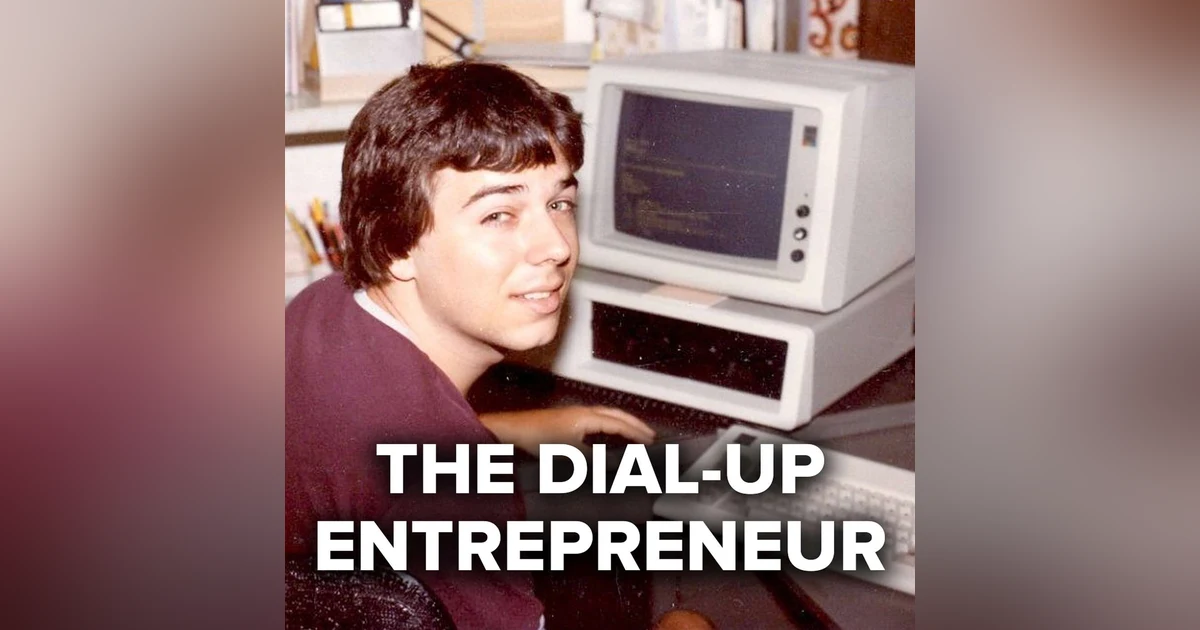
Send us Fan Mail In this episode I speak with Scott Miller, founder of Apogee Entertainment (Commander Keen, Duke Nukem) and 3D Realms (Max Payne, Prey). Scott helped pioneer the shareware model of game distribution in the late 80s and early 90s, releasing large chunks of games for free online long before Steam existed, and asking players to mail in cheques or call directly to order the full version. Scott literally helped build the gaming industry as we know it today from the ground up. Afte...


In this episode I speak with Scott Miller, founder of Apogee Entertainment (Commander Keen, Duke Nukem) and 3D Realms (Max Payne, Prey). Scott helped pioneer the shareware model of game distribution in the late 80s and early 90s, releasing large chunks of games for free online long before Steam existed, and asking players to mail in cheques or call directly to order the full version.
Scott literally helped build the gaming industry as we know it today from the ground up. After being rejected by major publishers in his early years in the industry, he decided to do things his own way. We discuss his early attempts to break into the industry, the rejection from publishers like EA and Sierra, and how that pushed him to build his own path through BBS systems, dial-up distribution, and early online communities.
I’ve been playing Scott’s games since I was in single digits. Cosmo’s Cosmic Adventure and Wolfenstein 3D were some of my favourite games growing up, playing them on our family Amstrad with the dining table chair pulled up to the keyboard.
The conversation covers his work with John Romero and John Carmack at id Software on Commander Keen, Wolfenstein 3D and the rise of the FPS genre, as well as the development of Duke Nukem 3D and how it differentiated itself from Doom through humour, interactivity, destructible environments and world design.
We also talk about the early PC gaming era, game demos, shareware, PC Gamer magazine culture, box art, game marketing, and how games like Duke Nukem, Max Payne, Shadow Warrior, Rise of the Triad and Prey were shaped by player feedback and experimentation.
This is a conversation about the foundations of PC gaming, the origins of indie distribution, and the mindset that helped shape modern game development long before digital storefronts and platforms like Steam existed.
The Examined Game
Each week, host Steven Lake asks the creators behind some of the world’s most influential video games about the meaning of life (in video games), leading to conversations about the personal and creative impact games have had on their lives.
00:00 - — The Birth of Shareware
04:52 - — Dial-Up Distribution and the Pre-Internet Era
11:07 - — Giving Away a Third of the Game for Free
17:46 - — Working with id Software and the Rise of Commander Keen
24:18 - — Wolfenstein 3D and Shaking Up the Industry
30:12 - — Game Magazines, Box Art, and Building Hype
38:05 - — Duke Nukem and Creating an Iconic Character
45:33 - — Why Demos Were So Important
53:41 - — Player Feedback and Early Community Development
01:00:54 - — The Joy of Interactive Worlds
01:08:27 - — Doom vs Duke Nukem: Different Design Philosophies
01:15:03 - — The Evolution of Game Distribution
01:21:48 - — What Hasn’t Changed About Making Great Games
— The Birth of Shareware
SPEAKER_01I was just trying to figure out a way to make money by selling my games. I mean, I sent them off to all the different publishers of the time. No one ever even wrote back to me. So really, I guess I'm talking about the pre-internet, just became our uh like the distribution method. If they liked the game, you know, we would ask for them to send us, you know, 15 or 20 or 25 dollars, whatever it was. I don't remember. Um, and that just kind of really just took off for us. At some point, we were hitting 25,000 sales per month. Very quickly, I realized there's probably something here to start a company with.
SPEAKER_00Hey there, my name is Stephen Lake, and welcome to the Examine Game. So today we're talking with Scott Miller. He is the founder of Apogee. This is the company behind the original Duke Newcomb series and the publisher of games like Commander Keen and Wolfenstein 3D. Scott later founded 3D Realms, which helped bring games like Max Pain and Prey, the original Prey, to the market. And he worked with developers like John Romero, John Carmack at ID Software. So Scott and his company pioneered the shareware distribution model in the late 80s and early 90s, where people would dial into computer networks using their phone line to download and share games. And this happened long, long before platforms like Steam. This conversation is so much around the mindset of the development and distribution of the games of this era and the ramifications that their actions and pioneering spirit had on and still do have uh on the gaming industry today and the games that we get to enjoy and play and how we get to enjoy and play them. It's a brilliant conversation. Please do subscribe. Thank you very much. I'm always interested when talking with people about their kind of early experiences either playing, um, that that sort of showed you, hey, okay, this is there's there's something to this uh video game Malaki.
SPEAKER_01I was actually going to high school in in Australia, and um when I was 15, uh this was like 1975, I want to say, um uh our computer got a Wing 2200 uh PC, um, which was kind of one of the first ever sort of integrated PCs that I'm aware of. That had, you know, had the screen, the CRT screen, the keyboard, the uh the built-in uh floppy disk drive, um even came with a little side printer. Um and crazily enough, to make any sounds in your game, uh, it actually went through the printer. You sent signals to the printer, and the printer made the sounds. It was uh but uh anyway, that was like my first introduction to any sort of PC. And uh me and a bunch of my friends, we sort of discovered um that you could play games on this thing. You could uh uh there was a magazine called Creative Computing, and I think a couple other magazines, and they would have like printouts of games that'd be like one or two pages long. So we type these things in and um and see what they did, and you know, from there you could modify values in it, you could add new new ideas to this game, you can and you could kind of make it your own. So we just basically learned how to code on our own. And then when I came back to America um after I graduated high school in Australia, uh came to Dallas. Um, I ended up getting um a pet computer, which a Commodore Pet. Uh, and then a few years later I got an IBM PC and I was going to college for a computer science degree, and I was just still making games on my own. I loved it. And uh um I was just trying to figure out a way to make money um, you know, by selling my games. I mean, I sent them off to all the different publishers of the time, like Surtec and Rotorbund and all these, you know, EA. Uh no one ever even wrote back to me. And uh so I was just sitting on these games, and um so at some point um the internet came along and I was like, well, let's let's put some games on the internet and see what would happen. And uh that's really how the company took off. Um, you know, once you know the internet became our uh like the distribution method, and within the game, you know, we would have people, if they liked the game, you know, we would ask for them to send us, you know, 15 or 20 or 25 dollars, whatever it was, I don't remember. Um, and that just kind of really just took off for us. Well, or for me at the time. And, you know, very quickly I realized there's probably something here to start a company with.
SPEAKER_00What sort of year was that when when when you sort of got into the internet distribution? When are we talking?
SPEAKER_01Uh that was like 19. Well, it was actually before the internet. It was uh it was like 1986, is when, you know, because I was using BBS systems uh primarily and in places that uh were were like like CompuServe and Genie and Delphi,
— Dial-Up Distribution and the Pre-Internet Era
SPEAKER_01Prodigy, AOL. So it was kind of the pre-internet. Um yeah, because the internet really didn't come along until I guess 94 for us is when we started to to embrace that. But yeah, so really I guess I'm talking about the pre-internet, just basically just online, you know, just using the online systems that were around at the time. And and and luckily there was a lot, you know, copy server and prodigy and AOL and all the BBS systems. So we were actually working with um a BBS operator based in Boston who had a BBS system called Software Creations and uh was run by Dan Linton, Dan Linton, and um he became our home BBS, and we would always upload to him first, and it just became known that any games that AppGee would upload, you know, would go to the Software Creations BBS first, and then you know, all the other BBS systems that wanted to distribute our games would download it from Software Creations and they would distribute it, distribute it themselves. Um so it just it just really took off. And like Software Creations very quickly became one of the top BBS systems in the United States. They ended up going and getting a T3 line put in, which I don't even know what the equivalent that is now, but it was like you know, a big pipeline for bandwidth. And uh like in his basement in Boston, he probably had 60 or 70 PCs, you know, to handle all the traffic. Uh so I guess each PC could handle I don't know I guess one person uh calling in. So that was the limit, I guess, at the time. But yeah, it it it just all kind of exploded. Um and uh you know the whole online distribution method just really worked for us.
SPEAKER_00And so, and you may have sort of covered a little bit there, and perhaps my kind of like layman understanding of it, I may have missed it. But if you could just like really kind of just like talk through those basic steps from okay, here's the completed game on file to you know it it reaching the the end user, um, you know, what that looked like when you were first jumping into that distribution model.
SPEAKER_01Yeah, like for instance, I'll I'll talk about the my first game that really hit a big, which was uh called Kingdom of Cross. Um so I actually had three I actually had a big cross game that had like 75 levels, and um I I decided that rather than release the whole game, just release like a third of it. And so I cut I cut it down to 25 levels, and I released that as shareware, and at the end of the game, it would say, Hey, if you if you like this, there's two more episodes, you know, 50 more levels, you know, send me $20, and I'll send you those extra two uh episodes. Um, so that's that's really how it worked. But um, you know, as far as like uploading it, you know, I just had like a little modem at my house, and you know, I would dial it up and get the phone working, and and you'd hear all those strange sounds that you that you don't hear anymore, you know, the modem connection sounds and the phone stuff and all the buzzing and everything. And uh, you know, just I would just upload it to like the key places, you know, like I said, CompuServe, AOL, Prodigy, Genie, uh the software creations BBS, once we get that going. Um, and from there, it would self-propagate. Um, you know, because people were very hungry for games back then. The whole, you know, there weren't that many games. Um, you know, we don't we don't have the indie scene like we do now, where there's like 20,000 games coming out a year. Uh back then it was like, you know, maybe 50 or 100 games a year, you know, at least the the kind of games that were being released where you could get something online. And almost all the online games back then were just very minimal projects. Um there was only a couple of games that I ever saw online back then that really kind of impressed me. Like uh there was one called uh Captain Comic, and I tried to recruit that author uh to work for us, but he never did. Um so when we started releasing our games online, they were they were probably better than most other games that were online. Um, you know, and then once we started working with this software and Commander Keen came out, that just exploded. Um, you know, that was that was as good as any commercially made game. Um and here it is, you know, you could get the free version online, the free episode, and then you could order uh the rest of the game from us for 30 bucks. You know, and we were selling thousands per per month. I think at some point we were hitting 25,000 sales per month after that game. You know, and and and consider this, you know, this was during a time when for someone to actually order from us, they had to either write us a check and mail it, you know, get a stamp, do all that craziness that no one ever does anymore nowadays. You know, there wasn't Steam back then to make it easy. Um or you know, we eventually got um a phone number and they would call us and you know, we would um you know take their order down and take their credit card, which is still, you know, who who calls for things anymore, you know, everything's online. So, you know, the friction was pretty high to order from us. So, you know, thinking about all the friction there was for someone to make an order back then, you know, the fact that we were getting 25,000 orders a month is is really kind of impressive.
SPEAKER_00And was that, I guess, uh just to go, you know, you said you originally you were trying to, you were sending your work out and you're getting like no response back, right? And my my guess is you're you're grateful
— Giving Away a Third of the Game for Free
SPEAKER_00in the end that that's what happened because it then you sort of trailblazed this route for yourself. And then then you sort of found yourself in a position where you were kind of competing with the very companies that you'd been trying to sort of get to bring bring you on to sort of develop games for, I guess.
SPEAKER_01Yeah, I I never really saw it as competing with them, honestly.
SPEAKER_00Um perhaps in the same market all of a sudden, then.
SPEAKER_01Yeah, yeah. Um I I heard that they felt I like we were just busy doing our own thing, you know. The companies like Electronic Arts and Sierra and all these big companies back then, you know, I I still saw them in a league of their own. You know, they were doing, you know, I remember hearing when Sierra was doing like King's Quest III or something, and they they said that they had a million-dollar budget, and that just blew me away. A million dollars in a game, who would spend that much? You know, here we are spending, you know, tens of thousands to make games, you know, and and here's a game for a million. So I just I just always kind of thought of you know the commercial publishers as just a league above us. But then I started hearing stories, you know, especially after you know, Wolfenstein 3D came out, you know, where people like with within EA and um you know within Sierra, you know, they were like, How's this little company you know doing stuff that we can't even make? You know, and um so I I you know I remember I remember one of the top people, the top execs um at EA had they had a big meeting and and one of the guys threw a copy of Wolfenstein down on the you know the boardroom table and was like, we need to be competing with these guys. But I never really thought about competing with them. You know, we were just busy doing our own thing and having fun.
SPEAKER_00And do you do you do you have the answer to that question? Like, how how were you doing that? You know, how were you sort of generating and creating such like they they they they're obviously iconic still, but at the time just incredible uh pieces of work?
SPEAKER_01Yeah, I mean, um there's there's two reasons that we were doing really well. One we were taking advantage of this whole online ecosystem that they weren't doing it, and so we were getting this crazy distribution. Um and you know, we were we were releasing, you know, we would make a game and release basically one third of it for free. And that blew the minds. You know, I later talked to people at publishers because we started working at with publishers around 93, 94, and that blew their mind that we were giving away so much of the game. They couldn't believe that. You know, they were like, you know, their mindset is you know, you would give away maybe 10 or 15 minutes of a game, but not like, you know, hours of a game. You know, that's just crazy. Why are you giving away so much? But it was working for us. And and my my my feeling and answer, you know, when people asked about that was, you know, if the game's good enough, you want them to get a good bite of it. You want them to get a good taste of it. Uh, because and and and them and that's gonna hook them. If you give away too little, it may not be enough to hook people, but if you give away like a third, you know, they're gonna get deep into that game and really, really want to keep playing it if it's a good game. Um, you know, I always said that the whole shareword distribution system really only works if your game is good, because if it's not good, then they're gonna get that taste and not one anymore. So I I that that's that's part one. Part two was you know, we were so lucky to start working with id software, and those guys, you know, were technical geniuses with their game engines, like Commander Keen was the first ever pixel smooth scrolling engine. You know, had that had been done on consoles and arcade machines, but it had never been done on the PC before. So Commander Keene was kind of a breakthrough in that market in that area. And then, of course, Wolfenstein 3D was the first really first-person shooter, you know, with this amazingly fast 3D, you know, first perspective first-person perspective engine. Um, and you know, other companies weren't doing anything like that, you know, the big companies weren't doing anything like that. So it just it just blew them away that these little guys working out of their garages, you know, were making games of this amazing technical prowess that uh that the big boys weren't able to do at that time. So yeah. And is that just at one point I know uh Sierra flew the id guys down to meet with um uh God, who's the main guy who uh Ken, can't remember his name, um, who one of the founders of uh Sierra, you know, it's a husband and wife team. It was Ken and Roberta. Williams, Ken Williams, that's it. Anyway, Ken flew them down there and offered to buy id software. But um what did he offer? He I think he offered them just a hundred thousand dollars and and uh id Software was actually interested in the deal, but id software said something like, you know, but you gotta pay us ten thousand up front, and Ken refused to do that and and lost the deal, you know, and then id software went on to make Doom. So uh Ken Ken, I've seen Ken in interviews say that's one of the biggest regrets of his life that he didn't pursue that deal.
SPEAKER_00That's a hard one to sort of yeah. It's sort of like having the having the sort of the um the wherewith to understand the potential, but just uh just not necessarily quite enough to sort of um He was just a hair too greedy Yeah for not wanting to give the 10,000 away up front. I mean I just love that that it's you know just the it because it feels like it's just this this outcome of like pure tenacity and just kind of a drive to I don't know what was going on with him. It was just like, well, we just want to go and try these things and when we bump up against limitations and we'll sort of keep on pushing, you know. Um yeah, I I mean I I think I said you know, my my my bet my best friend had Kamadakin and I had Cosmo, um Cosmo's Cosmic Adventure, um
— Working with id Software and the Rise of Commander Keen
SPEAKER_00part one, and then and then and uh I I I know I guess we had it on on disc, but obviously at at the age of six, I wouldn't have known how it ended up getting into our uh into my parents' bedroom in with the Amstrad, but um it's it's literally burnt into my retinas the beginning of episode uh two, I think, when you're just falling into the mouth of the um oh right uh the beast. I mean, because my my memory of it is is this was like this extraordinarily sort of cinematic moment in in in a video game, you know. Um and I guess that kind of brings onto that that topic, and it is interesting because you know I I I I think why Larry connected us was I was I'm very interested in in the conversation around like how one markets a game and how one puts the idea of a game into the player's head before they play it and the work that can be done. And maybe it's it's because I'm sort of thinking, well, with your games that you said, people actually get to play them, right? They they they would get to test them and feel them out. So I don't know if that meant that you were needing to leverage less in terms of like the box art and the kind of illustrations and and and imagery that was going along alongside the games, but I'd love to hear about how that played a part.
SPEAKER_01Um yeah, we didn't really think about like doing like poster or key art or box art back then. We didn't really distribute boxes. Um actually we did um we did um I think around 92 come up with a generic or 93. This might have been actually this is even a little later because it has 3D realms in the back. So this would have been 94. Um but we did end up doing like generic boxes like this that you know we would have we would talk about some of the games on the side and stuff like that. So if you did buy directly from us, you would get it in one of these generic boxes. So we didn't really make a box for each game. Um but in 1993 we ended up we started working with a with a retail publisher called Formgen who wanted to bring our games to the retail market, and so that's when we started working on actual boxes for each individual game. Um but really it was it was mainly Formgen who who handled all that. Um they just saw the success we were having in having in uh shareware and were like, you know, they realized that these games could all could also do well in uh retail stores, so that's that ended up happening. Um but uh yeah, we we weren't really, you know, doing, I mean, we we didn't really take out any ads and magazines until more like the mid-90s. Um when we started getting into our bigger games like Rise of the Triad and Duke Duke and 3D. That's when we started to do some of the stuff that the bigger publishers uh were doing.
SPEAKER_00And and what drove that decision making?
SPEAKER_01Um well, we for one, we could afford it at that point. You know, those, you know, a full-page ad in a magazine, I think would cost like $5,000 back then. Um and and uh we were also getting the gatefold ads, you know, like when you get the magazine, the very front cover would open up and then would open up again. That's called a gatefold, it would be like a tri-page situation there. I think those could cost like $15,000. Um and for a couple of years, for a couple of years, we we got almost every gatefold ad in PC Gamer or uh Computer Games Magazine. Um and which which was really amazing because uh you know we had we had those ads. We it was our games on those gatefolds were like said almost two years running. You know, I was like amazed that like EA and Activision and you know all those companies aren't trying to get those gatefolds also. So, but we just bought them ahead of time and we just, you know, we were we we were we were able to secure them and you know it was always fun to get a new magazine and boom, you open it up, and there's you know a big spread of Duke Nukem or whatever, um, or Shadow Warrior or Rise of the Triad or you know, whatever game we were promoting at the time.
SPEAKER_00And was Duke Nukem one of the was that the first where you well I'm interested in what the first game was that you decided to sort of try try that approach with and and uh in what ways you started to see the returns of that that investment.
SPEAKER_01Well, obviously through sales, but yeah, honestly, I um I don't know we we we had no way to quantify the return on the investment. There was really no way for us to to measure whether those ads were paying us off for us. Luckily, we were making so much money at the time, it didn't really matter. Uh so we were we were and also it was almost like prestigious to be, you know, have full page ads and magazines and stuff. You know, we we we felt like even if it's not necessarily selling that many more games, it still keeps you know our name sort of like in the spotlight for anyone who buys the magazines. Um so you know, I there was definitely value to it, but we don't we don't we don't know like how many more games it sold, those ads. Um and also when you do buy ads for magazines, whether the editors will admit it or not, they're also more likely to give you editorial coverage. Um so we get a ton of editorial coverage. It's almost like every issue there was like either of an article about like making, you know, making new maps for Duke Duke and this, or you know, new cheat codes, or let's interview this person, or you know, what's what's APG doing next? You know, there was always ongoing stories almost every month. And I kind of had the feeling that that Trine was rolling forward like that because we were also one of their big advertisers.
SPEAKER_00Hmm. And again, I you know, I remember picking up those copies
— Wolfenstein 3D and Shaking Up the Industry
SPEAKER_00of PC Gamer and and seeing those those spreads of of like the likes of Duke Nukem, which you know, I would have been too young at that point to have had my parents get that for me. But you know, I just the you know, why I got thinking about this this topic was you know, as a kid, I had there was such limited access to the games that were coming out, right? That I would just pour over these, you know, little thumbnails in the magazine, you know, or the the cover art that was in the opening part, and I would just kind of like absorb it, absorb it, absorb it, you know. Um, and whether I I was a big point and click uh player, so you know, and I remember this would have been a few years later, but like the spread for like broken sword, you know, and just like being obsessed with it or Toonstruck, you know, and old Monkey Island, like the the third one, you know, because there was nothing else, there was no trailer for me to go to, there was no sort of playthrough or let's play, or or I mean maybe there was a demo down the line, but these these these print media um images were just like I don't I don't know, you can probably hear the way I'm talking about, like they really meant something to me at the time. So there's something incredible about that, and you're sort of priming an audience, right, for a game that they're eventually then gonna go on and get to to experience and play.
SPEAKER_01Yeah, those magazines were such a big player back in the day because you know, they would cover you as previews. You know, we got a lot of covers of magazines just based on like, you know, like previewing, like here comes like Max Payne or Shadow Warrior or Prey or um like an expansion pack for Duke Nukem or something. Um, you know, they would these magazines would fly down, you know, their riders to our offices and spend half a day with us. And you know, we'd show them all the behind-the-scenes stuff, we'd show them stuff that they weren't even allowed to talk about just to kind of like get them excited um about future things we're working on. We'd take them to lunch, you know, at a local Tex-Mex place. That was really good. Good. So uh, you know, we we had a lot of fun when people came down. Um and uh yeah, so previews were a huge part of it. And and then when the game came out, you got a big review, and then you got then you had all these follow-up articles, like I said. You know, we're talking about this and that about the game and just whatever. Um, you know, there was always follow-up stories that could be done. So yeah, a lot of a lot of magazine coverage. And I miss that nowadays. We don't really have that nowadays. Now I know PC gamers are still around, uh, they're not nearly as thick as they used to be. You know, it used to be like a like a half of a phone book size. Um and uh you know, everything seems to be online now, and I I just don't get the sense that the game journalism is as strong as it used to be.
SPEAKER_00And do you think that's just because by the very nature of it being sort of watered down through not maybe watered down is the wrong word, but there's just there's just it it's so much easier, and there's so many more voices, and it's not kind of um unified into a few set um publications anymore.
SPEAKER_01It's definitely well, I I just don't think that these game journalists uh these game outlets that that cover you know games, um I just don't think they make as much money anymore and they can't afford you know the top-end people, the top-end writers like they used to. Like, I don't know if you remember, but like PC Gamer back in the 90s, you know, they had tons of articles, and then they had probably 10 to 12, maybe more columnists every issue, you know, that you know, would write a page or a page and a half or two pages about, you know, whatever specialized topic they cover every month. Um and uh, you know, you would get into good some really good meaty discussions with those columnists and and good editorials and stuff. And these were all, I mean, they just all came across as like very professional, you know, writers who actually had, you know, journalistic backgrounds probably and and just knew how to write well and and uh knew how to cover topics in a fair, balanced manner and all that kind of stuff. Um I just I just have a hard time finding anything like that nowadays.
SPEAKER_00I mean, I remember those columns, the editorial stuff. I think I remember, and it was Charlie Brooker, you know, was one of the people I used to read a lot, who then obviously has gone on to do all kinds of other things in in PC Gamer. And I guess again, it's that idea I I sometimes think about and whether this is the case or not, but you know, the difference between me being primed as a player, you know, to sort of see the box art and kind of like absorb the game and sort of get an understanding of it before I play it, because you know, and say with um the the artwork, for example, like you know, like Duke Nukem on the cover is this like high fidelity, you know, like masterpiece of art. And where obviously when you play the game, which is in in itself a masterpiece, but it's a very you know, much sort of lower resolution experience, and you're kind of um you know, I think that about say like Monkey Island with the box art, and you've got you know, like um Guybrush sweetboard and he's like this fully formed like idea, and so I can I can convert over that image into the the game and sort of see his kind of lush ponytail and and and and um all of that stuff. But I I don't I I guess the question then would be like how important is that priming um of of a potential player before they dive into the game, or is it all there, you know, within the game, and because the game can speak for itself,
— Game Magazines, Box Art, and Building Hype
SPEAKER_00that's gonna be the thing that that carries it through.
SPEAKER_01Um yeah, I'm just looking at Vox Art right now. Uh I have it all over my wall. Um so I mean, like our Duke Nukem 3D box art, um, you know, we never really cared that it was much higher fidelity than what was in the game, you know, because I think pap you know, players knew back then that, you know, games weren't doing that level of art, you know, for the models and everything. So um that was never a consideration. You know, we just wanted to do really, really cool key art or box art, whatever you want to call it. And um, you know, we we we we like our 3D, our Duke Duke of 3D box art, you know, we definitely wanted to make something that was iconic. Um, you know, we had, you know, just like I think we did that art in 199, probably around mid-1995. And at that point, you know, we had learned to like a lot of sort of rules or guidelines about like doing really good box art. Like you want your character to have a distinctive like silhouette, you know, that's a well-known one. Um and you just want him or her doing something, you know, um, that you know, conveys some sort of action or um, you know, you just want you just want something exciting on the screen. You know, like like everyone knows the Doom uh box art, we know with the with the Marines standing like on a pile of dead bodies, um and uh you know the Duke Nukem 3D artwork is also pretty cool. We actually uh a lot of people know this, we actually used um the Army of Darkness, that movie. Um we used that poster as sort of our our model for the Duke Nukem pose. If you look at the Duke Nukem 3D pose, Duke's pose, and the um the Army of Darkness one, they're very, very similar. Um, we probably copied it a little too closely, but that's fine. Um it it all worked out. Um, so you know, we were just looking for something very iconic uh, you know, for Duke on the package. You know, you want him doing something exciting, uh, you know, and um so I think we we achieved that.
SPEAKER_00I would I would say so. I guess I'm interested, and maybe there aren't others that necessarily come to mind off the top of your head, but if there are other kind of rules or rule sets that you kind of had learned over time, you know, I just found that that that's that's really interesting stuff, isn't it? About the sort of similar and the action and and these different things that the kind of must-haves if you're gonna put it off.
SPEAKER_01Yeah, well, like with Duke Nukem, we had a we we decided what it was yeah, we decided that, you know, like anytime you saw Duke, we he had to be wearing his glasses. He had to have a little, like um, I don't know if you can like he he does like a gur or you know with his with his mouth. Uh we always wanted to have like a nuclear explosion in the background, you know, because you know, because his name's Nukem. Um he's always got that red shirt on, he's got like a belt buckle that's a nuclear symbol. So we had all these sort of things that if you look at any key art that we ever did for Duke, and we probably did about 10 pieces of key art for various games, you know, for zero hour, time to kill, all these ones, they all had these elements in common. So we were trying to really sort of um you know present the same image of Duke every time. Even though he was in different poses, you know, these elements were all there. Uh that people, whether they whether they knew it or not, were seeing these same elements every single time.
SPEAKER_00And just with that and with the other games you're releasing, is there a kind of a trial and error that goes on in terms of you know perfecting that craft of of really sort of consolidating the the message or the vibe or the brand of a of a game?
SPEAKER_01Um yeah, I mean, every game's different. I mean, with with Duke, because he's like a character-based game where you know the character is front and center, it's like a comic book, you know, uh like Batman or Superman or Spider-Man or whatever, uh Iron Man, you know, Duke Nukem for us was the same thing. You know, we we wanted to name the game after the character. That way, you know, we didn't we didn't want to do like what I considered a mistake was the name of the game Tomb Raider. The day that game came out, I was like, they they probably made a mistake. They probably should have named the game Laura Croft, and then you know, have like some sort of like subtitle, like you know, in Tomb Raider or something if they wanted to. But you have a lot more flexibility when you just name your your IP after the name of the character, just like all the comic books do, you know, Wonder Woman, all you know, Aldi's, Green Lantern. That way you're not pigeonholed into one sort of story, you know. Like if you if you name your game Tomb Raider, then that becomes the name of your IP. And does that mean that every time you play, you're gonna be raiding some tomb? I think I think nowadays they call the game Lorecroft. I think they've gotten away from the tomb. I think, I'm not positive. Um, but but our thinking was always from the beginning, like even with the Max Payne, let's name it after the character. That way the character becomes the IP, the star, and we can always put that character in different situations, and it won't be, you know, it's kind of like James Bond. James Bond can be in a different adventure every time. Um so that was our thinking uh with the name. Um and uh but with with like with our current games, I don't think we have any games named after a character. Um some of our games probably should be, like we have a game called Turbo Overkill, which came out two years ago, has done really super well for us. There will definitely be a sequel at some point. Stars a character called uh Johnny Turbo, but when we signed that game, the developer had already named the game Turbo Overkill. So we just basically stuck with it. But I would have rather have named the game Johnny Turbo. And um but we'll we'll see, you know, when we do a sequel, we may we may go back to we may convince the developer to to go with Johnny Turbo, we'll see.
SPEAKER_00So you talked about that distribution route that you found, and then it is interesting because yeah, you're talking about people calling up or posting checks, but there's you know, there are parallels to that that that you could draw with with how say Steam functions now, right? You know, I mean like the 90-minute play window to demo a game, you know, it's not it's not quite as much as perhaps you might have been giving away, but then and then obviously the the paids then get access to it. And I guess I'm just curious about your feelings about what sort of foundations were kind of set up back then that are really effectively the same as as are happening now. It's just it's a lot faster, the the systems are a lot more sort of succinct to be able to download. We're not talking about thousands of downloads anymore, talking about like millions, right? But it it it sort of it it almost just seems like a much quicker version of what you were already doing back then, is that right?
SPEAKER_01Yeah, Steam has made things uh so simple um for people to, you know, to order games, to buy games, to download them and everything.
— Duke Nukem and Creating an Iconic Character
SPEAKER_01Um so that's that's that's the biggest game changer that's happened probably in the last 15 years. Um But um, you know, the share version back when we were doing Shareware, the Shever version was really just a demo. And to this day, every one of the games we release on Steam, we still release a demo first. Um so it's essentially the same in that way. Uh, you know, we all we still want to give people a taste of the game before they commit to buying it, you know, um as a way to hook them. Um so we still, you know, luckily Steam allows you to release demos, and so we do that, you know, for all of our games.
SPEAKER_00I guess again, no matter like what what happens, gamers never really change in the sense that they sort of, you know, they they they want a taste of something and you can kind of like let a game speak for itself, right?
SPEAKER_01Yeah, unless you've got like a super well-known IP that's you know been around for several years and already has a huge audience, then you know, my feeling is you have to release a demo. You can't just release a game and and hope people will just buy it. Um you gotta allow them to try it. Um and people will, you know, not everyone's gonna play the demo before they buy it. You know, hopefully, you know, when enough people play the demo, you know, it creates enough buzz, word of mouth gets out there. And if people hear enough good things about a game, they'll just skip the demo and go right to buying it. Um but uh you know, for us, you know, the demo is still super essential. Yeah, we put a lot yeah. I mean the demo is you know, the first impression, you you gotta come out uh, you know, with a strong first impression. So we we we definitely put a lot of effort into our demo. Just like we always felt like the shareware episode of any game we released needed to be the best episode. You want to come out with your you don't want to save your best for the end, although you want your end to be good still, but you really want to come out of the gate with what people are gonna get their hands on, you know, just be the best best version of the game. Um, so we would like for Duke Nukem 3D, we spent months and months getting the uh the shower version, you know, as you know, as perfect as possible in every way. Um and then, quite honestly, we would rush to get the rest of the game out. So uh we would spend a lot less time on the on the follow-up, you know, levels or episodes than we did on the very first one. Um just so that we can get it out there and start making money. Um but um but also we put so much effort into the share version that the developers would gain a lot of knowledge about what makes the levels fun. So that would transfer to the rest of the game. So we're not, I'm so I'm not really saying that the rest of the game was really any less fun or less quality. It's just that we didn't put as much time into it because by that time we had already learned the lessons and and the developers who were designing the levels and making the art, they really had it all down, you know, all the the systems down and everything. And so we could basically rush the rest of the game out um and um and still have a good quality game the whole way through.
SPEAKER_00And was that uh as as in, were you getting sort of player feedback based on the Yeah, yeah.
SPEAKER_01So like for Dick Took and 3D again, we released the share version months before the full version was was out, and we got a ton of flare uh player feedback, and we definitely incorporated that into you know the full release of the game. So we would based on the player feedback, we would improve the share version, and then we'd also make those take those comments into account for the rest of the game. Like, you know, like if people were saying that um let's say the mouse wasn't controlling exactly, you know, smooth, you know, we would iron all that out, and that would affect the whole game, you know, and or maybe the save system wasn't really that great. So we would fix all that and um and then we would release a new version of the share version, and then we would release the full game, and would and both of those would incorporate all the player feedback.
SPEAKER_03Wow.
SPEAKER_01For for uh for all the publishers that weren't releasing demos uh back then, um they would just release the full game and have to deal with it. You know, if there was issues, they would have to get a patch out there, you know, as quick as possible. Um so when we when we released our full games, they were usually in much better condition than when let's say EA or Activision release a whole game. Because our share episode had been battle tested and gotten all the feedback, and that made the whole game better.
SPEAKER_00So I mean, you know, I guess you you then have you learned from an early you you you obviously value player feedback, right? I mean any sane person nowadays probably would, but but all the way back then there there's be plenty of people that wouldn't just even need to bother with that and they'll just make the game that they're gonna make and you're gonna like it, hopefully, yeah, as they've decided to make it.
SPEAKER_01Yeah, definitely. I I think yeah, player feedback is so critical, even with the demos released nowadays. Um We get tons of player feedback. We incorporate that back in the in into the game. So um, yeah, it player feedback is absolutely critical. Because no matter we have a we have probably 70 people as part of our QA team. You know, they're all volunteers. You know, they do a really good job, but they can't catch everything. And for every game we release, we also hire a third-party uh QA company to, you know, find bugs the last month of development and you know give us daily reports, but even they miss things. You know, when you release a game and suddenly thousands of people are playing it, you know, the demo, you know, they're gonna find things that no one else has found. And um so yeah, no company has a big enough QA department to catch everything.
SPEAKER_00It's it's really interesting talking with you about that process and what you were doing back in the day, because I think it sort of signals to me just why this success was there, right? And obviously, at the end of the day, no matter what, you need to have a really quality product, but it seems like you had that because you were because of the way that you were going about releasing and players had a direct connection and got to pass it out, and all of this process is is is why it worked, right?
SPEAKER_01Yeah, I mean, because we sort of used online to distribute our games, uh, where other companies weren't back then, we had a very strong online community, you know, on AOL, CompuServe, all these places. We
— Why Demos Were So Important
SPEAKER_01had an Apache area set up to where you know people, you know, hundreds or thousands of people would be in there, you know, talking about you know our latest games or this and that, you know, how you how do you get past this section, you know, this, you know, that kind of thing, and they'd be reporting problems in there. So we were deeply connected with everyone who was playing the game and posting online because that's that's where we were, that's where they were, and um, you know, so we were paying attention to everything. Whereas companies like EA and stuff, they hadn't set up, you know, online areas like we had it back then, um, because they weren't distributing online, they were distributing in stores. So online wasn't as important to them back then. But yeah, for us it was super important and we were very well connected with uh the player base.
SPEAKER_00Um not to sort of get too nostalgic for back in those days, but yeah, I mean, what sort of file sizes were we talking about in those sort of original games that you were uploading? And I'm curious about what the upload time was.
SPEAKER_01I mean, sometimes it would take um an hour to upload, you know, a bigger project. Um, and we'd sit there, you know, watching the the upload bar just creep across real slow, hoping, you know, the connection wasn't lost. Uh so uh, you know, like on on the on the night when we said we were gonna upload a game, you know, we were all sitting there hoping for the upload bar to make it. Um and uh but uh what what was the rest of the question?
SPEAKER_00I thought there was just about oh, it was what and also what the file size was. Yeah, these sorts of games. Yeah, yeah, yeah.
SPEAKER_01That was the I don't think any of them were over a gig. I think they were all, you know, they were all the size, like I some of our biggest games back then, like I want to say Duke Nukem 3D, the Sherro version. Was that like a one or two three and a half inch floppies? And what did it what what was how much did a three and a half inch floppy hold back then?
SPEAKER_00Like I actually can't even remember. So yeah.
SPEAKER_01700 kilobytes or or I I forgot. It's been so long, but yeah, yeah, you know, um like a game like Wolfenstein, the whole game takes up less memory than a couple of big textures nowadays in a modern game. It's just it's peanuts, it's nothing. It's it's not it's so small uh back then. You know, because you're talking about VGA or 256 color graphics, which doesn't take up a lot of memory. Um yeah, yeah, things things were just really small back then. You know, it's it's the graphics that really has caused games to balloon in style in size.
SPEAKER_00Even just the uh the opening menu of a game. Uh um and actually, I guess just fine. I want to talk a little more about Duke Nukem 3D, and you know, because it became it was such an iconic game, not as much for the sort of gameplay mechanics, but also just like it's it's kind of vibe, right? You know, like there's there's things in that game like with the bathrooms, the toilets, you know, that just did you know the time like when they were designing, say that that thing in particular, that all this is gonna be this thing that players are gonna like love.
SPEAKER_01Um I mean early on we decided that um you know Doom had already come out. Doom was like a deadly serious, you know, game. And uh, you know, this was gonna be Duke Nukem's third game for us, Duke Nukem 3D. And Duke Nukem 1 and 2 already had elements of humor in it, which we wanted to carry over to Duke Nukem 3D. So we knew that to compete with a game like Doom, we couldn't really copy Doom. We had to be different. So, you know, we decided let's use realistic earth locations, let's do things that that Doom wasn't doing, um, like the humor, like the inner interactivity, you know, like like the pool table and turning on and off lights, you know, flushing toilets, all that kind of stuff. All this kind of interactivity that doesn't necessarily add to the gameplay, but it's still kind of fun to do. Um, you know, when you go try something like flush a toilet and it actually works, it's like whoa, you know, it's it's it's actually surprising in a good way. Um, it just makes the world feel more real. Um you know, having um you know, we also did a lot of destructible environments, which Doom wasn't doing. Um we had sloped surfaces, which was uh an engine upgrade feature that Doom wasn't doing. Uh we found a way to do rooms above rooms um in that engine. So we were we were trying to do as many things as possible to sort of elevate us past Doom and give us a reason, give this game um something to stand on that that you know it wouldn't be just directly compared to Doom. People would see that there's a lot of differences too. Like, and one of the big ones that didn't really come until late in development is giving Duke a voice. That wasn't planned um early on. Um that kind of gut rolling because when you start up the game, you're giving, I think, uh you have four different difficulty levels, and we wanted to um have like when you select one, we wanted Duke to say what you selected. Um you know, and so we had that voice done, and it sounded so cool that we were like, you know, where else can we put this voice? Uh, you know, it was John St. John who was doing the voice work. And um, you know, he just he just nailed the perfect voice for Duke. And, you know, once we heard it, we were like, let's let's find more places to put the voice. And we just kept adding more things and you know, during the game, you know, finding little places that would trigger, you know, a Duke comet. And we ended up adding, I think, 110 or 120 little, you know, what we called one-liners, you know, in the game. Some of them were just like you you would only ever hear it one time. Like there was this one time where there's like a microphone in the game, and you could go up there, and if you use it, you know, Duke would start singing Born to Be Wild, but you know, in a very off-key voice. Um, that was that's a that's a one-time one-liner. And then there was other ones, you know, like just during gameplay, he would say, like, like if uh if you blew up an enemy and it jibbed really spectacular, you know, Duke might say something like, Holy crap, or something like that. Um, you know, these are lines that he could repeat. So, you know, the more we added, the more we we kept thinking, yeah, this is this is really cool. It adds so much personality to the game. So we just added, we were adding lines up until basically almost the day we released the game. Um like I said, this all came this all came pretty late while we were doing the share version of the game. Um and uh it was just it was just a happy discovery on our part that adding the voice, it you know, it worked. You know, we we might have thought before we added the voice that it might be distracting, it might take away from the idea that you're playing the game rather than uh you know, if it's Duke's voice, if it's Duke's voice coming out, you know, you
— Player Feedback and Early Community Development
SPEAKER_01uh the player might think, well, this isn't me anymore playing the game. It's a Duke. So there was a little fear of that. Um, but then once we got the voices in the game and people were still loving and have a great time, you know, that fear completely disappeared. And um we just totally embraced it.
SPEAKER_00Oh, I love hearing that. Yeah, it's it's these these sort of things that seem so commonplace now, but you know, it is sort of all sort of spawns from somewhere, right? Um I guess you know, I was just thinking again, I just think like say with the there's something that's so simple as flushing a toilet, like that's something a game still has to do now, or at least a player is gonna go and if there's a toilet cubicle, you're gonna go and check if like press X to flush the loop.
SPEAKER_01People are gonna go try it out for sure.
SPEAKER_00Do you I mean maybe I don't I don't know if you have any idea like why because we you know all maybe there's an argument like video games are for escapism and you can go and do whatever and travel to you know foreign planets and blow up aliens or whatever, you know. I mean that's pretty reductive things, but they're basic examples. But it it's important to us, it's important to me as a player to be able to you know check that the the the world has a functioning plumbing system within the the the the ecosystem, you know.
SPEAKER_01Um do you know why we care about that so much, or is it just yeah well I just I just I just think of them as little rewards. If you go do something like it's a tot it's a it's just it's a great little reward for you thinking of I'm gonna try this and see if it actually does something. And if it does something, you just feel great about it. Um it's a little reward. Um doesn't add anything to gameplay. And I remember John Carmack, you know, the genius coder at It Software, he was against this sort of thing. You know, his whole thing was if it doesn't address gameplay, we're not gonna do it. Um, you know, his his whole design philosophy was very, you know, lean and mean, and everything has to serve the gameplay, which is which is great. I mean, obviously, Doom killed it. Um one of the best games ever made. But um our philosophy was a little different. Let's let's have some fun. And and so we came up with these all these little ideas just for the fun of it. You know, that little there's like a pool table, right? And you can knock the balls around. They don't behave with any real physics physics whatsoever, but no one gave a crap. You know, you would still knock the ball, and just seeing that the ball actually moved and knocked some other balls around in funny, weird ways, it was still super rewarding. It didn't have to have real physics. It's it's like, oh wow, I can do that, and it worked. So that was that's why we did all these things.
SPEAKER_00Just for the very satisfying stuff, and I think I think Nintendo followed that that design philosophy as well, where it's like everything should be funneled into like what is the the thing that's just the the gameplay mechanics that's pushing the player forward rather than um you know a million little um you know press X to flush things. But um I I know how much joy I joy I get. I I did a a piece recently about chairs in video games, you know, and that got an overwhelmingly sort of strong response of how important it is for players to be able to sit down um in a game, which is and if they can't sit, they crouch and pretend that they're sitting. Um well, brilliant. This has been such a great conversation. I just love diving into the sort of the you know the the the ins and outs of that that kind of early uh distribution system, you know. Um and I I suppose my final question actually would be like I guess I mean from your end, do you sort of feel like you're doing the same thing now that you were doing then? It's just the systems have changed and the technology's changed, but at the end of the day, you're sort of you're you're serving players, right? Games that they want to play.
SPEAKER_01Yeah, it's really kind of the same deal. I mean, we're just trying to make games that um that have unique qualities and can stand out um and uh you know deliver very high on the fun factor. You know, ever since we sort of rebooted ApChi uh four or five years ago, you know, all of our games have done pretty well. They're pretty well rated on Steam. So um I feel like we're doing a pretty good job. We have some super exciting projects coming out. Um and you know, our philosophy is really kind of the same. You know, we're just uh just trying to make just really fun games and um you know, high quality experiences. You know, we really focus on uh you know a really smooth user interface, and we and we did this back in the day, you know, we really put a lot of time into the controls, user interface, quality of life features, that kind of stuff. Um and uh yeah, so it's really it's really just an extension of what we were doing, you know, in the old days, the 90s. So and we have like 120 people, you know, we have 10 games in production, we're all having a fun time, and um yeah, things are still online, but just now through Steam.