How Obsidian Make Games That Actually Come Out | Carrie Patel (Avowed, Outer Worlds)
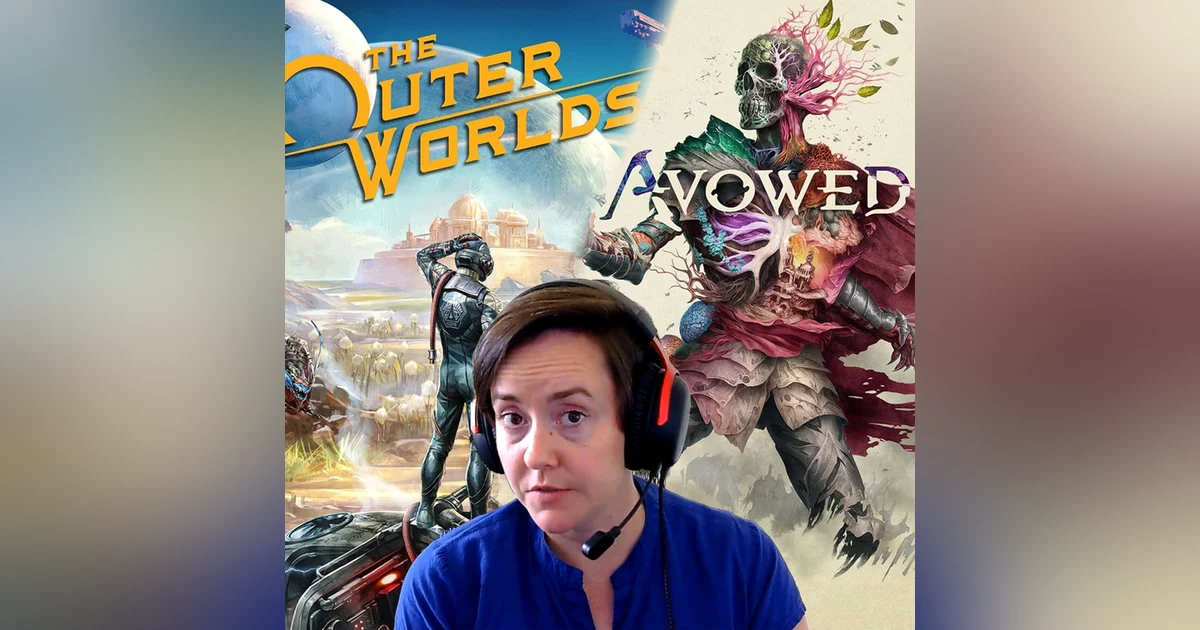

Send us Fan Mail Today I am talking with Carrie Patel, director of Avowed, who worked on the Pillars of Eternity series as well as The Outer Worlds while working at Obsidian. I've long wanted to have a discussion around the direction that Obsidian decided to take with its RPGs by making games that actually get released! So we talk about the scope and ambition that went into making a game like Avowed, how Obsidian made an RPG that could stand on its own two legs and separate itself from the Sk...


Today I am talking with Carrie Patel, director of Avowed, who worked on the Pillars of Eternity series as well as The Outer Worlds while working at Obsidian.
I've long wanted to have a discussion around the direction that Obsidian decided to take with its RPGs by making games that actually get released! So we talk about the scope and ambition that went into making a game like Avowed, how Obsidian made an RPG that could stand on its own two legs and separate itself from the Skyrims of the world, and how crucial good writing and quest design are when you are reducing scope elsewhere, such as removing in-depth crime and murder mechanics.
Much like when I spoke with Josh Sawyer, Carrie just exuded so much love and joy for video games, both the ones she has played and the ones she works on. We also discuss the pathway she took from author, to video game writer, to directing one of the biggest RPGs of recent years.
The Examined Game
Each week, host Steven Lake asks the creators behind some of the world’s most influential video games about the meaning of life (in video games), leading to conversations about the personal and creative impact games have had on their lives.
If the writing is done well, it never feels like you've been blindsided by the consequences of your actions. One thing I was really proud of with Avoud is how we brought a lot of those choices together in the end. One early decision that if I were to go back, I would make differently was cutting the crime and the kill everyone system. How often do I walk into a town and press a button and swing my sword at a merchant, and now he and everyone in this town are gonna be pissed at me forever. This is an easy scope cut. Let's just simplify this and just focus on making really good quests that still assume a lot of agency for the player, but don't assume them doing murder hobo stuff all the time.
SPEAKER_00Hi there, my name is Stephen Lake, and welcome to the Examined Game. Today I am talking with Carrie Patel, director of Avowed, who then moved on recently to be a game director at Night School Studios, which was owned by Netflix and has sadly very recently been shut down. What I wanted to talk to Carrie about was her history of writing as an author, then moving into the games industry as a writer. She worked at Obsidian on the Pillars games and then Outer Worlds, and then had her first shot at directing with the Outer Worlds DLC, Peril on Gorgon, and then directing Avowed. I really love what Obsidian are doing with these RPGs such as Outer Worlds and Avowed, where they're just making worlds that are not so huge and sprawling that they take like decades to come out. The games actually get released and I get to play them and enjoy them. And we talked a lot about scope and ambition with these types of games, what you get the chance to give the player, what you don't have the time to give them, and how good writing, and this is what I got from Josh Sawyer as well when I spoke to him, good writing, it's really the cornerstone of making a great game. I really hope you enjoy this conversation. It was such a great chat. Thank you very much.
SPEAKER_01It's a pleasure to be here. And I've I've listened to a few other episodes, and I've really loved the conversations you've had with other developers about yeah, just what excites them, what they how they play, how they think about games. So I'm glad to be here.
SPEAKER_00Thank you. Yeah, I mean obviously I got to have a really lovely, very in-depth conversation with Josh uh Sawyer, you know, and we obviously touched on pillars and things like that, and just just a little bit about one's ability to kill or not kill God. I sort of like subjects like that. Um so I always start by asking what someone's playing or not playing right now, um, if you are gaming.
SPEAKER_01Yeah, so I I tend to ping pong between a few different things right now. When I'm feeling adventure games, I'm playing Perfect Tides. Um, I'm trying to finish Dying Light One. Um I finished two previously, and then um I'm playing Pragmata as well.
SPEAKER_00And I think that's a that's a nice little spread there.
SPEAKER_01Yeah, yeah.
SPEAKER_00How long have you been on Dying Light for?
SPEAKER_01You know, it's funny. I I started Dying Light One Um around the time I joined the Avowed project, which I think was 2020. Yeah, around 2020, early 2021, late 2020, um, because I knew that was a big inspiration for Chris Parker, the previous game director in terms of the movement and parkour system. So I thought I I should play this, I should see what it's about, how they use it. Um very different kind of game, a whole lot of fun, um, and such a great combination of like the frenetic parkour movement, you know, zombies and you know, kind of the the breakable weapons, which I feel like those are always divisive for people, but I I think it works well. Um but then I got to the part maybe midway through the main uh the main crit path. Like I really enjoy the tension of like finding the safe rooms, activating the safe rooms, and then having these little zones of security amidst the city and kind of trying to get there ahead of nighttime. And then you get to a part midway through the crit path where you actually have to go out at night and face, I think it's the volatiles to get some bolter flesh. And I was like, nope, nope, nope, can't do it. Um, and then over the last few years, I think I've I've gotten a little bit braver. Um, I've finished two, which is, I think, a lot less horror forward. I went back and played more of Alien Isolation by myself and was like, yeah, yeah, I can handle this, I can handle this. So yeah, I've just recently come back to it after a very long hiatus.
SPEAKER_00I don't think I could, I mean, an alien isolation is an unfinished game for me, and I'm I'm just I don't I'm yeah, I can't imagine ever going back. It's it's the save. Well, what did it's like Resident Evil uh Requiem. I just made my way through, but uh you know, I could say, you know, the saves are very close, close between each other, so I'm not losing my mind, but with Alien Isolation, I just can't.
SPEAKER_01Yeah. I I think I I at some point found the hide and seek fun and just accepted I'm going to die a lot. And now that I'm kind of just knowing that that's going to happen, it takes a little bit of the sting and tension out, and I can sort of see sneaking past the alien as a thrill rather than something that is just like raising, you know, all the hairs on my neck and making me squirm. Um, but yeah, it took a while to get there. I I played it, I played the demo at E3 uh years and years ago, and I think I spent the entirety of that demo hiding in a locker. So this is growth.
SPEAKER_00That's uh that well, yeah, I like that. The perspective change can suddenly shift one's frustration, right, if you understand how or how you're engaging with it. But um, and then historically, like most played games that you sort of committed the most hours of your life to.
SPEAKER_01Okay, so I did go and I looked at my Steam stats, and I have to caveat this by saying that I do play quite a bit on console, so this doesn't include that. And I think a lot of the games that I poured many hours of my life into, like college and before, were when I was still buying boxes, so like Morrowind is not on there. But my number three in terms of hours on my personal Steam account was the long dark. Number two was Baldur's Gate 3, and number one is Chronicles of Mirtana Arkolos, which is a very well done but Polish fan-made mod for, I think, Gothic 2 is the base. Um, and it's basically an entire standalone game. And a few years ago, I was just really hankering for kind of like that early Ots action RPG feel where it's it's punishing and the world is explorable, but it is still bounded a bit more, and we're kind of progressing to the next area feels like a lot of progress. So it was it was really interesting to go back to as something that I think was made within probably the last seven or so years, but you can it definitely built on the bones of something a lot older.
SPEAKER_00Is there I'm always is there quite a big time jump between two and one?
SPEAKER_01Because often uh You know, I've actually never played the original Gothic games.
SPEAKER_00Oh no, I mean between your number two of Steam and the number one, you know.
SPEAKER_01Oh, sort of so yeah, it was like it's two 220 hours on Chronicles of Mirtana and then 142 hours on Baldur's Gate 3.
SPEAKER_00Yeah, yeah. Yeah. That's my you know, my I think Baldur's Gate 3 is probably my three. I actually need to check myself. Long Dark is definitely in there. Absolutely adore that game. Um and Factorio is my number one.
SPEAKER_01Oh nice.
SPEAKER_00And that's like a huge jump, huge jump in hours. Um, too many hours. So, okay, and then I guess I'm curious then with you talk about those kind of games. It when you're talking about like childhood or teendom, obviously, like writing and I'm guessing fiction and books and stuff has been a big part of your your life for a long time. Was that kind of working coinciding with gaming as well? Is that something that came later in life? Did that predate a love of literature and reading? How do those two things intertwine?
SPEAKER_01Yeah, I I think they really developed side by side for me. Um, you know, I grew up loving to read. Both of my parents are big readers as well, my sisters as well. Um, and I also grew up playing video games with both of my parents. Um, you know, some of my earlier memories are uh original Mario Brothers, um Duck Hunt, and we also had an Atari even a little bit before that, but playing that with both of my parents. And then I enjoyed those games a lot, but where I feel like things really opened up for me um was when I started playing the Sierra adventure games, which were things that I'd play a whole lot with my dad. Um, and my sisters to to varying degrees got into them as well. But yeah, I think the Colonel's Bequest and King's Quest III were probably two of the earliest ones for me, and I loved your uh your conversation with um um Laura Minamata.
SPEAKER_00Yes, yeah, yeah, yeah. Thank you about about Crimson Diamonds, yeah, yeah, yeah. Fantastic.
SPEAKER_01Julia Minamata. I'm Julia Minamata. I'm sorry. Yeah, thank you. Um but yeah, so I think those games and just the kind of the intertwining of gameplay and story, and obviously story is very central to those games, paying attention to the details is quite important, and kind of getting to embody that protagonist and explore the game in a more open-ended way, you know, than I think like the the traditional Mario experience um lets you do. So, you know, I've it's not that I can only enjoy games with a story, but I think for me, that story experience and how how I get to step into it as a player and what sort of possibility space the game opens up for me. Um, that's always been a really big part of what I enjoy in many of the games that I love the most.
SPEAKER_00There's something, and and you know, so I was never, other than like this one game like Hugo's Haunted House of Horror, which was a Text Passer adventure, I never played many, and and you know, I came in on, you know, I was the LucasArts kid. But um Julia's game was incredible because it made it, you know, I could obviously I then did go back and play those um though those early Sierra games after that because I just wanted more, it was so Moor-ish. But obviously, the interface, the way that she designed that game, it just made it so accessible, and there is something so incredibly tactile about text command gameplay.
SPEAKER_01I I I feel like, you know, just because once the point and click adventure games kind of rose up, they sort of took over, and I feel like you don't see as many people go back after that point and make text parser games. But I've always been a bit more drawn to the text parser games because, you know, whenever you land on a correct solution, it feels as a player like you have owned and figured it out that much more. Because when you've got, you know, your your five different uh icon, you know, kind of clickable cursors and then kind of the screen in front of you, there's a finite set of things that you can do in a game space. And eventually by dumb luck, you can more easily hit upon the correct solution. But when you're you're looking at a world and you have to type in your intent, the possibilities are infinite. And so it feels really rewarding to come up with a correct solution, and it also just feels like, well, you know, anything this game maker could have put in this world and anything that I could think of to interact with it, anything really is possible, which is a lot of fun.
SPEAKER_00I think, and I maybe I don't want to jump too far ahead, but something I'm always really interested in is, you know, I feel like with games, certainly, you know, I play them and I make the assumption in you who's making them, constantly on the pursuit to basically do that exact same thing, um, just with a fully 3D environment that's got like 500 hours worth of content in it to explore and all these other things. It it's still just trying to get the player to have that spark of um excitement that comes when you type sit in chair and you sit right in the chair.
SPEAKER_01Yeah, and how it's you know, I I think some of it is the responsiveness, like you, you know, whether it's a big thing or a little thing, you have an action you want to take and you see the game and the world kind of respond to it and kind of enter into this kind of back and forth with you as the player. I think some of it is the expressiveness, you know. Sometimes it I mean, that's why cause I think cosmetic options are so popular across so many different types of games. Like even if it's not going to have an effect on the gameplay, I want to shape, you know, who I am or how I appear in this world or how my personal space looks and feels in this world. Um, I think there's something that's yeah, just very fun and very rewarding as a player, you know, about kind of interacting with something that kind of responds to you as much as you give to it. And as a designer, that's one of the things I really enjoyed about a lot of the games I've had the opportunity to work on is really being a part of games and teams that embrace that possibility space and look for as many ways as we can to say yes to the player and to hide these delightful surprises, you know, for the player, and to kind of look for these moments where, you know, someone's gonna find this, and it might be a very small percentage of players, but when they do, they're gonna think, oh, this is I discovered this thing, and now it feels like mine.
SPEAKER_00And so to just then go back, and obviously there's so much overlap between those types of those those games, especially you know, the Sierra games just felt that a little bit more serious than LucasArts ones. And I guess I'm thinking about your you obviously being very drawn to to writing and that you sort of took took that route, that direction. Is that something that you were just doing for yourself from an early age? And what was it that drove you to sort of pursue that form of creativity outlet?
SPEAKER_01Yeah, I it was always something I was a bit drawn to. Um, you know, I I always enjoyed assignments as a kid that involved writing, like creative or even just um, you know, persuasive writing. Um and yeah, it was something that, you know, increasingly as a you know, as a teen and as I got older, um, you know, writing for fun, writing fiction, um, just using that as a place to explore ideas and try to build the kinds of things that I'd really enjoyed um became a really rewarding outlet. Um, and over time I, you know, wanted to spend more and more time doing it. Um, and you know, even though I I've continued to love having writing be a part of my career, I think, you know, I took a couple of years where I was just focused on fiction writing, and I'm very glad that I did it and that I was in a position to be able to do it. Um, but it was also a very solitary pursuit. And I feel like every writer has a different relationship with writing. Like there are some people who just kind of plug in and it's therapeutic. There are some people for whom it is it is work, but like work that they, you know, you feel compelled to do. Um and I feel like I'm kind of somewhere in the middle. Like, yeah, there are days when it feels great and it's coming naturally and it's ah, this feels wonderful. And then a whole lot of days to get there though, where it's just, it's just work. And you look at your word count and you're like, why isn't this number getting higher today? Ugh. So I've, you know, I I love having that be a part of what I do, but I, you know, for the majority of my career, I've uh spent a lot more of my time and professional energy in games because I love the collaborative aspect and I I love the different disciplines that it brings together and the different creative and technical and collaborative muscles that it kind of brings into play. Because I feel like when I'm just writing, there are a lot of things that I really love about it, but it can feel it can feel very solitary and it can um, you know, you're you're kind of doing the same thing for a long time. And so when you start to hit a wall, you kind of know, okay, I'm gonna be chipping away at this for a while, maybe.
SPEAKER_00And so then what is what does that pivot for you look like? What was the intention? Okay, like I'm gonna go, I'm going into games. Um, is it something you thought over for a long time, or was it just the right opportunity came up? Just talk talk me through that.
SPEAKER_01Yeah, so games and writing for games had been in kind of the back of my mind for a long time, as one of those ideas of like, wow, people do this and that sounds amazing. Um, but there are a lot of things people do that seem, you know, very, very hard to get into, and where does one start? Um, you know, again, as a Sierra adventure gamer growing up, um Roberta Williams was one of the people that I I kind of grew up having a having a name and an identity and kind of a person associated with like wow, she makes these things. That's so cool. Um and you know, so I I want to say probably when I was uh, you know, maybe late in college, kind of early, starting out, um, you know, after college, I I was starting to read maybe a little bit more and more about narrative design and games writing and um, you know, kind of blogs from some of the people who were uh I, you know, like the David Gators, um, and oh my gosh, uh there's a Jillian who used to work for uh Ubisoft, who who was, I think, fairly prolific for a while there. Um all the names are escaping me today. But, you know, I I would kind of read and get a taste for, oh, this is something that real people do, and this is kind of how they've gotten into it, and this is sort of what it's like. And so after I'd spent a a couple years focused on fiction writing, and I thought, well, I'm very glad I did this, but I I don't think I want this to be, you know, the next 40, 50 years of my life. Um I wonder what it'd be like, could I I want to try to get into games writing and let's just see what happens. And so I remember finding an article on um the on one of the big uh publications at the time that had a list of the 50 best writers in games, and I thought, I'm going to go through this list and see where all these people work and see which of those places are hiring right now. Um, and Obsidian was one of those places. So I, you know, as with all these things, there's a lot of luck involved. They were hiring.
SPEAKER_00What year is this?
SPEAKER_01Oh, yeah. This is uh 2013.
SPEAKER_00Okay.
SPEAKER_01Yeah. So they were hiring for, they were at the time looking for a contract writer to help with the first pillars of eternity game. So uh I wrote in, I, you know, sent my resume, I sent a writing sample, which was a a short story that I recently sold that was sort of um uh a historically grounded um uh kind of kind of dark fantasy piece. Um and so I yeah, I sent all that in. They sent me their writing test, I finished it and sent it back, and then uh they reached back out to me when I was, my husband and I were actually on vacation uh about doing an interview. So we found a uh we we found a date where we knew we were gonna be somewhere with you know decent phone access. So we were in a South African ostrich farming town called Uthorn. I got a calling card, uh, talked to the hotel uh staff ahead of time and said, Hey, I have an interview at your time midnight. Could I please use your phone for it? And they said, Sure, we got a card. So did the uh my interview from the lobby of a little hotel in Oot Shorn.
SPEAKER_00Because obviously there's not even like dodgy internet days, it's kind of like, yeah, you're popping on the phone. This was a phone. Yeah, yeah. But yeah, and then yeah, so so yeah, so you had the interview, and then what is the next next step there? And who was it that you were sort of um you know, first immediately working alongside in those early days?
SPEAKER_01Yeah, so uh I worked most with Eric Fenstermaker, who was the narrative lead on Pillars of Eternity One, um, worked very closely with him, uh, worked quite a bit with Josh Sawyer, who has always been very close to the narrative process as well. And I mean, as a as a creative director and game director, he has a really great breadth of experience across pretty much all the design disciplines, as well as I think a very um, I mean, you know, from talking to him, like a very well-tuned uh understanding of what he wants visually and artistically. And so I feel like, you know, as a director, he has such a range of skills that, and and he's very interested, I think, in kind of getting into the weeds with every discipline and every every part of the game that kind of everyone ends up working pretty closely with him, which is great. Um But yeah, I worked a lot with those guys, and then the way narrative was structured on projects at at that time, and I I think pretty much the whole time I was at Obsidian is, you know, narrative design would be very closely paired with area design. And this was, I think, kind of when the studio was transitioning from having most writing being done by area design to kind of starting to specialize narrative design, um, but still keep it very, very closely paired with um with it, with area design and and with environment art as well. I think one thing the studio has done a great job of is um you know keeping the writing and the content design and and just sort of holistically the player experience very tied together. Like I, you know, you see a lot of places where writing is kind of this layer that happens uh, you know, on top of the core design, or writing is a thing that happens that then design kind of works around. Um and I, you know, so there was a real push, and I think a very good one to make sure. that you know like I think area designers already still saw themselves as stewards of the player story and crafters.
SPEAKER_00Can you just explain what an area designer does just so we understand the context and the the the sort of symbiotic relationship between these these different areas?
SPEAKER_01Absolutely. So area design with and again every studio kind of has their own terminology. I feel like some studios would call them level designers. Area designers wear traditionally a lot of hats at Obsidian and they're basically the you know if you think of a unit of content at uh you know of an RPG or an obsidian game being a quest it's you know who are the people primarily responsible for designing crafting implementing and iterating on that quest and most of the time it's area design. They are very often um kind of gray boxing particular levels. So just kind of setting up here's what the shape of this space is um here's kind of how the player's going to move through it. Here's we're gonna where we're gonna place different enemy encounters where we might place loot um just kind of setting up the shape the framework and the pacing of the player's experience and and oftentimes even the you know what's the what's the conceit of this content? Like is this you know the the castle of a bereaved lord you know is this the the you know the stronghold of a warlord like any number of things it could be what's kind of the conceit how does the player experience it what's the content that runs through there which is very closely related to you know then the environment art. So okay how does how does it look how do we create that feel you know how do we want the player to feel when we move through it and also the narrative which narrative design also means a lot of different things at different studios but what's the story that the player is encountering and how are they experiencing it? And so that's where you would when you know at its best see I think a very a very close um collaboration between those disciplines to kind of you know design something that feels cohesive that feels surprising and where in the best of situations you have you know kind of people with all kind of trying to make the same thing and yes anding their way uh to that destination. And then so then yeah and then obsidian making this quite intentional decision to make sure the the writing that's going on isn't just sort of like something that's reactive to whatever's being built there but it's very much um being sewed into the game yeah you you know you you think of the dialogue as and I I know I I feel like writing has been a big part of RPGs kind of across the board because I mean you know a lot of them have their their roots in tabletop RPGs where you know you've got kind of the lore that's building you know part of what you're experiencing is this fantasy world and so you want to know um what what's the story, what's the lore, like what what's the world that underpins all this. But you know additionally I think kind of besides just kind of setting the stage for the player it's dialogue has always been um we've always wanted dialogue to feel playable and to feel like both a mode of player expression where you're getting to perform out who you are in this world. You know like the player should be getting just as many zingers and good lines as an NPC. Like the player isn't just there to appreciate kind of the clever writing and characterization of another character. They're there to get to play the interesting main character in whatever shape they want that to take. So a lot of it is about role play player expressiveness getting to embody some kind of archetypal fantasy and a lot of it is also about you know in some cases the gameplay of how do you navigate a particular situation. You know, are you going to try to negotiate something? Are you going to try to intimidate someone? And do you have the tools, the resources, the attributes or have you made previous choices in order to allow that to happen? So there's a very big interplay of you know both responding to previous uh choices with consequence and with the opening or closing of options and also the creation of forward looking um of choices that will open and close up uh different options in the future.
SPEAKER_00I guess I'm curious for you then and I know for me we're like every project has its own strengths and its own weaknesses and there's something from every one that I'm like I feel like that did this thing the best and then this and then it maybe was a little weaker on this and then this project over here it like absolutely nailed this other thing that I would always had an ambition to try and pull off. I guess I'm curious for what you just described if there's any particular example within the games you've worked on where you feel like you've seen that come together so well that you're just like oh this is this is literally working exactly how we we we want players to respond to it.
SPEAKER_01Let's see I I feel like there are a number of places where that's come together on kind of the small and the large scale but one thing I was uh really proud of with a vowed is how we brought a lot of those choices together in the end. I you know I think with um especially when it comes to dialogue driven choice and consequence there's always a delicate balance because you know a lot of times reactions are invisible to the player especially if they are written and created to feel very natural and you don't have the NPC kind of saying well yes you know because you made this choice now I will do this and on the one hand that allows the player to see the choice and consequence at work but it also then just feels kind of overdone. So the trick is always how do you respond to the player in a way there where they can see it um and there are a lot of like you can use you a lot of games increasingly just use UI to say like yes this is a response to something you've done before someone remembered this. And how do you create reaction, you know if every little decision, you know, every every time you breathed in someone in someone's presence um you know becomes a a major driver in your ability to get something done with them later, then obviously that feels too punitive. So kind of creating those outcomes that feel meaningful but earned. And there are a couple moments in Avowed spoilers um where I I I think that the team did that really really well and one is um there are a couple different ways and moments where you can side with Inquisitor Ludwig who is you know ostensibly the game's main antagonist um but she sort of starts out maybe your ally and maybe someone that you have a positive history with um and there's a very meaningful moment where you can get her to stand down but if and only if you have continuously supported her interests at like three major decision points earlier in the game. And she will call them out because they are they're meaningful decision points. And so I felt like that was a really special moment to pay attention to some really important choices the player had made and I I think a lot of times about choice and consequence in a in you know an RPG or kind of a similarly expansive game as giving the player a lot of you know kind of light pop quizzes before they get to the big test. So that when they're at the moment of making a big decision, it's not like, oh well I've never thought about this before. How do I feel about this? Like if there's choice agony and hopefully there is it's because they have appreciated the different nuances of that conflict because you have taken them through the paces in so many other parts because you've said well hey now you're going to encounter this character or this little quest or this little vignette and all of these things are going to show you a different facet of this larger conflict that at some point you're gonna have to step in and make a very big and very impactful decision about. So when you get there, you've spent a lot of time thinking about it, feeling about it, kind of constructing your character and your either your character or your you know moral philosophy about what to do about it. And you get there and you say I've I'm prepared for this and so I I feel like some of the showdowns with Inquisitor Ludwig where yeah you had a lot of opportunities to either even though you you won't necessarily be working side by side with her act towards her interests or sabotage them and the way she reacts to that and the opportunities she affords you or does not uh help her feel more grounded and and more human, uh even though she's not exactly human anymore, because you can see her as a a character with consistent interests and the ability to kind of negotiate with you based on how she sees you behaving. And at the very very end, you know, there are quite a few different uh permutations you can get of the ending depending on you know again kind of who you've sided with and how consistent you've been about it. And I I feel like you know a lot of the struggle for a lot of RPGs and kind of similarly choice driven games is you know how do you create endings that feel like kind of more than a collection of of uh you know slides, which I think can still be a great way to show the stuff that you can't that that there isn't room and space to include you know the these are farther future con to consequences.
SPEAKER_00How can you really allow the player to play through the consequences of their decisions and to experience an endgame that feels meaningfully different based on how they've shaped the world and who they've either alienated or allied with I mean it's so interesting hearing that breakdown and it makes me think about you know something like Life is Strange which is you know a game that so much of it the I mean the gameplay is literally on Rails but the choices that you make aren't although they obviously you know then come back um but but why do I care so much by the end? It's because I'm so so connected with the characters and the and I won't say but yeah sort of spoiler you know you have to make a very very big decision at the end of that game and it's one of those things where great writing in a way the the hugess of the decision whether it's like are you going to save the universe or are you going to you know save your puppy um it doesn't always have to be big but it can be it can be a minuscule thing that's agonizing. But when the writing is done right um it doesn't matter and I I love in RPGs when they test you in that way. Well it's like actually we're just gonna throw you an easy one and there's this like you know old farmer and he's a bit hungry what are you going to do? You know, versus do you want to you know destroy the world or not?
SPEAKER_01Well and I think you know I I I I completely agree with you that it doesn't always and I don't even think it's always the most effective to make the choices you know big world-ending you know consequences or not. And even in the way players talk about these games you see that in many cases they're being driven by the interests of the characters they care about most. And you know so to that point it's well yeah if you can invest the player in the characters around them, whether they're companions or faction heads or or even just characters they got to know along the way and kind of attached to that in a lot of times is what's going to create that emotional anchor and make these choices most compelling and really influence the way the player thinks about them because it's not the state of this abstract world it's this person I've come to care about.
SPEAKER_00And then and I'm curious on your insight on this you know my feeling with Obsidian one of my favorite things about Obsidian is they release games you know like like you know the the games come out they don't take like however many decades to make and I know with um Outer Worlds it felt like what was being put out there was this very intentional decision to make something that can get turned around within a certain amount of time and is going to be smaller in scope only in terms of you know I don't know what is the what is the size of the geography or or or things like this things that don't well they may they might really matter to some players but not someone like like myself you know I'm gonna get this really lovely compact not even the right word but you know finishable video game.
SPEAKER_01Yes.
SPEAKER_00And my assumption is that they're like okay well what what is the strength and this is something that Josh talked a lot about in relation to New Vegas we've got limited time we're limited resources what are we going to lean into like the characters the agonizing decisions the factions you know these things that we can basically make huge improvements for the engagement just by better writing. Does that sort of chime with with the intention of those those games?
SPEAKER_01I I think so and I I think a lot of it is also just a also just about everything feeling intentional. You know every everyone who's played uh RPGs or or big open world games you know you kind of start to recognize filler content when you see it um and it's there but it's not particularly exciting and you know my sense for my time at Obsidian was I don't think there was ever much interest in creating stuff that just felt like filler. You you want everything to feel meaningful and handcrafted and like something that is going to have been worth the player's time to experience and you know that takes time and that takes investment. But you know I I think everyone would rather create you know a really depending on your playstyle like you know a really solid you know 40 to 80 hour experience where everything in there felt really memorable where everything felt reactive where the content and the characters kind of wove together to create this really cohesive and complex story where there's just this intentional tapestry that you're weaving for the player you know rather than a 100 plus hour game that you can get absolutely lost in and you may never finish um but most of what you do is not going to feel that memorable to you. And the team size honestly too like I I do think that having kind of more medium sized teams has been a strength for the studio because you know when you're in an environment where the the team and the project are big enough that you can be ambitious with it, but just small enough that everyone can know each other. Everyone can have the opportunity to kind of understand what's going on across the game where it's easy to kind of dip into someone's office or you know ping them on slack and say, you know, hey so and so and this is someone you've talked to before because the team is you know small enough for you to have done so that that kind of the the collaboration and just sort of the the creative sink that you really want to create a a a game that is again all about connections and the interweaving of content and kind of the intentional interplay between different parts of your systems and different pieces of your content that becomes possible when you have a smaller team that is not on the hook for again creating the biggest most expansive thing you've ever played.
SPEAKER_00And I'm curious what the sort of best kind of feedback is that you've gotten from players around that um because it it feels like you you sort of because I love I love those games. I love the Outer Worlds I love the vowed um and there was they were very approachable to me because again I knew I wasn't gonna have to like take however long but I still got to enjoy all these mechanics and RPG.
SPEAKER_01Yeah what is the what is the feedback you get from players when it's like it's absolutely scratching that that itch for them yeah I I think a couple things I love seeing are I I love seeing kind of players lean into really interesting and distinct like mechanical builds and also role play directions. And in some cases it's like wow I worked on this game for years and I never quite thought of someone doing exactly that set of things or or doing things in exactly that way with this kind of intent behind it. But what you find is that even if your game is you know not the broadest in terms of content, that by creating that depth you can again create these surprises and opportunities where players who are really curious about them, who want to explore them and experiment, where they can find something really meaningful and distinct and create the kind of fun that like they want to experience. So I think one is seeing players kind of create these very either very specific backstories for their characters and role play them out and you know express how they were able to uh how they were able to remain consistent with that and in some cases where they weren't and then you look at that and you think okay we're gonna remember this for next time. And also just seeing the way people will argue about what the obviously right outcome of something was. I I remember looking about at this a lot when it came to the God decisions in uh the God alliances at the end of the First Pillars game is someone would come in and say well obviously Healy is ridiculous. Who who would go for this? This is a terrible idea and someone say I went for that I think it's the best solution and you're wrong. And you just have all these people arguing and you think this is this is what it's all about is if it you know if the inputs were that were complex enough and if the emotional attachments I think were there for people to form very strong and very different opinions. Again in a game where we don't I I don't think we've ever really set out to at least not on anything I worked on create you know a well this is obviously the right path and this is obviously the wrong path and the only way to do this is if you want to role play an absolute villain. Yeah seeing people passionately argue about those outcomes is really good feedback.
SPEAKER_00Well there's a there was a lot of that in the Josh Sawyer interview uh talk about Pillars 2 and and it was it was you know it's it's interesting with comments because they can either be like games broken like you know which is like that's again it's their that's their opinion or someone is like you know they're kind of still pissed at the game but almost in a way that sort of because they they got so into it and then either the game did something that they they they didn't want to happen or again they said other players made decisions or again there's really strong opinions about what you should or should not be able to do to a god in a video game um which is which is so fun and fascinating to to to read about I I do and I do think there's you know there's an interesting distinction there where on the one hand there's the question of you know if I'm kind of taking this this world building and this role playing seriously you know what is the correct outcome for the people of this world or what's the the best outcome um you know what morally should a person do?
SPEAKER_01And then I feel like there's the power fantasy question, which is where a lot of the, you know, why can't I kill a god? You know, I I think there's you know every game has its own has its own approach to both kind of the black and white versus shades of gray morality and also you know empowerment kind of how far that can go you know and like in a in a survival horror game you expect to be disempowered you know almost the entire time and so you may not even be able to kill your enemy and that's that's the gameplay. But you know so many RPGs are really about a player fantasy a power curve about the ability that if I work, if I grind, if I explore, if I discover, if I if I build my character in a really smart way, you know, I can become infinitely powerful and I am the protagonist of this game. You know the question of but how do you set up something that is it's not a test. You know, we're not setting you up for you know a giant final boss. We are we're actually saying there's a limit to even your empowerment player. But I I think so many games you know train different sets of expectations for players about how how empowered they can expect to be in the world um how clear and rewarded their decisions should be. You know like I think another thing that's interesting is when you have a decision that is either morally great or at least has some real drawbacks to it or you might feel you're doing the right thing but certain people are still going to be hurt by it how you introduce that disappointment and that well we understand what you did and you might have done it for nice reasons, but these people here are still going to suffer and you know how can we introduce that to you in a way that deepens the complexity of the world without it just feeling every time like you the player expressing yourself like someone's just kind of you know Debbie Downering whatever you just did and saying actually you just made it all worse. You know it's tough.
SPEAKER_00It was interesting and I you know I spoke with Clint Hawking from who did Far Cry too about this and you know we just talked about like why gaming and what we talked about was there's something really nice about doing something that has a problem that can always be solved. Whereas life has problems that often can't be solved or they certainly aren't solved the way you know or they're solved but it takes three and a half years you know of of litigation or something. You know whereas like the game is is at its simplest is like okay enemy you can beat the enemy if you if you uh apply yourself enough times and um and then that what we're talking about there is those you know potentially taking away that that option is is is is yeah it's Some might argue that that's like removing the whole point of why they want to play a video game. It's not, it's not, I mean, it is why I want to play it, but I'm I'm deeply satisfied when a game actually sort of pushes back on me in that way and says, Well, you've you've actually you've reached your your limit now. You're playing the game, and there's this is a problem you can't solve in it either. Um but then it I think good writing j justifies that, you know. Um when you're dealing with characters that you care about and situations that feel real and meaningful, then I think it's much easier to buy into um the limitations or the the horror of a situation that you can't do anything about.
SPEAKER_01Yeah, like I if if the writing is done well, it never feels like you've been blindsided by the consequences of your actions. It feels like they were always kind of there, and then when the dust settles, you you just see them a bit more clearly, but you realize yes, that that was there the whole time, not wow, this is coming out of nowhere, and it feels like it's it's stealing this sense of uh victory or accomplishment or goodness from me.
SPEAKER_00And so I was interested about your what what what did it look like, your transition onto working on a vowed? Um was that you know, in terms of going into directing, and was that something that you were like pushing for, or did you just get plucked out and said, go do this? Like what what what was the path to that?
SPEAKER_01I'd I'd been interested in moving into a larger creative direction, creative leadership role. And um, I actually got my first uh swing at that on the Parallon Gorgon expansion for the outer worlds. So a lot of times Obsidian, and I'm sure many studios, you know, you you kind of get an opportunity to test and train up potential new leadership on DLC projects. Um so I'd uh I'd joined that project at first after um as they were starting to wind down the the base outer worlds game. Um I jumped onto that project. And then when it went through a couple of reboots, they were also looking for uh new project leadership for a lot of the roles. So I got brought in or kind of then transitioned up as game director. And then once that shipped, um, there was also a kind of creative and scope pivot on the horizon for Avoid. And, you know, as part of that having just come off of uh Parallelon Gorgon and also being very familiar with the pillars of eternity IP, um, and part of it was also a desire to make sure that what we were making still felt true to the pillars core and still felt like a continuation of the same world and the same setting. Um, I got uh I was asked if that was something I'd be, you know, interested in available to do, and uh absolutely.
SPEAKER_00Did you have a clear idea from from the the outset with with with avowed, like what kind of game you were looking at? Because it's it's uh like you can't make a game like avowed and again, you know, in terms of the way they're just written about in the press or whatever, where and it's I I've sort of forgotten about this because the game's out now and it's created its own identity, a really strong identity. But while it's not out, everyone's just like, well, it's obsidian Skyrim. Like that's what it's gonna be. But you know that isn't gonna be the case, right? But you're kind of having to just beaver doing what you're gonna do.
SPEAKER_01Yeah, at a certain point, you you have to kind of say, I I really and I mean, and to be to be fair, like the first trailer, like the cinematic trailer that got put out, it it did look a lot more like Obsidian Skyrim. So it's like, yeah, I can I can see where people would think that, but you kind of have to put that aside, and you I don't think you can worry too much about either chasing or fleeing the game that people think you're going to make. Um, you know, we have a we had a wonderful comms team at uh Obsidian. So obviously working very closely with them and saying, like, you know, Mikey, Shila, Sam, like please tee us up and help people understand this is not gonna be Skyrim. And they're like, we got it. Um so you you kind of have to acknowledge it, you know, trust your partners to help you preempt it. And I think I think people did a very good job of preempting some of those expectations. Um, but yeah, when so when I when I joined, you know, it it wasn't gonna be it wasn't an entirely clean slate reboot. You know, we we still wanted to I I think the the bones of it being kind of a a first person, you know, open-ish action RPG that was still building on the Pillars universe, but you know, a little less crunchy and old school than uh the you know isometric Pillars games, that was all still there. Um, and a lot of the bigger questions were, you know, the story, the setting, and I think that particular flavor and identity that you're kind of referring to, like how how dark does it feel? How do we bring across what's grounded? How do we convey what's you know big and divine and magical? And and how do we bring those things together? Um so, you know, a number of the other leads on the project, and I think had always been interested in exploring the living lands, um, both as a a location that was very exciting to us, as kind of this new territory for us to um, you know, uh find something really exciting and something that felt very novel to us, and also something that, you know, happily, you know, a lot of players were very curious about as well. Um I I definitely wanted us, wanted to avoid us making something that I think felt a little too familiar or, you know, a little too close to territory that kind of aesthetically that and tonally that other other games had already explored in, you know, kind of the recent past. And, you know, a lot of us had also that were on, so a lot of us who were Pillars veterans had also worked on Deadfire. And I think we found that an incredibly creatively fulfilling project, in part because it did break away from, you know, a lot of the you know traditional Western European fantasy tropes that many of us had, you know, worked and written and played in for a very long time. Um, it was very colorful, but that that color did not have to make it didn't make the world feel safe or less dangerous, but it was just a really fun space to work in. And so I think that was something that, you know, I definitely did, and I think a lot of us on the creative team really gravitated towards in terms of something that felt fresh, that felt novel, that, you know, would be both an exciting entry point for new fans of the franchise, and also something that would be fresh and new, uh, you know, to people who were returning from having played Pillars and Deadfire. And and something that we were excited to work on, which, you know, when you're looking at a multi-year project is quite important as well.
SPEAKER_00Is there anything with that project that, you know, again, you've got an understanding of the scope and so what you can and can't do. But are there points, what are the what are the points where you start to sort of butt butt up against some of those, the, the, the scope of the restrictions, and you're thinking, oh, you know what, I we would have I would have loved to be able to implement this or explore this further or take this further?
SPEAKER_01Yeah, I I think one one one early decision that if I were to go back, I would make differently was cutting the crime and the kill everyone system. Um, you know, because again, like part of it when I came onto the project was looking at, okay, we kind of have the bones. We've also still kind of got the alarms blaring behind us, though, to say, hey, finish this game and try not to make it take too much longer than it was originally supposed to. So, you know, it's not like, hey guys, take your time, the sky's the limit, slow down, you know, it's how can you also, how can you make this good, but also get it done? And so it was like, okay, one thing that I know from having worked on these games is, you know, we spend inevitably a whole lot of time on both the system side, but also especially on the content side, um, creating workarounds for players to do things that many players will never do. And if they do them, they say oops, and then they reload, you know? So it's like, you know, how often do I walk into a town and press a button and swing my sword at a merchant? And now he and everyone in this town are gonna be pissed at me forever. And it's like, well, I didn't want to do that. I didn't mean to do that. Like, what is the fun that comes out of that aside from kind of doing your murder hobo playthrough? And that was also one of the systems that when I was when I first joined, had not had a lot of work put into it. So it was like, okay, this is an easy scope cut. Let's just simplify this and just focus on making really good quests that still assume a lot of agency for the player, but don't assume them doing murder hobo stuff all the time. Um and yeah, I I think one thing that that cost us that was kind of that was invisible at the time, especially since, you know, again, I'd kind of worked on these games for several years already. And so, you know, you you kind of develop a way of thinking about player opportunity in a more expansive way, but it became, I think, a lot easier to constrain the player. And, you know, you would start to hear in in discussions about, you know, quest pitches and iteration, and like, well, hey, what are we assuming? Well, the player's going to go here, here, and there. And it's like, well, but what if they want to do this other thing instead? Well, no, the quest is telling them to go there. It's like, well, I don't care what the quest is telling them to do. Like, if we're putting them, you know, we're putting them into this world, like they enter the region, they see all these landmarks, you know, there should very rarely be a good reason why the player's only route through this quest is to go in this very specific order. Like, let the player sequence break. And so I think even simple things like um like sequence breaking, like creating, you know, opportunity. And and there are a few quests where you can uh you can turn on some of the quest givers. Like there's a really fun one where you can uh do some clever things with poison. Um there's a you know side quest relatively late in the game where you know you you do have one of those moments where you can either, you know, make peace with or attack someone who you've been kind of sent to disarm. Um and those things became a lot harder to implement. Like those specific things I think became harder to implement and also harder to convey to the player, like, hey, we're bending the rules a little bit, you can do something kind of wacky here, but the player hasn't gotten used to it, so how do they know? And also, I think just from a design mentality, I think it created a harder-to-break habit of thinking in terms of more rigid player paths through the content.
SPEAKER_00It's so interesting. You as you said it when you said about, you know, like kill everyone crime system. And it is like, you know, I'm afraid to say, the second I get get um to the off the boat, I'm like, all right, where's the merchant? Gonna go try and kill him. But it's a bit of a curse of of your genre, right? Like because it's like the first thing everyone's gonna do, but exactly like you said, it's like what you have to build this entire system for something that I'm gonna like do once, and then and then the only other thing I need to check is like, can I take literally everything off of the corpse of this person, you know, including all of their armor and clothing, so they're just left there. And it's like, um, but I'm I'm literally gonna do that once and then I'm I'm I'm done. Yeah, at the same time, it's gonna I mean obviously then you know, as I found, you I get over it and then I I I really start to get get immersed in in what you really need, right? Is is is story. But it's interesting because I think uh I remember The Witcher 3. I was turned off from that game for a very long time because it didn't, it wasn't like quite RPG enough for me. Um but then of course when I actually played it properly and start to invest in the characters, I get over that. But I don't know. You just made me realize there's a lot of work to to give someone a tool that they're gonna use flippantly a small handful of times.
SPEAKER_01It it is, and it's you know, it's interesting because I think in in very specific subsets of you know RPGs, like that expectation is there. Like this is this kind of game, it looks and feels this way, it's from the studio, I should be able to do this. Um but you look at the breadth of RPGs and action RPGs across the genre, and a lot of games, you know, again, even like very successful, very, you know, critically and commercially adored games, um, don't do that. And it's complicated. There are pros and cons. And I I think one thing, you know, I I think if you're going to allow the player to take their that that path, you do always have to make sure that there is some way forward in the content, but I I think you can absolve yourself of making sure that that way forward is as robust as, you know, following a more paved path. You know, it's like, okay, if if you're gonna go murder hobo into every town, we're not necessarily going to deliver an incredibly balanced and well-paced crit path to you because you're knocking it over every time you see it. And that's okay because that's the experience you want to have. Um, we just need to provide something that that allows you to get through. And and in many cases, like, you know, the player I think is creating a big challenge for themselves in terms of, you know, creating very large hostile zones, you know, antagonizing every faction they might come across, um, you know, potentially eliminating merchants they might need later and quest givers who are going to be bigger sources of XP than you know, just pew-pew-pewing everybody. But yeah, it's it's a complicated question, and I've I've seen both sides of where both approaches have their merit.
SPEAKER_00And so, you know, you move on from a vowed, and then you know, what what was the process like after being obsidian for quite quite a while there, um, and then moving on to night school. And obviously that's something that's at this moment sort of bittersweet, but just hearing about what it was you were able to achieve during during the time that the studio was like, you know, going full force.
SPEAKER_01Yeah, it, you know, it was uh it was a really exciting time to join the studio. Um, and I've been you know very grateful for my my years at the city and and the friends and colleagues I've made there. And I also wanted to make sure I had a I guess a broader set of experiences and a broader kind of practical education as a dev. Um, and I saw an opportunity to go to a place that is also very well regarded for story, um, and that I saw trying to do some really interesting and innovative things on a very new platform um in terms of bringing, you know, gameplay and mechanics that are exciting and immersive and also approachable um, you know, to a wider to a wider audience. And I think the the team that made Unhinged did an incredible job of that and have so much to be proud of. Like, you know, relatively small scrappy team that, you know, made something that I think deservedly made a really big splash, and also I think created a really different sense for a lot of people of, you know, what a gaming experience could be and what it could be on a platform like Netflix. So, you know, I think they deserve a ton of flowers and a ton of kudos for what they did. But yeah, the the opportunity to be a part of building something that felt very new, of, you know, just finding a different way of approaching um, you know, immersive narrative experiences and building and weaving in gameplay mechanics, um, you know, that again were going to be uh approachable to newcomers, but also compelling to people who are, you know, more comfortable playing games, was a really exciting challenge and one I'm you know glad that I got to partake in for a while.
SPEAKER_00You thinking about that a lot about the sort of thing you want to go on to do next?
SPEAKER_01I I do think there's an interesting conversation that happens around games where you know people will say, Oh, do you play games? Um, and then you know, as if that's a yes or no. But almost no one says, Oh, do you watch movies? Oh, do you watch any shows? It's more like, oh, what kind of movies do you like? What kind of music do you listen to? And there's I think still a sense that you know some media are for everybody and everybody has uh an inlet somewhere, and then that there are a few types of media that aren't for everybody. But I think there will come a day when the question will be, what kind of games do you like? And I mean, even if you look at a lot of the research now, most people actually do play games, but I think in a lot of the discourse, you know, um, kind of your your mobile and you know, Candy Crush like games are considered very different from what we really talk about when we say games. But, you know, I mean, even any anyone who's gotten used to playing a gamepad and then with a game pad and then tried to hand that to someone who has never encountered one before or hasn't encountered one in years, like there's just a a whole language where you're like, well, the bottom button is very on, you know, very often jumper interact. Um, the left trigger's probably gonna be some kind of aim, the right trigger is probably gonna be some kind of shoot. And the rules may be a little bit different, but you know, left camera's gonna kind of look around or left stick's gonna look, right stick's gonna move me. There's just a language there that you you pick up and that I think can be very intimidating for newcomers. And so I think what I'll be very curious to see is, you know, what is the pace at which, you know, games become more approachable to people, and what is the pace at which people kind of become more willing to go through that initial discomfort to find these new worlds that open up for them. And, you know, I know there's uh I think a lot of a lot of pessimism and and worry right now about kind of the state of the industry, but man, one thing I was super excited to see just the other week was uh the the emergence of uh Black Pony Immersive with all these ex arcane devs um hopefully making the next great immersive sim for all of us. And so seeing incredible new, you know, double-A ventures with I think big ambitions to create stuff that you know I still think is very industry and genre defining is is really exciting and a reason to be very optimistic, too, about where games are still headed and what opportunities are still on the horizon.