Betting My Career on Talking About Video Games — 3 Years In
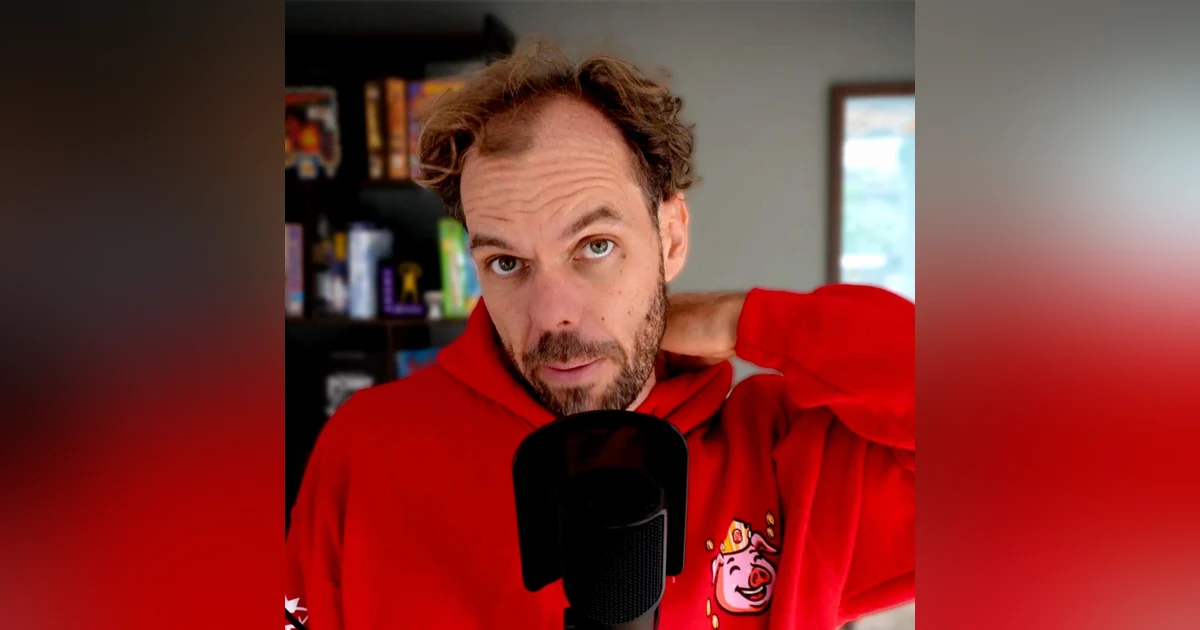
Send us Fan Mail Technoblade Never Dies Documentary Announcement: https://youtu.be/Lj0mDrEKSmA?si=N0pV54fYQg5HlnxF Variety Piece: https://variety.com/2026/film/news/technoblade-never-dies-documentary-minecraft-riot-games-1236850438/ Today my guest on The Examined Game Podcast is me... Steven Lake. Look life has been busy with a few projects and for the first time in 7 months I didn't line up a guest for the podcast. So I thought i'd spend a bit of time telling you what i'm up to outside of t...


Technoblade Never Dies Documentary Announcement: https://youtu.be/Lj0mDrEKSmA?si=N0pV54fYQg5HlnxF
Variety Piece: https://variety.com/2026/film/news/technoblade-never-dies-documentary-minecraft-riot-games-1236850438/
Today my guest on The Examined Game Podcast is me... Steven Lake. Look life has been busy with a few projects and for the first time in 7 months I didn't line up a guest for the podcast. So I thought i'd spend a bit of time telling you what i'm up to outside of the channel (I'm making some movies!) and talk a little bit about the podcast, why I do it, what I love about it etc.
I do talk a little bit about Technoblade Never Dies, the feature documentary I am directing about the life and times of Technoblade and the upcoming film Raised By Dragons directed by Carina Nichaouchine. A Coming of age dungeons and Dragons documentary.
The Examined Game
Each week, host Steven Lake asks the creators behind some of the world’s most influential video games about the meaning of life (in video games), leading to conversations about the personal and creative impact games have had on their lives.
I made a decision to move away from the security of my work as a documentary filmmaker, which by the way isn't a particularly secure position in the first place, to focus to double down on talking about, thinking about, making content, movies, documentaries, about video games. And I'm still trying to work out whether that was a good idea. But as of right now, present tense, it feels like the greatest thing I've ever chosen to do in my life. And I want to talk a little bit today in this episode about why I made that decision and what that actually looks like on paper for someone like myself. It's not really something that my wife wanted to hear coming from my mouth. Like I'm going to become a YouTuber and I'm just going to focus on making documentaries about video games. There was something I wanted to say about games, both in terms of feature-length documentaries and this YouTube channel that I created. And I thought it would be fun to talk a little bit about the journey that I've gone through in taking one of the biggest risks of my life. So, where do I begin? Let's talk about the films that I'm making. I'm a documentary filmmaker. I've been doing that since I graduated from film school way back in 2009. I love uh telling true stories through through film, through documentary. And I've made some really beautiful films. I've gotten to work on some really beautiful films. But a couple of years ago, I made a decision. Like, I was like, what if I could blend my love of video games with my love of documentary? And what if that was my job? Which is such an insane ambition to have because making documentaries is is is difficult in its own right, but to sort of make a decision to double down on one particular uh focus um of something that I find really interesting, but who knows? I mean, I know the world finds this, or I know that you will find this interesting, but you you you you're gonna get someone to pay for a documentary, you need to be able to like reach some sort of um wider audience, right, to justify it. I was like, what if I just start making video game or kind of nerdum-based films? And that's what I set out to do. And it's been a few years now of getting that off the ground, and finally there's some things that are moving ahead. Uh, the first one being I'm making a documentary called Technoblade Never Dies, which is about a young man, uh, Alex, who was a YouTuber who went by the name of Technoblade. There's so little that I can say about this film and that I'm choosing to say about it, but we put out an announcement. It was out there that it's being supported by Riot Games and Hypixel, which has been an incredible honor to get to work with them. Um, I'm working with a brilliant production company, Candle, True Stories on this. And yeah, it's a story that's just really close to my heart. Again, that's kind of like it. Um, but you can check out the announcement. There's a great piece from Variety on it, which gives a bit more details. The reason I don't want to talk too much about it is it's such a huge story, and there's so many people that are so invested in what Technoblade achieved that we just want to be so careful about how we're putting information out there about the film. Um, we want it to be, you know, contained and curated so that there's there's no misunderstanding about what it is we're doing and what the ambition of that film is. But uh that's been a good few years in the making, and I can't wait for you all to see what we've been up to there. And secondly, I'm working on a Dungeons and Dragons uh documentary with the director Karina Nick How Chang. I've been working on the film for a few years now. Karina's been working on it for way more years than that because she effectively filmed her two younger brothers playing DD, uh, from them going from like boys to young men across the span of this film. So she's been shooting it for like six years, and it's a beautiful film. It's it's really a film about camaraderie and connection and the the joy that comes from tabletop gaming, but there's also tension in that film because you've got these two brothers. One's the dungeon master, one is sort of playing along with his brother's friends, and um, yeah, you know, there's there's there's fallout, there's tension, there's all kinds of drama that unfolds as these kids go through, you know, prepubescence into young adulthood. So yeah, that's the work I've been doing outside this podcast, and it takes a very long time to get a film made uh and to find support for it. And while I was waiting, I thought I'm gonna try and make um a podcast. I had a really great conversation with a good friend of mine, Sam Roberts, who uh runs the Back Page podcast with Matthew Castle. If you aren't aware of it, go and check it out. It's just two very uh gamer-centric people talking about video games like a lot. It's brilliant uh conversations. And you know, he gave me this insight into just the fact that you know, you can like if you decide to, you can just go out and sort of make something. I already knew that with documentary, that's how I've made every film that I've that's come about. But I had this idea that like YouTube and podcasts and all that, that the ship had sailed, you know, that all the podcasts and all the YouTube buzz that were ever going to exist um already out there, and there's no point trying to compete in that market. Um, and then I went to this festival called Beyond um in up in Manchester, which is all about sort of new media and I don't know, all kinds of things. And I got this understanding that the pie is is uh it's ever expanding, it's growing. There's still many slices of it to be, you know, uh taken. And I thought, you know what? I've I've always wanted to ask video game developers questions about their games, about the games they love playing, the games they've made, how they went about it, what it took to make them. I think that there's something in any kind of creative endeavor, certainly in film, but very much the case in video games, as I found out in talking with these people, where it's a lonely thing that you're doing. Um, we usually only hear about a game once it's starting to get rolled out, and then once it's out, and then once it's a success or a failure, um, or somewhere in between, you know, um, whatever that word might mean. And I think it's really interesting just to hear about the slog that people are going through when you're making something and you've got no real validation that this is gonna work or it's gonna be good. And that to me is really where the you know the nutrition of these conversations come up. So yeah, I just thought, well, I know I know how to interview people, I like I know how to have good conversations, I think. Um, why don't I just start doing some cold outreach and see if anyone wants to talk to me? And it was funny when I first um reached out to people, it's like Richard Le Monschand, who was the co-lead game designer on the Uncharted trilogy. I kind of made a I sort of conflated it a little bit because I was I thought, well, this this person's not gonna just want to talk some rando um about video games. I was like, well, I've done this and I'm thinking about doing these short films, dah dah dah, I want to interview you, whatever. And he was just like, yeah, great. I was like, oh, like that worked. And um, it was a brilliant conversation, which was great. Julia Minamata was also one of my early interviews. She uh made a beautiful game called The Crimson Diamond, who again was just like willing to jump on, and and what it showed me was like, oh, like there's a couple of things. I don't think um, even when it's people who are very well known in the industry, say like Richard or Josh Sawyer, um Edmund McMillan, like I kind of assumed that they just wouldn't be interested in having like conversations because they probably get hit up by this stuff all the time, and maybe they do, but I've been pleasantly surprised by just, and I would I feel this way about my work. They just had this willingness and a desire to want to talk about video games because they love video games, it's something they think about like all the time, um, and they just love talking about it, and I love hearing about it, I love talking about it, I love asking questions around it. So, you know, the thing just grew really organically, and I think what was nice about getting some of those early yeses from the likes of Richard, um, it it helped build a sort of a slight accolade for the show to say, well, you know, this person of this caliber was on it. It makes it a little bit easier when I'm reaching out to PR people or whatever, you know, if I don't have a direct link to the actual person. But a lot of the time I'm just cold emailing someone. And it's funny when I think back when I first started doing this, I hated it. I I hated it, I hated it, I hated it, I hate cold emailing. I don't like um, I get just get so much fear around it that like I'm annoying someone or bugging someone or I'm gonna piss them off. Um but I just started doing it in a way, and I would like overthink the emails, then I'd press send, and then I'd press the undo button that you can that you can do before before it is officially sends, and I'll do it again and then undo again, and then you know, and then I'd see like uh you know the name of someone like pop up, you know, like Josh Sawyer in my inbox. I'd be like, is this gonna be an email from Josh Sawyer telling me off for um bugging him or something? And and everyone's just like I get I get one of two responses either I get no response at all, or people are like, great, when let's let's do it. Or some people are like, look, this is great, but I just don't have the time, or maybe down the line, or whatever. Um what what is that? That that's just taught me that basically you you can build something out of anything, you know. I I did apply a certain skill set, I know how to edit edit, I know how to make films, video stuff, but then actually the podcast stuff is pretty simple. I just sit down and we just in we just chat, and I think it makes for good good content. Um, yeah, it's been some really, really beautiful conversations that I've gotten to have along the way. Yeah, so I thought I would look through uh one of my earliest conversations. Yeah, Richard Le Monschand, uh Julia Minamata, Eric Woolpore from Portal. That was amazing when I got a response from him. That was such a great in-depth conversation, so knowledgeable. He spent so much time like in this industry, around this industry, thinking about video games, thinking about writing for video games, so insightful. Um, I had Chris Wade, who did this beautiful game, uh Big Hops, which is a great platformer, and I would say sort of competes for the likes of Mario in terms of what it's doing with the um um with the genre. Um, Kelsey Beecham, the writer for Outer Worlds, that was really big for me when when I heard back from her, and then I had the chance to interview her brother Alex Beecham as well. Those two were some of the most meaningful conversations I've had. I think you know what's interesting talking with people within the industry is there's a few different ways the conversation tends to go. It's either some people really, really are focused on the kind of mechanical side of it, like like how did they make the game, like what are the components that bring it together, uh, you know, on a on a very technical um side of things, and then other people really want to talk about the heart, the beating heart behind the game, what it means to them, what they want it to mean to the players, the sentiment um behind it. Some people um, you know, and I uh for that one I would put put Kelsey and Alex Beecham in that bracket. Others um say like Josh Sawyer uh from Fall Out New Vegas, Pillars of Eternity, um Pentiment, he was much more like Josh like has this kind of encyclopedic knowledge, not just of games, but of books and movies and plays and all kinds of things, and that belief is all swirling around in in his head, which I think is what makes him a really good good writer and and director and creator of video games. But that conversation is a lot more I don't want to say thinky, um but he's he's just got such a brilliant analytical view on what makes a game work, and I don't want to say that that's a technical thing because I think it's coming from a very sort of left-brain um point of view, but everything he's talking about, there's always a reference behind it. It's like, well, it's this book, or it's this game, or it's this music, or it's this time in history. Um and then and then what are the other ways? Um, and then some people just want to talk about the way that a game rolled out, or talk a lot about audience and the way that their audience connected with it. Edward Macmillan from The Binding of Isaac is a brilliant conversation in that regard. And again, I it's he's just like you can tell he's thinking long and hard about what his game is and what it's gonna mean to people. Um, who else did I get to speak to? Clint Hawking. Again, someone with an uh he did uh Fire Cry Far Cry 2, um, the original spin cell games, um, Watchdog Legions, you know, someone with a real encyclopedic uh knowledge of games, and I would put him under Josh Sawyer in terms of like who someone who sort of has this top-down view on like, okay, this is why this works, this is why this doesn't work, and then they're trying to apply it. And you know, they themselves, I think, can self-admittedly say, Well, you know, especially when you've got such an ambitious, like Far Cry 2 is such an ambitious game, and then for to hear Clint talk about, well, this worked, this didn't, this is why, this is why I think it did, this is why I think it didn't. Um the thing across the board with anyone that I speak to really is they've all had a willingness to sort of take a risk, to take a punt on something, whether they be an indie developer or or working for a big studio. Um, Ben Fisher from Atomfall, that was a great conversation. That was really diving into the nuance and the necessary steps that need to be taken to grab a player at the beginning of a game. And Atomfall, I think, does a really good job of that about how you set expectations, how you um deconstruct expectations that shouldn't be there. What else? Um, Amandy Morest is the hair designer from Claire Obscure Expedition 33. This was a brilliant conversation that took weeks to get. She was very busy, but I was like, I so want to be able to have this chat, and it was it was just as satisfying as I hoped it would be to talk about hair and video games for like an hour and a half. Um, John Ingold and Joseph Humphrey from Inkle Studios, they've been very generous with their time. Um, I actually went and interviewed them in person for a proper setup for a documentary, a short on documentary on their studio, which I've still yet to put together and release. It's kind of in process, but it's one of those annoying things where something always kind of tends to get in the way. But um, they that was just such a great conversation around. I mean, John again, John is obsessed with um story and how do you you know extract good story from a game, how do you create good characters, and how do you get the audience, the players to connect with that? And um both him and John and Joseph really were uh a sort of shiny beacon of hope as to how you can make an indie studio work and sustainable. Um, Jonathan Zimmerman, he was just really lovely guy working on the The Life is Strange, True Colours, and Reunion and Before the Storm. As I said, I got to speak with Josh Sawyer, that was really exciting for me. Um that was just exciting for me. Doug Cockle, um, the voice actor behind uh Geralt. Um Geralt. I don't know why I say Geralt, but I got some criticism for that. Um Stephen Kick from Night Dive Studios, incredible, incredible conversation, great guy. I really enjoyed talking with him. He was this sort of guy when you're talking, he just has such a kind of glimmer, uh sort of shine twinkle in his eye when he's talking about video games, be it from the past or present. Um Mark Darrer from uh Dragon Age series worked at Bioware for years and years and years, um, and is now quite a vocal, you know, um commentator on what is and isn't going on within the industry. Um, again, encyclopedic knowledge, and so interesting to hear someone talks talk about this, you know, decades within a certain company. Uh Sean Velesco from Mina the Hollower and Hollow Knight, he was great. That's a really good, that's a really fun episode just to hear just how much work went into creating Mina the Hollower and how much on a limb that they were going. Um and then more recently, Carrie Patel from Avowed and Outer Worlds. Um, and and she also worked on Pillars of Eternity as well. Uh, Carrie was great. Um, that that was just one of those ones where it's just lovely to speak to a director and hear about like, okay, how did you put this thing together when talking about Avoid? So, anyway, that was just me kind of whittling through um uh the conversations that I've had today. Um, and so yeah, what is to come? Well, like I said, the examine game has these these films coming out. Um, I'm gonna hope to keep you updated with them as there's more news around it. What else? I'm gonna keep on with the podcast. Like life has gotten busy and it's become more difficult to get the time to be doing this, but I've kind of committed to it. Like I've made a decision, like this is what I want to be doing, you know, with every ounce of spare time that that I have that's outside of my work and and and my family and friends and all the other good good things I get to enjoy in life, um, because it is such a pleasure. And finally, I kind of want to just talk about you all. Um, it's been really interesting to me. I was really um a little bit reticent. Like, I I like I'm not too worried about putting myself out there to a degree. Like there's a part of me that's a little bit extroverted, at least in the sense of like, um, maybe not in real life, but certainly putting myself out there on a screen. But yeah, I was worried about being cut down or people being mean or rude. Um, and the fact of the matter is all those things have happened since since I I launched this uh podcast. You know, you you get a bit of flack if you're gonna put yourself out there in the world, um, even if it's just this kind of funny little minority group of people who want to watch, you're not funny, but you know what I mean, who want to watch these these uh episodes and conversations with games devs. People have very strong opinions, um, is the other thing. And you know, there's a tiny, tiny percent that for some reason they want to direct that at me and have criticism. And actually, you know what? Sometimes like I've been able to take um good feedback from a comment that isn't necessarily put in the most helpful way. Um like there's a it might start as a mean-spirited comment, but but underneath it, it's like, oh, okay, well, maybe I do say you know too many times, and perhaps I could do with just you know, focusing on on how I'm speaking and engaging with interviewees, and I can take something like that on board. Other times it's just like pointless, just like people being kind of weird, and and that's okay as well. I mean surpr I guess what I'm getting at is like I've been surprised at how easy I found it to be like engaged on what is effectively a social media platform. I thought I would struggle with it, but um you you sort of get used to that, and and it's it makes up such a small part of it. But what I really want to talk about is what is makes up like 99.9% of the comments, which is you all engaging really, really positively um in discussions around this stuff. And I think the thing I find so satisfying about it is especially like I did one of my early videos was like sitting as a chairs as a form of protest in video games, and people were commenting about things that even I hadn't thought about, like using the crouch button in old like SNES games just to pretend that you're sitting in in a game that would never involve you know, sitting like Mario or something like that. Um comments like that, seeing people respond to the devs, you know. Sometimes there's there's you know disagreements and people have very, very strong opinions, it turns out, about certain games and definitely about certain studios as well. And you know, I really love reading that stuff as long as when people um try and have some sort of nuance to their argument and they don't just say this is slop or something. Like I I I enjoy seeing the back and forth that goes on uh between people. I did a video about Mina the Hollower, which was for me like the first Souls like that I ever played, and actually, you know, got got the hang of, and it was a real achievement for me. Um, and there was this great conversation about souls likes and this almost like non-umbative discussion around the get good mentality, and it it really informed me about like, oh, I kind of get why people are so passionate about that genre. Um, not not when it gets taken to that nth degree of sort of gatekeeping, but I learnt a lot through that thread. So I love reading the comments. There is something really satisfying about the fact that I can kind of just you know get up and come out to my studio um and you know, talk about video games or talk with someone else about video games and put it up there and you know, have some couple of hundred people watch something or a couple of thousand or a couple of hundred thousand, depending on the video. Um, it's always satisfying for me no matter what. And actually, can we end on my uh backdrop? I did a whole video about this. It's like called me unboxing my nineties big box games. Actually, can we bring the focus to it? Hold on. You see that? Isn't that incredible? Isn't this incredible? I went back to my parents and I um I got all my big box games on my 40th birthday. And look at this, isn't this just incredible? Um sorry, I've just gone down, gotten distracted in a nostalgia hole. Sorry, and if you're listening to this, I'm currently pointing out all of my big box games. It's a who's who of uh 90s, early noughties, point-and-click adventure games. Um because I'm trying to sort of you know legitimise my background to become a proper like podcaster. I don't know what my stepkids think about their 40-year-old stepdad um deciding to become a YouTuber. My stepdaughter found out I sli I let slip yesterday to my stepdaughter that I have a TikTok account. And she was like, I don't, I don't like that. And I was like, Yeah, I I knew that she wouldn't it's it's it's it's fine, it doesn't offend me. Like I would find that weird. It would be like if I found out my dad I don't know, had a Twitch account, you know, just be like, no, that's that's for me. Um the TikTok is just to to post the shorts, you know, of um from the video content that I do. I guess I found a way to talk for nearly 30 minutes. I hope that this constitutes as an as an episode for those who who do listen regularly. If you are a regular listener um on the podcast uh or through YouTube, can you do me a favor? Can you write to me and let me know? I just want to hear from you. Um I'm not much of a commenter. So, you know, when I'm listening to stuff or there's channels or podcasts that I love, I'm just there in the shadows. But I I sort of want to hear from you. And there was one person who reached out and they sent me a list of people they wanted me to interview, and one of them was Edmund McMillan from um The Binding of Isaac, and that's become my like most successful video to date. That's like at 300,000, it's about to hit 300,000 views. Um, so you all have good taste, and I want to hear about it, but I I just want to hear from you. Um, hear what you think of the podcast. What are your favorite episodes? What do you like about it? What don't you like about it? Do you have any feedback? I'm up for whatever. Um, yeah. Thanks for hearing me out. I'm hoping I'm gonna have a guest for you next week. And if there's a little bit of uncertainty about like release date, I want to apologize for that. I would always try to do it on a Tuesday, but there's just been a bit of whatever. Um, I'm gonna try and get better at that. But I've got a bunch of really lovely conversations booked up for uh next month as well. Um, so please bear with me. My name is Stephen Lake. This is the exam in game. Thank you very much.