90s Games Were Built Different | Stephen Kick (Nightdive Studios - System Shock 1 & 2 Remake)
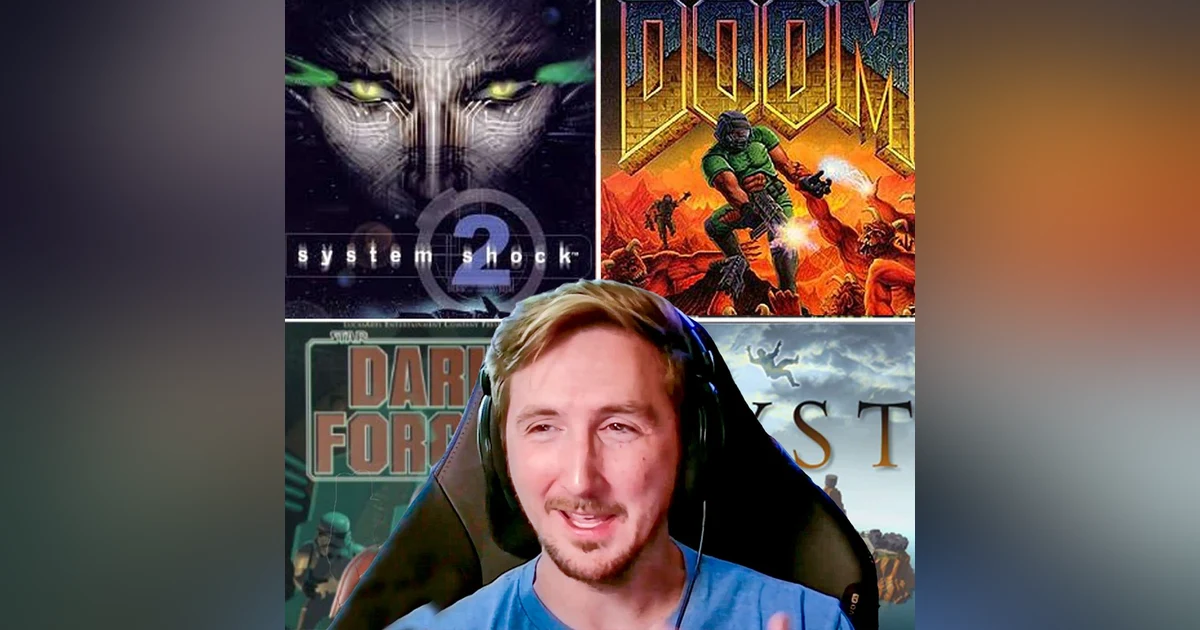
Send us Fan Mail Today on The Examined Game I am speaking with Stephen Kick, Studio Head at Nightdive Studios. Stephen is responsible for some of the greatest video game remasters, remakes and re-releases of the last decade, including System Shock, System Shock 2, The Thing: Remastered, Turok, Quake, DOOM + DOOM II, STAR WARS: Dark Forces Remaster, Blade Runner: Enhanced Edition, I Have No Mouth, and I Must Scream, Blood, Outlaws and many more. This was an extremely personal deep dive into ...


Today on The Examined Game I am speaking with Stephen Kick, Studio Head at Nightdive Studios.
Stephen is responsible for some of the greatest video game remasters, remakes and re-releases of the last decade, including System Shock, System Shock 2, The Thing: Remastered, Turok, Quake, DOOM + DOOM II, STAR WARS: Dark Forces Remaster, Blade Runner: Enhanced Edition, I Have No Mouth, and I Must Scream, Blood, Outlaws and many more.
This was an extremely personal deep dive into his childhood and the influence his dad had on him, bringing the video game adventures they played together to life through the painstaking journals he created, and his mum's strong desire for him to study video game design.
We also discuss the adventure in South America that led to Stephen striking gold with Nightdive's first official re-release, System Shock 2. Stephen is dedicated to making sure some of the greatest video games of all time are not lost to history, putting them into the hands of both new and returning players alike.
#NightdiveStudios #SystemShock #SystemShock2 #Gaming #GamingPodcast #GamePreservation #retrogaming
The Examined Game
Each week, host Steven Lake asks the creators behind some of the world’s most influential video games about the meaning of life (in video games), leading to conversations about the personal and creative impact games have had on their lives.
I remember, you know, saving up all summer long so I could buy a three D FX graphics card. But the real reason I got it is so that I could play Jedi Knight Dark Forces 2. I installed the game and I'm running in software mode, so the frame rate is just like it's awful. And like my soul is like crushed, you know. I'm like, oh my god, this can't be what I waited all this time for. Putting the card in, getting Jedi Knight booted up, and then suddenly seeing the um Direct 3D or the OpenGL option be grayed out and clicking it, and then all of a sudden, you know, this stuttering frame rate move to this, you know, smooth velvety uh appearance was just, you know, it's putting chills down my spine right now thinking about it.
SPEAKER_02Hi there, my name is Steven Lake, and welcome to the Examined Game. Today I am talking with the founder of Night Dive Studios, Stephen Kick. Steven has made an entire career out of finding video games that you can't access, at least very easily anymore, and then making sure they're available to the marketplace, and he's been very successful at that. And one of the most interesting things that we got into, and we spent a lot of time on this, was sort of his childhood and the beautiful relationship that he and his father had with video games. And and it kind of ties in with this idea of being a video game archivist, which I'm not sure if he would agree with that terminology, but it's about making sure that these brilliant games are just as good now as they were when they came out. Games like System Shock 1 and 2, more recently Blood, the Blade Runner Adventure game, Outlaws, Sin, Star Wars Dark Forces. And it was really a pleasure to find out just how much heart and soul has gone into building this company that has become a really, really reliable place to go to when it comes to remasters and remakes. I hope you enjoy this conversation. Thank you very much. One of the first conversations, the questions I usually ask to sort of get a sense of things is to get a vibe on the kind of games that you were playing back in the day. But um obviously in your case, I might I might already have a kind of semi-clear idea of what that is. Um, but I'd love to hear direct from you, you know, um maybe what your earliest, earliest sort of gaming moments were that sort of um caught you with that particular medium.
SPEAKER_01Yeah, you know, it's funny as you become older, I feel like you know your memories are more fragmented, you know, they're they're more just like little blips than they are fully formed thoughts, that kind of thing. And I I just had this blip of a memory of going over to a friend's house and seeing Wolfenstein 3D for the first time. And just immediately just, you know, my whole perception of video gaming just changing in an instant. And then from there, you know, it was so rapid, it was it was Doom, it was Quake, it was Dark Forces, it was Jedi Knight, it was full 3D, it was Turok, it was, you know, and here we are now. Um but that was really kind of my bread and butter growing up. I didn't have a Nintendo or just a home console. Um for whatever reason, my parents were just like completely adamant that they would not be in our home. So when we got our first computer, it was like, what games can I put on this thing? And uh my dad and I became very um how do I put it? We were just infatuated um with the scene at the time, and that included adventure games, uh first-person shooters, of course, uh, real-time strategy, um, just about anything that we could get our hands on because there was so much to choose from.
SPEAKER_02I love that um the blip thing. You just totally took me. Yeah, it is interesting. I don't think I thought about that. That actually they're not like fully font memories, or I remember this. Oh, I have to numerized sat and played this whole game with my neighbor. It is, it's like a flash of like the opening scene for Dark Forces or something, you know, just like comes and goes.
SPEAKER_01Yeah, there was um there was another moment. I mean, it's and I I don't know how I feel about this in retrospect, but like a lot of the um you know formative moments from like 1995 to 2001 are all punctuated by like video games coming out. Um I remember um you know saving up all summer long so I could buy a 3D FX graphics card. And um, you know, it was like a hundred dollars because at this point the the technology had already gone on so far. I think Voodoo 2 was coming out. So I was buying a Voodoo 1 uh from 3D FX uh like on discount at the Rabbages. And uh the real value add for me is that it came with three games. It came with Turok Dinosaur Hunter, uh, Motor Racer GP and James Longbow.
SPEAKER_02Oh, that's that's a good, yeah.
SPEAKER_01Um, but the real reason I got it is so that I could play Jedi Knight Dark Forces 2. And um, I remember, you know, my parents brought me to the midnight release of that game. I brought it home, they let me stay up. It was like a school night, you know. Um, I installed the game, and I'm running in software mode, so the frame rate is just like it's awful. And like my soul is like crushed, you know. I'm like, oh my god, this can't be what I waited all this time for. And so I save up, I get the graphics card, um, I plug it in. My parents are like, how do you even know how to do this? And you know, I've just been devouring uh PC Gamer and um any kind of magazine I could get my hands on. We used to have this uh local dump where I grew up where there were these giant uh garages and each one was dedicated to uh a type of recycling. And so there was like a magazine newspaper garage, and it would just be this mound that you could scale. It was so high, and I would like jump in and just start pawing through this mountain of magazines and anything that was like computer related, I just like I pulled out of the pile, and I made myself like a little bag and would go home and just you know read through these things. But anyways, putting the card in, getting Jedi and I booted up, and then suddenly seeing the um Direct3D or the OpenGL option be not grayed out and clicking it, and then all of a sudden, you know, this stuttering frame rate move to this, you know, smooth velvety uh appearance was just you know, it's putting chills down my spine right now thinking about it. I mean, how I love that.
SPEAKER_02It's almost like bedtime story. You could almost make an ASMR channel where you just tell stories.
SPEAKER_01Right. Like my son, he's never gonna experience anything like that. At least I I can't foresee it. Maybe he will, it'll be like an entirely different thing. But like he, you know, he's already experienced VR and he plays Fortnite and there's a PS5 out there. It's like what are we gonna see in our lifetimes that's gonna have that kind of uh an impact on somebody, maybe creatively or or inspire them to you know want to be a part of this thing that's so brand new and exciting and has so much room for growth, you know?
SPEAKER_02I and also just trying to explain it's like what does the dump have to do with my PC games? So go back to those magazines, I love that.
SPEAKER_01Well, the the other there was a a scrap metal garage, and people threw away entire computers in there. And so my dad and I would go in there and we would just take towers out of this pile and just put them in the back of the truck, and we'd go home and we'd boot them up if we could, and if not, we would like take parts from the various computers that we found and just create like Frankenstein machines, which was wild, like that people threw them out back then when they needed to upgrade because those parts were not cheap back then. You know, there was RAM and hard drives in there that had considerable value, and we never sold anything, we just liked building the computers and seeing if we could get them to run or you know, increase the performance of our own machine. Uh, but that's yeah, we lovingly referred to them all as Frankenstein's because they were just, you know, they were made from the discarded uh bodies of of uh of old computers.
SPEAKER_02And so your dad was a kind of techie gamer, you know, just just enjoyed, you know, you that was obviously something that was a common ground for you both.
SPEAKER_01Yeah, um, you know, again, like I look back on it and I that whole thing was kind of a big surprise. Like, even them wanting to get a computer, um, it wasn't like that my parents were anti-technology at all. I think that they were, you know, they were embracing it, um, but probably a lot more so than a lot of the other families from my from my town, or just from the limited amount of people that I knew. And um when we did get that computer, I remember one of the first games he got was Mist.
SPEAKER_02And we played that together and solved the puzzles and just give me the context of how old you are at this point, because I'd love to know how old someone is when they're like engaging with a certain game to understand how much they would have known what was going on versus not.
SPEAKER_01Sure. So in 1995 I was 10. Okay, yeah, yeah.
SPEAKER_02Um, I'm f I'll be 41 this year, and like old enough to kind of get it, but you're like to a degree, but I'm guessing there would have been limitations, yeah.
SPEAKER_01Yeah. Um I mean, so my dad would let me drive, is how we would put it. I would control the mouse and the keyboard, and then he would be like, oh, let's go check out that area, or you know, wait here and let's see if we can solve this puzzle. And um, you know, one of the fondest memories I have, and this is crystal clear, is we must have played 30, 40 adventure games uh together, and they ranged in quality tremendously back then. As you know, there was good ones and there were some bad ones. Um but what we did was he wrote down the solutions to the puzzles, and then he would create these hand-drawn maps of the game worlds, and then he would take screenshots from the game itself, and then he'd put them into uh we had Corell Draw. Um and he would print them out. And I remember uh when we were done playing, he would like meticulously cut the pictures out uh from the printed sheets with like an X Acto knife, and then he would glue them into these journals that he created, uh, and each one had walkthroughs of the games that we played together. And my dad's an artist, um that's he's always been very artistic, and so he would hand draw a lot of like the um the symbols of the iconography or uh points of interest that you would find in the games, and these journals are like somebody actually went on this adventure and you know took very detailed notes and drew very detailed, beautiful illustrations along the way, kind of outlining the journey. And um like just going back and looking through those journals, it's almost like we live those adventures and we were a part of them together. Um it's such a unique thing that I've found when talking with other people who played with their parents. Like normally you would just play the game and you'd be done and you move on to the next thing, but we have these living documents essentially um that kind of tell a story from you know 1995 to probably 1999. Uh, because uh m my dad started getting into FPS uh when Half-Life came out, and so we'd play those together and we'd start doing Deathmatch, which is you know, uh maybe not as um stimulating, I guess, as solving puzzles. Um trying to put it delicately, it's a little more uh action-oriented, so to speak. But yeah, those were those were really good times, and um we have a lot of good memories together.
SPEAKER_02That's I love hearing that's so it's quite touching hearing that, you know um at that level. I mean, I guess he so he was an artist, he's doing that, but I guess he would have just yeah, seen the the joy coming from you as his son uh building yeah, these sort of like historic accounts of your adventures in these virtual worlds.
SPEAKER_01It does really feel like we did that together. Um and even to this day we have like inside jokes of certain games that we played were you know a moment or two really stood out. Like um I d have you ever heard of a game called Shivers? And Shivers 2 Harvest of Souls? Yeah, so we played both of those, and and you know, half the reason we played these is because we'd go to Computer City and they would have bargain bins, you know, these giant metal bins, and they would just throw in three to six month-old PC games that just didn't sell, and they would be a fraction of the price. So we'd go in and just buy you know fifty dollars worth of games, which would be you know, five or six of them, and then we'd go home and we'd play them. And again, like the varying degrees of quality would would really start to shine.
SPEAKER_02Shivers would have definitely been in the in the bargain from what I remember with that game.
SPEAKER_01But you know, we had so much fun, like it made us laugh. Um because like you know, the developers back then they were all still trying to figure that out the medium themselves. And and to, you know, to be honest, we still are, right? It's still a very new art form in terms of um human expression. And uh at the early on onset, it was like, what are we gonna get? Like what mind was given control over this adventure game uh because nobody had experience back then. It was just like what what would happen, you know.
SPEAKER_02And I guess your your dad's then obviously gone on to see what you've you know, like career-wise done, and I guess he's probably getting some validation that they would need it, but it's like, oh, that that that time was well spent, right, for the for the long term. Um I mean it I I don't want to force connections where they're not, but you talk about those kind of these books or those maps and this kind of like these, you know, these these physical, tangible um creations to sort of uh uh commemorate this these adventures you went on, but they it it doesn't seem dissimilar to the idea of game preservation or what you're you yourself are doing um to a degree that makes sense.
SPEAKER_01Yeah, um you're right. And I'm not sure if I ever really c made that connection before. Um, but it was, it was like we were preserving an aspect of the game, maybe not the game itself, but the experience of playing it in a wholly unique way, because you know, you would buy a strategy guide back then from like Prima or whatever, and it was always written in the perspective of just like somebody playing the game, not so much actually going through the experience themselves. Um, but that's how my dad would frame it. The journal would be written in like the first person perspective of somebody actually being a part of that world and experiencing it, um, you know, and it would be uh very descriptive and um, you know, kind of beautiful to write. So like you wouldn't need any other context when actually reading it to understand it and to enjoy it. So in a way, it was um basically transcribing the game without the game.
SPEAKER_02So is it almost so sort of like a novelization and not literally a novelizer, but in a couple of years. Yeah, yeah, that's a good way to put it. Yeah. So is it what is there any that come to like like did you have one for like Monkey Island or for like, you know, uh I'm wondering if any certain ones come to mind when you think back to them?
SPEAKER_01Sure. Um I mean there was a lot. I think he's got I think we filled up like eight journals. Wow. Um, but we played Mist, we played Riven, um, Seventh Guest, 11th Hour, uh a lot of the early ones. Um we played Obsidian, we played uh Drowned God, that's one that we still talk about to this day. Um Time Lapse, that was a fantastic game. Uh it's one that we actually uh remastered, or well, we didn't remaster it, but we just re-released it. Um Titanic Adventure Out of Time, which is another one that we did. Uh there was a game called Morpheus, um, which is an exceptionally cool adventure game. That's one where you know we started playing that and it really kind of blew our minds because of how many adventure games we'd played before that. Um Rendezvous with Rama. We played the video game adaptation of uh Ray Bradbury's The Martian Chronicles.
SPEAKER_02I've never even heard of that.
SPEAKER_01Yeah, there's I mean, there's a lot. Yeah. Um I'm pretty sure that we've got a list of all the games that we played somewhere, but um my parents ended up separating I think after I had turned like 20 or 21, and I remember I went home. I was living in San Francisco, I was going to school at the time for game design, and I came home to basically like get rid of all the all of our stuff. Uh keep the things that we wanted and then just like purge so that they could sell the house. And I went up in the attic with my dad, and um there was just giant cardboard boxes and they were filled with big box PC games, like all the adventure games we played. And at the time they weren't like collectible, they weren't highly sought-after things. It was just who would ever want these? That was kind of the attitude that we had. And I think we just kind of went one by one, and like my dad saved the CD and the manual, and then we just like tossed the box.
SPEAKER_02I mean, they were big, they were big things.
SPEAKER_01Yeah, yeah, yeah. They take up a lot of real estate. Um, but uh I think for a number of them, I actually like cut the this is awful. I feel so bad, didn't it? It feels like I destroyed an artifact. We would we I cut out the front of the box so that I would have like a memento, you know. Uh and of course, some of those games are like hundreds, if not thousands, of dollars, you know. Um we also played the a lot of the Zork games. We played Zork Nemesis and um Zork Grand Inquisitor. See, like the memories are starting to come back. I'm like picturing me defacing these uh historical items, and that's gonna be the controversy from this interview, finding out with the night dive, you know. Oh god, I feel awful. I I still have those though. My plan was to create some kind of um collage or some kind of art piece that was like, you know, this is what we did, this is what my my dad and I, but even that would end up being gigantic because each one is like eight and a half by eleven.
SPEAKER_02I've still got a few of mine in a box up in my parents' attic still. It's that mix of some originals, like they'd put, you know, like Grim Fandango or Broken Sword and things, and then a lot of those, you know, you know, when like you'd get them on sale like a few years later, and it would be like a white box with like a smaller print of the you know, not not quite as special, but just as boxy.
SPEAKER_01Yeah, I so my dad was really into like I let's just put let's just say um more I guess more serious adventure games, and then well that's what I was picking up from the ones you were saying there, because those are yeah. Um and I I don't know if that's the correct terminology, just I guess more um less cartoony, less less LucasArts, um essentially. And um I started to get into the cartoony games, so I played Salmon Max, I played um I was just starting to get into c into games on the computer when Curse of Monkey Island came out. And so I went to the store and I bought that and it was packaged with um Monkey Island one and two. And so I got I played Those two first, and then the third one, and then that got me into Full Throttle, Grim Fan Dango, The Dig, you know, the whole LucasArts catalog, essentially. Um, but my dad didn't really play those ones as much. He he you know, they just the cartoon style didn't really appeal to him. Um, but we did have some laughs. I I called him into my room um when I was playing Toonstruck. Yeah.
SPEAKER_02Do you know that game? Yeah, I absolutely loved Toon Struck. With Christopher Lloyd.
SPEAKER_01Yeah, yeah. Um, I remember like I just begged my parents for that game for my birthday one year, and it was rated T for Teen. And uh I think I was probably only like 11 or 12 at the time. And um, there's that whole scene where it's like a BDSM scene with like a cow. Yeah, with a cow, yeah. And and there you have to whip the cow, and she's like, whip my cream, and like I remember just laughing so hard. Just thinking, like, oh my gosh, this is so inappropriate. My parents can't see me playing it.
SPEAKER_02That's so fun. I had that with like the Monty Python and the Holy Grail like video game, which was a bunch of like mini games, and there was one where you'd have to like spank the maidens or whatever. Like, yeah, yeah. It was like that it's the exact same thing comes to mind is that like yeah, because obviously for lack of internet, like that was the most inappropriate thing for my PC, and I was very embarrassed at the thought of them coming in on that.
SPEAKER_01Uh because that would be the exact time that they would do it, right? Yeah, yeah, yeah, yeah, exactly.
SPEAKER_02And I'm pretty sure I'm pretty sure I have a memory of that happening, and my dad's saying, like, what are you what is you know, yeah, what is this? Um that's so funny. Yeah, there's a lot of um memory receptors. It's so interesting, and it, you know, because it's like, oh, it's just all these other people that basically had one for one the identical childhood, you know, same game, same moments, same experiences. Yeah. Um I guess then I'm interested in how much you know, using because obviously you were always sort of destined to kind of come back to that era, you know, and in in in the work that you're now doing. And um I'm I'm interested in the space between that literal childhood, you know, when and a lot of the games that you're preserving and remaking and remastering are uh being sort of like burnt into your retinas, um and then and then starting night dive and you know what what what you were doing but between those two periods in terms of you know your interest in gaming and your work in in and around the industry.
SPEAKER_01Yeah, um it's a bit of a story. Um but I remember, you know, senior year of high school, everyone's asking you, what are you gonna do? What do you want to do for a job? Like where are you gonna go to school? What what college? What are you gonna study? And I had no idea. Um I don't think I was particularly motivated to do or you know, go into any particular field. I I think outside of just like gaming, I was really interested in psychology. And so um that was kind of my first choice was to become a psychologist. Um I've always really enjoyed like talking to people and listening to them and offering insight and perspectives on whatever it is that we're discussing, and I thought maybe I could have a career doing that. Uh, but I remember I came home one day and my parents had a subscription to PC Gamer for me, and I opened that up, and um there was an ad in there for a school in California called the Art Institute of California, San Francisco, and they were offering a game art and design program, and I showed my parents that I was like, I want to do this, like I want to go and I want to learn how to make video games, and so my mom basically decided that she was gonna put everything into that. Um she was gonna make that happen no matter what. She wanted me to get out of Massachusetts. Um their male my parents' marriage was kind of you know on the rocks. Um they just weren't in a very good place, and I think she saw that me kind of getting out of my own and being out of that environment was probably the best thing for me. Um so she flew me out there, uh basically sight on scene, and uh signed me up. And so uh I was by myself for the first time at 18 years old in, you know, a big city. And uh I had just come from a graduating class of like a hundred kids, very, very small town in in northern Massachusetts, and so it was a real um like country mouse move into the city kind of scenario, you know, where the bright lights of the city are are you know drawing me in and all these opportunities are are becoming apparent. And um I just I just dove headfirst into the into the program. Um I pushed myself to be the best. I wanted to dominate my field. I wanted the portfolio show to be, you know, the Stephen Kick show. I wanted all the recruiters to come over to me and offer me jobs. Um I ended up meeting my wife in school. She had transferred from the program that they had uh here in Portland, and she was already far more advanced than anybody else in our program uh because they had started like a year or two before ours. And so when she came in, it was like, oh my god, like this is how good you can be. And so I kind of just attached myself to her and tried to learn as much as I could, and we ended up just kind of having this co-operation where we were constantly pushing each other um to see who could, you know, get the better grade, who could get the job first, who could, you know, who could do who could do it, who could get a job in the industry. And um because she was you know further along in the program, she got the job first. That's another whole story, but um, she got a job at Sony Online Entertainment in in San Diego. Um, we both got uh best portfolio um for our respective shows. Um I almost stayed in Cal and in San Francisco. I almost stayed uh because I met uh Charlie from Unknown Worlds. Um and they had just finished um I think Natural Selection 2, and they were starting this game about going underwater and you know what would become Subnautica. Um, but I passed on that and I went and worked on MMOs um with my girlfriend in San Diego, and so we did that for a number of years. Um I had originally gone to school for game art and design, or I should just say design, uh, but I really tried started to gravitate towards character art. So that's like what my whole portfolio was was um was character models, textures, that kind of thing. So we both got hired, and um there's a lot of intricate details to this story. I'm just kind of I'm gonna glaze over because it's it's it's a bit of a journey, but um, you know, we worked there for a number of years and and ended up kind of getting burned out um just on the daily grind of creating game art, and we quit and uh we sold all our stuff, we saved up like 10 grand, and then we got into our Honda Civic and we drove across the border into Mexico, and we basically were like, well, let's just see how far we can go, let's see what we can do. And so we traveled for 10 months through Mexico and Central America, and we got all the way down to the Panama Canal uh in Honda Civic. Um and it was during that trip um that I kind of rediscovered my love for all those games that I grew up with. So uh we had this little netbook with us that could play adventure games and games from the 90s, and so I put um you know, Fallout on there, Fallout 2, Full Throttle, Curse of Monkey Island. Um, I brought the System Shock games with me. And um there was this one evening in Guatemala where it started to rain and we had this wonderful thunderstorm, and I got it in my head that I just thought System Shock 2 would be the most appropriate thing for me to play at that moment. And so I tried to uh load it up and I just couldn't get it to run. And uh we had satellite internet, thankfully, um, in the middle of the jungle. And I went to GOG.com and it wasn't available there either, but it was the number one requested game on their list. So I just started to do some research because I had played looking glass games before. Um, I played System Shock 2 when it had first come out. I played Thief and Thief 2, and um just loved what they were doing. So I wanted to find out what happened to them and why, you know, what I would consider, and I think what a lot of people would consider to be one of the best games of all time, and like why you couldn't play that anymore. And at the time, I I think this was like 2000 like 2011, somewhere around then, and looking glass had gone out of business in what, 2001, 2002, sometime around there. So it hadn't even been uh barely 10 years, and and the game was not no longer playable, uh, nor could you buy it commercially, which is just wild if you think about that in terms of yeah, I'm surprised that it can fall off so quickly.
SPEAKER_02I'm sure you see that over and over now, but yeah.
SPEAKER_01Um, so anyways, I did some research, I found some old articles uh on g4tv.com using the Wayback Machine uh to go to the you know the distant past of 2002 or whatever. Um had discovered that when they went bankrupt, the rights were split uh between an insurance company in the Midwest um and electronic arts. And so I found the insurance company and I filled out one of their you know contact submission forms on their website just saying, hey, like do you guys still have the rights to this game? And uh they wrote back the next day and it was their general counsel, and he was like, Yeah, we still have this. Like, do you want to, you know, what do you want to do with it? Do you want to make system shock three? Which was the question. I was like, you know, if only, you know, I wasn't you know in the jungle with a couple thousand dollars to my name. Like that would be you just want to play System Shock 2. Um, so I said that. I was like, hey, I you know, these these games are no longer available. Um uh Steam had been around for a little while at that point. And um I was like, yeah, well, I want to put them on digital storefronts. And they had never been approached with that opportunity before. So they started outlining um business terms and a deal to license me the rights that they had. And uh I didn't know this until later, but they had actually just acquired the trademark, which um EA had let abandon um because without the two of them working together, they couldn't do anything. So the the trademark became abandoned because EA couldn't commercialize it, and so Star Insurance Company acquired the trademark, and so they had both pieces um to do something, and then here it I came along just at the right time, offering them an opportunity to commercialize it so that they could retain the trademark. Um, this this was such an interesting period because I don't have a business background. Um, you know, if you asked me to define terms that you would see in a general like boilerplate contract, I'd just look at you blankly. Um, so a lot of it was just kind of by the seat of my pants, getting the contract, looking up what terms meant, you know, the definitions and and deciphering it kind of on my own, and then figuring out what it was I was gonna do once I had the rights, um, how I was gonna approach that, um, how I was gonna deal with finances, how I was gonna raise enough money to pay for a you know a minimum guarantee that was attached to the contract. I ended up um asking friends and family to lend me money, um, kind of with a loose business plan, like, hey, if this goes well, I'll pay you back double what you give me. Um, very simple uh return policy, right?
SPEAKER_02Maybe you can't talk about this, but I'm just curious what the sort of figures were that you were looking at to be able to pull this off originally.
SPEAKER_01Um I will say that compared to what we do now, it was a fraction of a fraction of a fraction.
SPEAKER_02That's kind of what I was getting at. I think you know, the numbers are kind of irrelevant, but I figured it would be a low, low number relative to what you're doing with it. The point is you did it, you did a lot with a little, right?
SPEAKER_01Yes. Yeah, it was it was extremely low, and I even managed to negotiate that figure down even more so in exchange for a higher royalty on the back end, which you know, I'm gonna say this a lot in retrospect. I mean, what a deal for them. They were quite happy uh with the you know the royalties I was sending them. They were beyond thrilled. Um but yeah, I managed to, you know, get the contract signed. I I had to start a an LLC like in less than 24 hours to have um you know a business associated with this deal. Um you know, the name night dive kind of just it came uh from a walk that my wife and I, or my she was still my girlfriend at the time. We were we were going on a walk trying to figure out what to call this thing. And um we had gone diving um numerous times together, both through Mexico, um Central America, and um uh California, Hawaii, Australia. We did the Great Barrier Reef, and um it had become such a big part of our life that the whole idea of being underwater at night and it being a total mystery um felt appropriate for a company that you know was kind of going into this blindly and hoping to find treasure somewhere beyond the gloom, right? Um so yeah, we signed the deal. I sent them a check that was bigger than anything I had ever seen up to that point, all in one uh, you know, kind of package. And then I reached out to GOG.com and uh at first they didn't believe me that I had secured the rights. So I had to go into Photoshop and I like redacted the contract myself and then sent that off, and they were like, I guess, you know, he's got you know this somehow this this random kid, you know, I was thinking gosh, how old was I? 26, 27, something like that at the time.
SPEAKER_02Yeah.
SPEAKER_01Um had managed to do this, and um the game went on sale uh I think around it was like Valentine's Day, 2013. And um it was uh financial windfall. Um it did better than I had, you know, there was no way I could anticipate uh what happened, and um honestly I kind of went into a panic. Um I freaked out. Um I'm recalling this, and again, I'm like I'm having all these tactile sensations bringing this stuff up to you. Like my palms are sweating just thinking about this. Um I had to talk to a lot of people that had experience doing this to just reassure me like this is normal, you know, like this is this is how you're supposed to feel in this scenario, and then these are the steps you need to take to ensure that you can kind of keep this going or you can you can start a legitimate business uh moving forward if this is what you want to pursue.
SPEAKER_02And just kind of just like what is the what is the feeling or what is underneath the feeling? You know, is it is it like sort of feeling of sort of feeling exposed or like a risk of future failure or or what?
SPEAKER_01Like what is the um it was just a like I had I I dove into the deep end and you know there was there was a couple of possibilities. Either like I hit my head on the bottom of the pool or I gracefully come up to the surface to breathe, you know. Um yeah, it was I remember being terrified and uh having to be like talked off a ledge almost. And I I the fear was I think based more on like if I don't act quickly or if I don't do the right thing, this whole thing could just collapse. And you know, there there was maybe it was unfounded, but I immediately was like, oh my god, what do I owe in taxes? You know, like I better make sure my next couple of moves are the right ones, or else I could end up owing the government more than you know what I made, or you know, and and that just leads you down to the spiral of like, well, what's the tax law and the state I'm in? You know, how do I how do I protect this so that they don't, you know, I don't end up sending the bulk of this away and leaving myself without anything to, you know, invest in a potential opportunity that I've discovered or whatever. Um so the thing that they recommended, or you know, this family member recommended, they're like just go get a personal accountant, you know, go talk to an accountant, tell them what happened, they will help you figure this out, they'll give you a plan. Um, and so I did. I I found a couple of accountants and I tried to find one that kind of understood what it was I was doing because as soon as I brought up the idea of digital distribution, it was like nobody knew what I was talking about. They're like, so you're making money, but you're not actually selling anything? Like, I don't know how that works, and it you know, that kind of fueled the fear even more. So it was like, oh my god, if like accountants don't know how this works, then what chance do I have? Um but eventually I found somebody.
SPEAKER_02I just I just wanted to go back to something you just just there would have there would have been a lot of drive going on to get this thing over the line, you know. And I was just curious, like what if you remember, like what was the motivating factor for you? Was it you know, because I and I hear this a lot in the interviews, it's like you have a dis you want to play system truck to you know, you just want to play the this damn game, um and and what obviously it turned out is that there was like thousands and thousands of people who felt the exact same way. Um but I'm curious, was the drive to sort of see that come through just like sort of a were you thinking like, oh, I want to run a games company? Or it's like, no, I just want to play this damn game, or were you not thinking at all? And you were just take, you know, flying by the seat of your pants. I'm curious what kept you motivated through through that process.
SPEAKER_01I think that there was a little bit of um, you know, just seeing where this would end up and just being excited by the opportunity to have a hand. In making sure that this game was not forgotten. But, you know, my dream had always been to have my own game studio and make games. You know, that's that's one thing that I haven't really quite fulfilled yet. I I wanted to make original titles. I wanted to make games that I designed or or um, you know, that I came up with. Um it just ended up being that I would basically re-re-release games or remake games that had already been made. And that, you know, that's okay. Um it's plenty fulfilling. Um but it was kind of like it felt like a train that slowly started to move and then just got up to a pace that was like it's so fast now that I can't get off. Um and so when that first sales report came in from GOG, it was like what have I stumbled upon? You know, like this is like a legitimate business. Like I could go now to that GOG wish list, and I could go, okay, what was the number two requested game? And I could just go down the list and um, you know, use whatever resources I had um to find the people that had the licenses or had some knowledge of you know where they ended up, and it kind of became a treasure hunt after that, you know. Um but that's that's why a lot of the very first games that we did, they didn't require you know actual remastering efforts, they they required um open source tools like Scum VM or DOSBox uh to get running on modern systems. Um because it was just me. And I don't have a programming background, I um I can't code. Uh I can make you a pretty picture. That's that's about as far as like my uh game development acumen could could carry me at that point. Um but yeah, it just it just kept going and going and going. And um I kept finding people that made games in the past and didn't understand how Steam worked, and so I could educate them and say, hey, like if you want to make some money and you want to put your game back out there, like I can do that. I can publish your game on Steam, I could publish your game through GOG, or um later on it would be Humble Bundle, or um Gamers Gate was one that we worked with pretty early on. Um and it just grew and grew and grew.
SPEAKER_02So, you know, you've you know you talked about your dad and then your wife as well. Obviously, like throughout this whole journey, you've had as as everyone does. I don't know how anyone could do it without this, but like, you know, good, good people like around you, right? Um you talk about your you know, your wife and that. I I think there's these sort of you talk about, you know, when you kind of came together and like pushing each other to just see what's the absolute best you could achieve, you know. I don't know that I've ever been able to do that without there being other people like in in my orbit like that, that kind of like they sort of propel us to kind of do way better than we would ever do if we were just trying to self-motivate. Does that make sense?
SPEAKER_01Yeah. Um yeah, my wife Alex has always been there, um, you know, from the very beginning, like when we very first met. Um, you know, there was a there was a mutual attraction at first, but we actually wouldn't end up, you know, becoming romantically involved for like a number of months after we met. Um and I remember one of the first conversations we had when we were both kind of like expressing, you know, our mutual attraction to each other. It was like, look, we're not here at school to fall in love. You know, we're not here to start relationships like this. We're here to learn and to take the opportunity that's been given to us to, you know, basically fulfill our our dreams, which is we both wanted to be in the games industry. We both wanted to either make art or start a studio or work on a game that we really loved or or something like that. And so we kind of made this pact from the beginning that like as soon as our relationship got in the way of that, that we would end it, that we would no longer kind of pursue that. And thankfully that never happened. It was, you know, the the relationship was always like part B of why we were together. Um part A being, you know, we both had this drive and this, you know, this talent and um this desire to do something um that would creatively fulfill us. Um and we've always kind of had that approach to everything um since then. But uh yeah, when we got home from that big trip, um we immediately just started doing contract work um from her parents' guest room. Uh so they gave us a yeah, talk about support, right? Like people that help you along the way. Like her mom and dad were like, yeah, come drive up to to the Pacific Northwest and you can stay with us as long as you want, and this, you know, this room you can stay in. And um yeah, we just we ended up setting up our old computers and just immediately just uh working for friends that had started indie studios or whatever that needed game art. And so um I used a little bit of that money to help fund night dive, but then the rest of it came from, like I was saying, some friends, and then um her dad actually gave me a considerable amount of money, um, which was a big surprise. Um but uh yeah, it's it's certainly having those those people around you that are excited for you and and willing to help you and and lend a hand when needed. Um, you know, I remember you know one of those first nights that I was like having a panic attack after the the success of that first game, and and they're like, hey, um one of my best friends is like he's an attorney. Um I'll introduce you to him. Why don't you print out the contract that you signed already and uh he'll review it for you and answer any questions that you may still have. And I remember you know, they did that, they did that for free. You know, I didn't have to pay him an attorney's fee or anything. He was just happy to help because he could see like you know, I was young and inexperienced and very naive. Um, and uh, you know, he came recommended through who would become my father-in-law. So um yeah, it's been it's been wonderful having these people in my life, they've all been very supportive and um yeah, they've been there every step of the way.
SPEAKER_02No, it's just it's such a you know, and again, like I can I can self-motivate to a degree, but if I wasn't surrounded by people sort of championing me, or and then and then we do a vice versa as well, right? Like um it it it it seems like it's such a crucial part of any any degree of success, at least at least in my experience, you know, being my wife, my stepkids, or parents or or anything like that. Um, and again, like same for me, you know, going all the way back to you know, like having a dad that was like cool with me spending like hours downloading Half-Life mods, you know, that took like all night to download some 50 megabyte thing, you know, and and not like um laughing that off or saying that's a waste of time or like you know, because we're fragile, especially especially when we're young, you know, like and we're listening to what people are like telling us about ourselves, right? And so like um to be sort of given that like you know assurance and affirmation that it's like yeah, this is a this is this is a worthy um pursuit, not even like from a making game thing, but just playing them, you know. Right. Um it's so important, I think. And I I think it's a it's a shame for people who may not be surrounded by people that that have come to even if they don't get games themselves, understand oh, there's something special about them, you know.
SPEAKER_01Yeah, that's true. I think there's still um even after all this time, I'm speaking like it's been decades, uh there's still like a stigma attached to to gamers, you know, people who find genuine joy and and and uh passion through this medium. There's still, you know, probably a big uh group of people, and I I think it's getting smaller uh as time goes by, or people just see them as um distractions, you know, wastes of time, that kind of thing. Whereas, you know, if you really dig deep, there are honest and beautiful expressions of humanity that can't be done in any other medium. And um, that's the kind of stuff that I'm really here for, you know, is you know, I want to I want to hear your story, I want to play your story, I want to experience it in a way that uh you can't do by reading a book or watching a movie or you know, any other way.
SPEAKER_02Um and so, you know, and and then you know I mean we you know we got up to like whatever that released that that first first game, and there's been a lot in between then, but then I suppose just to sort of ask in as expedited way as possible, I guess I'm interested in in what for you has been like the most challenging game, which one's been the most rewarding, and and also the your favorite um that just exists out there, like the like the game that you're most pleased is available, and maybe that's all three that maybe that's one game that answers all three of those. So yeah, challenging, rewarding, and and favor.
SPEAKER_01Yeah, I mean I I think any game that we've worked on that's been released under our development name or whatever that hadn't previously been available or um hadn't been commercially available for like a considerable amount of time is really special to me. So like even though it's probably our least well-received title, um, Blade Runner was was an immense accomplishment. Thank you.
SPEAKER_02Thank you, by the way. Thank you, thank thank you.
SPEAKER_01Yeah, that I mean that that's a story that I don't think I, you know, I can't tell um for various reasons, but that was it was a it was a it was a crowning achievement for us that was marred by a few circumstances that you know I I haven't seen before or since then or haven't experienced. Um yeah, it was a it was a mess. Um and so I think like the again, like kind of the the game coming out and being received the way it did was was a result of that, unfortunately. Um but I'm still incredibly pleased with the fact that it's out there and you can play it on different platforms now and and people can experience it because it's a wonderful game. Um I think the game that I'm probably most proud of is the System Shock remake. Uh that was also probably like the most difficult one. Um, it took eight years, I think, to come out from when we, you know, we ran the Kickstarter uh to when it finally happened, and that is I mean, that's an epic story all on its own. Um there were times where that game almost spelled the doom of the entire studio where we were bailed out in the last moment by um chance and serendipity. Uh there were a number of different players that that made appearances throughout this this three three act structure. Um it was a drama. Um it was it was completely insane. And uh the fact that it's out there is uh it should not be out there.
SPEAKER_02Uh I I love that that about like the because when you when you're the player, the game just pops up because you there's the press, you start hearing about it, and then it appears. So you buy, you download, and you play it, and it never crosses your mind. You know, I was just talking to Josh Sawyer, you know, talking about Fallout New Vegas, and I was thinking the literally the same thing this morning, like that game should not exist, like hearing all of the pitfalls and ups and downs of of of it even going into production, let alone getting made, like it shouldn't exist. But but as the player, you never understand just how close to the wire it got for something to just not be there that is obviously now so so special for the people who've gotten to play System Shop because of of that work that you've done. But anyway, yeah, it's just what's interesting.
SPEAKER_01Yeah, I I would love to know how many games that are out there or or that didn't quite make it, um, that could have been really special had they had that extra little bit of luck or money or whatever it is they needed to cross the finish line. Um yeah, this thing it it took a part of my soul with it, you know, when it released, for sure. Um you know, it was one of those things where I I had asked a group of anonymous people to put their money and their faith in this project, and I had made like a promise to myself that no matter what, that the game would come out one way or the other. And um, yeah, I mean, thankfully it came out, and um, there's a lot of people that really enjoy it too, which is the other big thing, is um, you know, I still get messages and people sending me emails uh at least once a week saying, Oh my gosh, I I've got to play system chalk for the first time, and um, you know, it treats me like a human being, it doesn't hold my hand, it doesn't tell me what to do, it doesn't telegraph where to go or how to solve a puzzle or any of this. It's like they're like, I had to use my brain for the first time. And uh, you know, that was risky uh designing the game in that way. But honestly, we just we just followed the blueprint that uh origin and looking glass laid before us. You know, we just we thought that there was enough there to um make an engaging game, and that we didn't we didn't really have to change much beyond what they had already designed. So um, you know, that was probably one of the most powerful things was just you know, hey, that these old games, they still have a lot to teach us. Um but sometimes the barrier of entry is just it's the game itself. And if it's repackaged in a way that's you know more appealing or digestible to a modern audience, you could you could pass on a lot of those lessons.
SPEAKER_02Just you you know you talked about those, you know, the the again coming back to that idea of the people around you. I just wonder if there's anyone specifically from the industry that's been like an absolute pillar to to you and the company that that's not necessarily within it within the company itself that's that's yeah.
SPEAKER_01Um I will say, you know, there's there's a lot of stories about how you should never meet your heroes. Um the complete opposite is what I've experienced in in my case. Um, you know, but my heroes are Tim Schaefer and you know, um Warren Spector and Paul Narrath and Um You know, all the guys and and and girls that worked on the games that inspired me to do all this to begin with. I mean, um Rebecca Heinemann, you know, uh who passed away uh not too long ago, she was um a big supporter of ours and helped us any chance that we that we needed it. Um John Romero is is somebody that I've been talking to a lot lately that just loves sharing anecdotes and stories and his experiences working on all the things that he's been through, you know. Same with Warren Spector. Um I've gotten to know him and Paul uh while we were developing System Shock because we would send them builds and be like, hey, can you can you play this and give us your reaction? Tell us what you think. How can we improve this? Like, what were you thinking when you were making this? And are we, you know, are we fulfilling that vision as best we can? Um Tim man, he he was just incredible. He invited us to Double Fine when we were at GDC. They wanted help in bringing back Grim Van Dango. They wanted to know who we talked to uh at Disney once they had acquired Lucas and those rights, you know. And and we we played a small role in that, you know, we helped kind of unwind that that legal entanglement to some degree. They did the lion's share of the work, of course, but um, you know, when I when I met him, I brought him my copy of Grim Fandango. And, you know, he signed it. He said, you know, he wrote to Steve and his dad, thanks for playing or whatever on there. And that was, you know, that was a big moment for me. Um and I I feel like they've they've all been there. Um, and I feel at least this is the impression that I've got, is that they're all grateful for what we've done, which is make sure that the work that they've all done or have influenced in some way or had some part in in releasing is is out there for people to enjoy uh without having to resort to you know piracy or getting something off a sketchy website or having to spend hours um getting something to run on a modern PC or whatever. Um so yeah, it's we always try to pay homage to those um who came before us, and I truly believe that if the industry wants to be seen as an art form, then we have to preserve its past. And not only that, we have to ensure that the developers that came before us and made these things are seen as artists.
SPEAKER_02It's it's it's been a very um I'm I'm not like surprised, but often we don't normally get it get into it, but of extremely sort of heartfelt conversation, which I've really enjoyed. Um because it has to be right, because it's things that we you know, you have to care deeply about this stuff to invest the amount of of time and energy that one does into pulling it off.
SPEAKER_01We had a meeting just recently to discuss a game that we're working on, um and there's a gentleman that we hired, um, and he came from the modding community. Uh he was the author of one of the blood mods that we um made official throughout our latest remaster, and he's joined our team full time, and he was saying that he had never been in a place where so many people work together to create something out of a place of passion like they do at nightdive. And it was really powerful hearing that from somebody who hasn't been a part of it for as long as you know, most of us. Um, and he said that, you know, it's what got him up in the morning was just being in the room, you know, remotely, uh, with a bunch of people that that cared about this more so than than anything else, and just wanted to do the best that they could with what they're given. Um and uh yeah, I mean it this the emotional part of this, it's like we we all grew up playing these games, and some of us are bigger fans of some games than others, but when we all come together, I think the love of whatever it is we're working. working on just kind of permeates the dev team. Yeah, it's a it's a very special place and um the people that that work here and and do these things um they do it because they love it.
SPEAKER_02But it sounds like the sort of secret or maybe not so secret ingredient for what makes Night Dive Night Dive, you know.
SPEAKER_01The secrets are us. All you need is love. Exactly is love.
SPEAKER_02I guess it was sort of true along. I mean I guess just fine I'm just for my own curiosity and and and maybe it's a game that's already in the the works so in which case you can't say that one but you know if there was any game that you just want no worries about what the legal was or what the mess that the uh source code is in or whether it would be commercially viable that you would just want to be able to see kind of um exist in an extremely accessible form.
SPEAKER_01I just wonder which one comes to mind oh well um it's been I'm sure there's a million but it's uh you know it's like it's every game that that deserves to be out there which is all of them right I mean they all they all deserve their place and they um there's just there's there's too many for for nightdive to handle on its own. But um you know I there's been whole articles written about this but if we could do No One Lives Forever, you know, we could get those two games out there again and in an accessible way that people could just pick up and play and experience I I think that um not only would they perform well um but I think that it would potentially inspire a whole new group of game developers. There's some really wonderful mechanics in there there's there's um unbelievable comedy hidden in the writing um the characters are fun um you have a a strong female protagonist that um was kind of a an anomaly for back then um that honestly I think we could use more examples of yes um it's those they're brilliant games and uh it's one of those weird ones where just due to the licensing and the acquisitions and and mergers of various companies throughout the years have made the the rights uh um you know spider web so yeah I've said it a million times I'll say it again you know no one lives forever yeah figured it we gotta we've gotta figure out some way to get it out there.
SPEAKER_02Keep saying it and manifest it into existence. That's right um oh it's just been such a good conversation I mean I you know we I I feel like there's a bunch of stuff we sort of barely went to touch on and and and and reason being because we ended up having or I ended up getting to have what felt like a a a much more interesting conversation. So um so I really appreciate your sort of openness uh around that it's been really fascinating.
SPEAKER_01Yeah no I I anytime anyone's interested in talking about this stuff I just I feel like I can open up you know and um kind of lay bare the the good the bad and the ugly side of all this I mean it hasn't always gone according to plan and um you know I didn't really have a plan when this whole thing started. So being able to share that I think um is really important because there is you know I think there's misconceptions about how this stuff works and all you have to have is an idea and I you know I think to your point you you have to have some people on your side that are that are willing to um provide honesty and support and encouragement knowledge whatever it is that you're lacking in order to kind of fulfill you know whatever goal you have and uh this was no different you know this was this was a business that was born with just my desire to just play a single game you know and um if you had asked me that you know 14-15 years later this is what we'd be talking about I'd laugh you know like there's no way you know we get to work on Doom you know we get to do Quake and um all these amazing games um it's a dream come true and uh you know I couldn't be more proud of of what we've done uh with the opportunities that we've had